
Last updated November 25, 2026
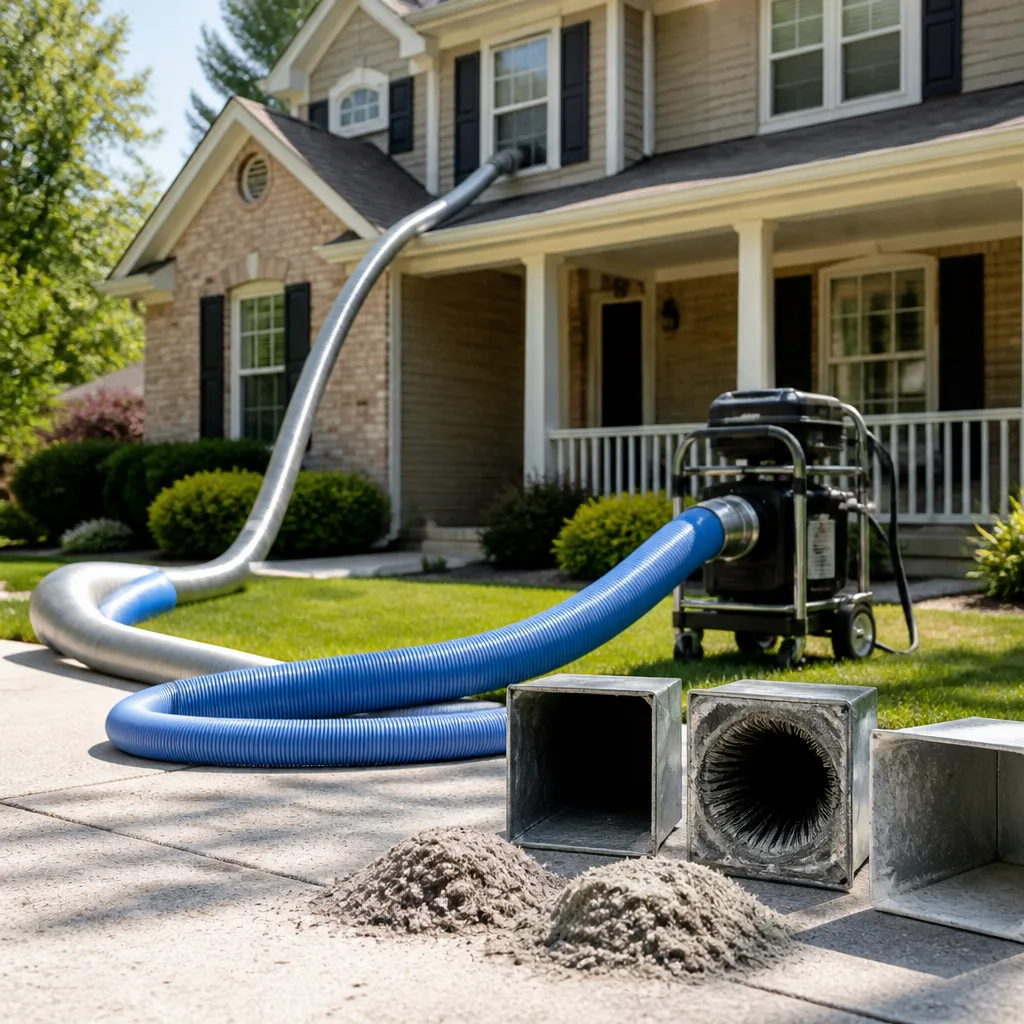 Whole-home duct cleaning
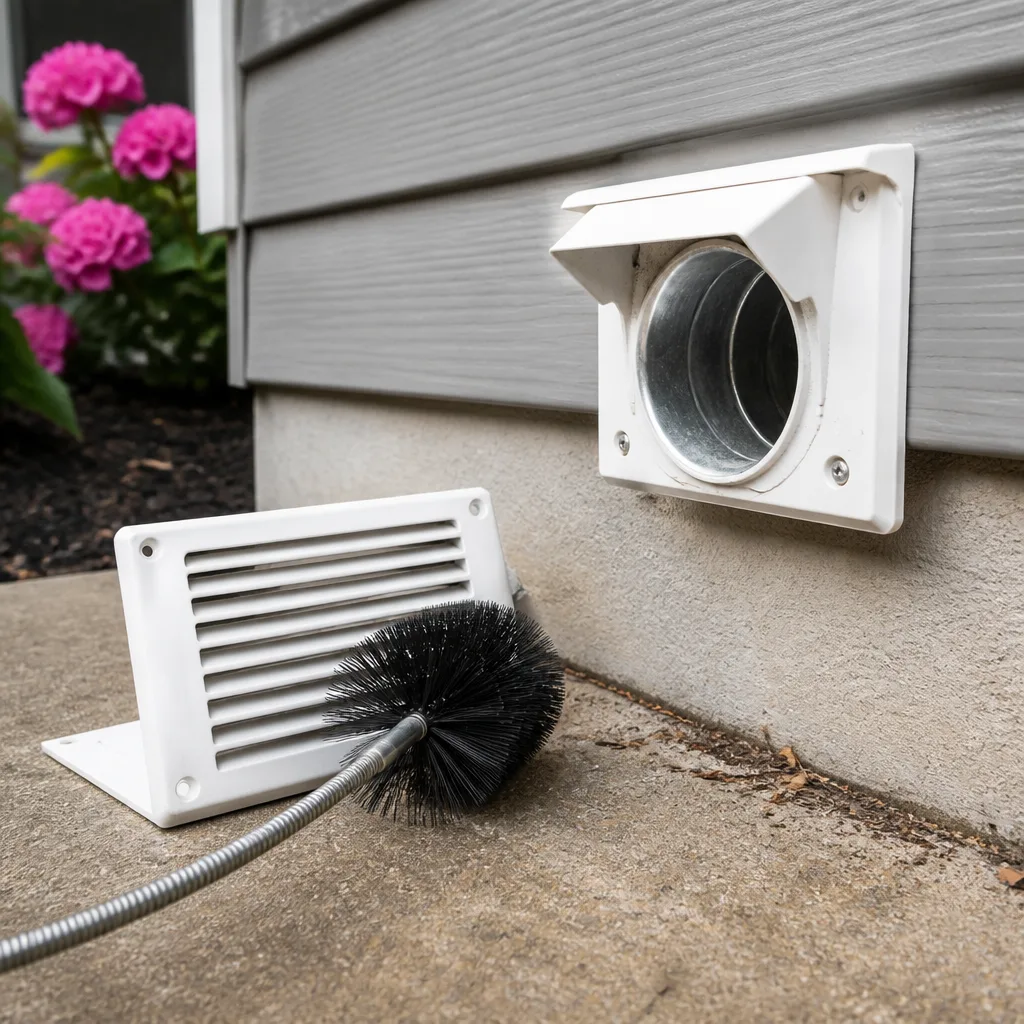 Dryer vent cleaning
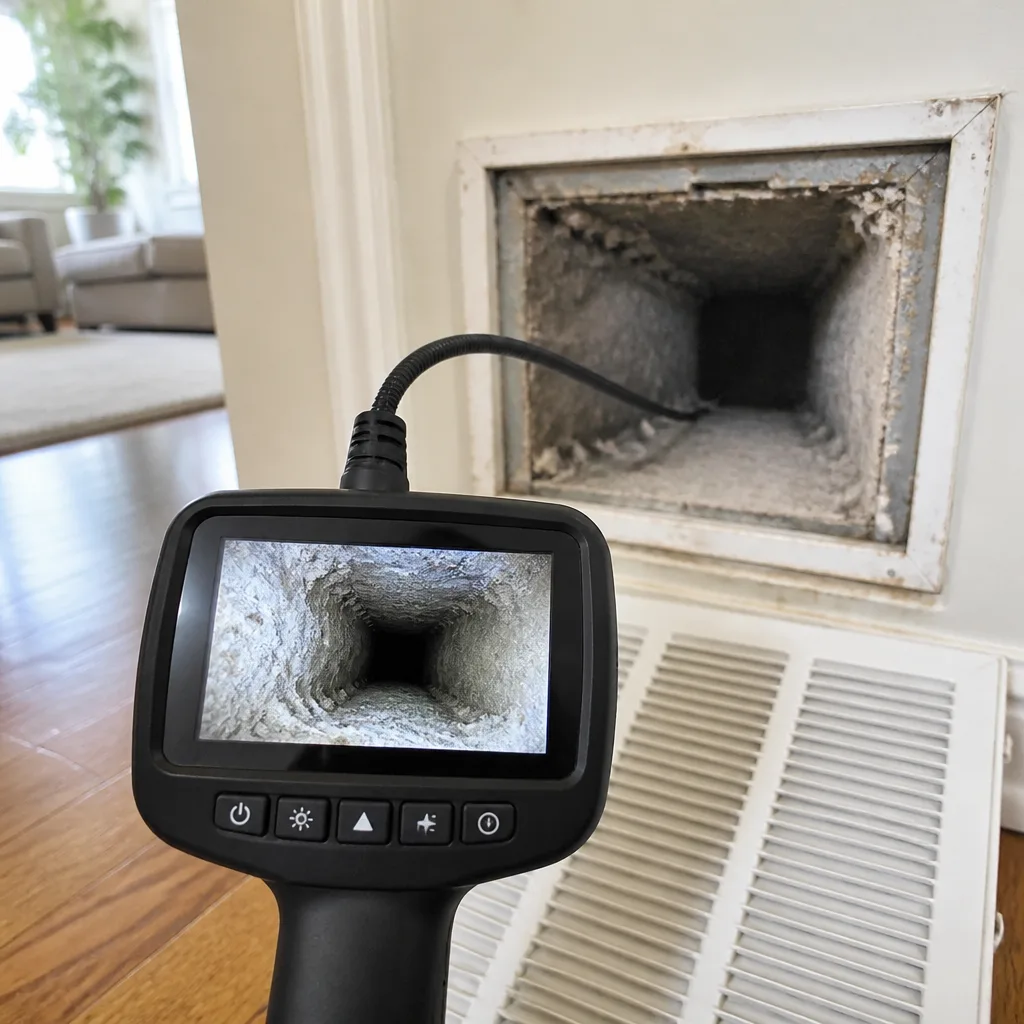 Camera inspection
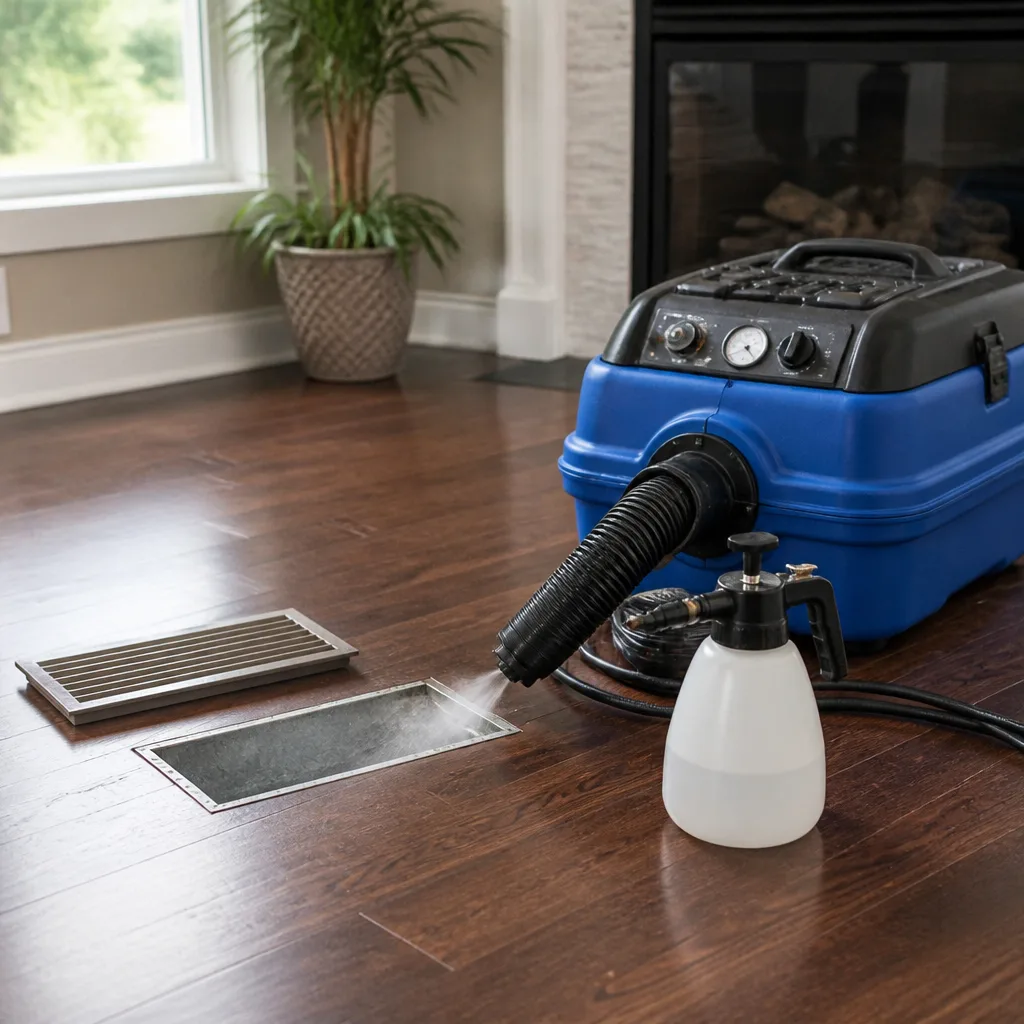 Sanitizing & deodorizing
Whole-system duct and dryer vent check with before-and-after photos - you see exactly what came out of your vents
That "$99 whole-house special" is a bait ad - the real number appears once they are in your hallway, or the "clean" is a shop-vac at the register. We photograph the inside of your ducts before and after instead.
Seasonal Air Duct Cleaning Care for Peralta Hills: Year-Round Homeowner’s Guide
The “clean your ducts every three to five years” rule is the most repeated piece of advice in this trade, and for Peralta Hills homeowners it’s also the least useful. That benchmark was developed for homes in climates with four mild calendar seasons, steady humidity, and a predictable allergy calendar. Peralta Hills doesn’t run on that schedule. This town cycles through four air quality seasons that have almost nothing to do with the calendar: a dry fire-risk summer, a Santa Ana fall, a wet winter that breeds condensation inside poorly sealed duct runs, and a spring pollen wave carried off the surrounding hillsides. Aligning duct care to those functional transitions, instead of to an arbitrary quarterly interval, is the whole game. This guide walks you through each season, what it demands from your HVAC system, and how to build a two-year service calendar that actually fits how air moves through a Peralta Hills home.
Quick Answer
Peralta Hills homes need duct care timed to four functional air quality seasons, not a fixed three-to-five-year interval: pre-fire-summer inspection and sealing before June, post-Santa Ana smoke assessment each fall, mold-focused attention after the wet winter, and pollen-driven cleaning in spring. A balanced two-year rolling calendar combines one full professional clean with owner-performed interim filter and penetration checks, which protects indoor air quality and extends equipment life better than any generic schedule.
Styles & brands we work with
- Whole-home duct cleaning
- Dryer vent cleaning
- Camera inspection
- Sanitizing & deodorizing
Table of Contents
- Why Peralta Hills Has Four Air Quality Seasons, Not Four Calendar Seasons
- Pre-Fire-Season Preparation: Why Sealing Before June Matters
- The Santa Ana Fall: Post-Wildfire Smoke Protocol
- Wet Winter: Condensation, Insulation, and Hidden Mold Risk
- Spring Pollen: What the Hillsides Send Into Your Ducts
- Building Your Two-Year Rolling Service Calendar
- What Professional Equipment Actually Does That a Shop Vac Can’t
- When to Call a Professional
Why Peralta Hills Has Four Air Quality Seasons, Not Four Calendar Seasons
Every region has weather. What makes Peralta Hills unusual is that the air quality pressures here shift in sharp, functional blocks that don’t line up with spring, summer, fall, and winter as most people think of them. A homeowner who cleans the ducts in “spring” because a website told them to may be doing it a month before the pollen wave arrives, or three months after the smoke already settled into the return plenum. The work is real; the timing is off.
Here’s how the year actually breaks down in a Peralta Hills home, from the perspective of what’s moving through the ducts:
- Dry fire-risk summer (roughly June through September). Low humidity, high heat, and dry vegetation on the surrounding hillsides. Ducts that leak at the joints pull hot attic air and fine dust into the supply stream. This is the season to have sealed the envelope before it started.
- Santa Ana fall (roughly October into early December). The wind events that define this stretch push smoke, ash, and particulate from regional fires into homes that are running their HVAC system for the first time in weeks. Duct leakage here works against you: every gap pulls outside air in.
- Wet winter (roughly December through March). Rain returns, ambient humidity climbs, and homes that run the heater in the morning and cool in the afternoon swing through temperature cycles that condense moisture on cold duct surfaces. Poorly insulated runs in unconditioned attic space are the prime suspect for mold conditions.
- Spring pollen (roughly March through May). Coastal sage and other hill vegetation release pollen that finds its way into return grilles and settles on the inside of the trunk line. This is the season where what accumulated over the prior year gets lifted back into circulation every time the fan kicks on.
The point isn’t to hand you a rigid calendar. It’s to show why “every three to five years” misses the moments when Peralta Hills duct systems take on the most load. A duct system that gets inspected before fire season, sealed where it’s leaking, and cleaned after the winter wet season will perform measurably better than one on a generic schedule, because the cleaning and repair work lands when it actually matters. If you’re just starting to think about this, the air duct cleaning process we run covers exactly this assessment, and it’s a good starting point before you build a calendar.
Pre-Fire-Season Preparation: Why Sealing Before June Matters
The most effective thing a Peralta Hills homeowner can do before fire season is not a cleaning. It’s an inspection and sealing of the duct penetrations and joints, done before June, so the system has less pathway for smoke to enter when the first regional fire starts up. Smoke intrusion resistance is a duct-integrity problem first and a filtration problem second. If the ducts leak, no filter upgrade will fully compensate.
Duct systems in this climate tend to lose their seals gradually. Attic heat expands and contracts the metal over hundreds of cycles a year, and tape lifts, mastic cracks, and flex duct connections work loose at the collar. You won’t notice from inside the house until the system starts pulling attic dust in through the same gaps. That’s why the inspection belongs on the front end of the year, before the system is under smoke load.
Here’s how we’d sequence pre-fire-season prep for a Peralta Hills home:
- Inspect the return side first. Supply-side leaks push conditioned air into the attic; return-side leaks pull outside air into the house. The return matters more for smoke intrusion.
- Check every accessible joint, collar, and plenum connection. Attic space, garage ceiling, and air handler cabinet are the usual failure points.
- Seal what’s leaking with duct mastic, not tape. Mastic holds through thermal cycling in a way that duct tape never does.
- Confirm filter fit at the air handler. A filter that doesn’t seal at the edges is a bypass around the filter media.
- Verify the return grille gaskets. Loose grille gaskets pull attic air in through the ceiling plane.
- Run a pressure check. A trained technician can measure static pressure and identify duct leakage that isn’t visible by eye.
Duct Repair & Sealing is one of the five core services we offer, and on a Peralta Hills job it’s usually the difference between a duct system that holds up through smoke season and one that doesn’t. We seal what we clean, which means a cleaning visit doesn’t end with the ducts cleaner but still leaking. The sealing work is what makes the cleaning stick.
One honest caveat: duct sealing in attic space during summer heat is genuinely hard work, and it’s not a homeowner project for anyone who isn’t comfortable with confined spaces, roof-deck temperatures, and ladders. If you want a trained technician to handle the inspection, that’s a reasonable ask and a normal part of the pre-season routine in Peralta Hills.
The Santa Ana Fall: Post-Wildfire Smoke Protocol
Not every smoke event warrants a duct cleaning. That’s the honest answer, and it’s the answer most duct companies don’t give, because “call us after every fire” is an easy sale. A Peralta Hills homeowner who cleaned the system in September and closed the windows through a distant fire in October usually needs nothing more than a filter change. The question is when the smoke event crosses from “adjust the filter” to “clean the system and sanitize.”
We use a practical decision tree on this, and it’s worth walking through because it’s the single most over-sold judgment call in this trade:
- Filter change is enough when: smoke was visible but the house stayed closed, the HVAC ran normally, and no smoke odor appeared inside the home.
- Filter upgrade plus inspection is warranted when: smoke odor was present indoors, the system ran during the smoke event, and the homeowner noticed fine ash on horizontal surfaces near return grilles.
- Professional cleaning plus sanitizing is warranted when: the home smelled of smoke for days after the air cleared outside, residents reported respiratory irritation or headaches indoors, or the home is being prepared for a new occupant and the prior cleaning is more than two years old.
For the third tier, we bring in Abatement Technologies filtration equipment on the job. It’s remediation-grade filtration, and it’s the right tool for pulling combustion particulate out of the airstream rather than just agitating it. On homes with allergy or asthma concerns, that equipment matters for reasons a shop vac can’t address. Once the particulate is removed, Air Quality & Sanitizing addresses residual contamination in the duct lining and plenum where mechanical cleaning alone doesn’t reach.
During a Santa Ana wind event, the sensible pre-event habit is to close the windows, run the fan on circulate rather than a fresh-air setting (if your system has one), and change the filter when the event passes. For homes with a Honeywell or Aprilaire filter cabinet, use a MERV-rated filter appropriate to the cabinet; the manufacturer’s spec is the guide, not the installer’s guess. Upgrading the filter cabinet to a higher-MERV media system is a legitimate pre-fire-season project, and we work with both brands.
Wet Winter: Condensation, Insulation, and Hidden Mold Risk
Mold risk in Peralta Hills ductwork doesn’t come from a wet climate. It comes from the swing between a heater-warm house and a cold attic in the wet season, and from duct runs that weren’t insulated for that swing. When warm air moves through an under-insulated duct in a cold attic, the metal skin on the outside of the duct drops below the dew point and condensation forms. It doesn’t take much. A few weeks of that, and the porous lining inside the duct and the dust settled on it become a substrate for mold growth.
Winter is the season when this condition sets up, and spring cleaning is when it should be addressed. A spring duct cleaning that includes the winter-wet evaluation catches the mold conditions that formed over the prior two to three months. That’s the timing logic most generic cleaning calendars miss: they treat spring cleaning as an “annual fresh start” rather than a response to a specific seasonal load.
What we look for in a Peralta Hills home on a winter-post inspection:
- Visible condensation or water staining on the outside jacket of flex duct runs in the attic.
- Discolored or darkened duct lining near the plenum or air handler cabinet.
- Musty odor at return grilles with the fan running, strongest in the first heat cycle of the day.
- Insulation gaps where duct runs cross rafters or rest on joists without a vapor barrier.
- Cabinet seams at the air handler where warm air leaks into cold attic space.
If a musty odor shows up in the winter, that’s the signal not to wait for spring. Humidity management in an otherwise dry home means fixing the duct runs that condense, not installing a whole-house humidifier. Where indoor humidity in the wet season trends high, a Honeywell or Aprilaire dehumidifier integrated with the HVAC system addresses the source condition, but only after the duct insulation is doing its job. Cleaning a duct system with insulated runs that still condense just resets the clock; the moisture returns.
If you smell mold or see dark streaking at return grilles, getting a professional assessment is the right move, and it’s not a do-it-yourself job. Disturbing mold-contaminated duct lining with a consumer vacuum spreads spores through the house. We use the Abatement Technologies filtration setup on those jobs specifically because it captures what the cleaning process liberates.
Spring Pollen: What the Hillsides Send Into Your Ducts
The spring pollen wave in Peralta Hills is the season homeowners misread most. Pollen enters the home through open windows and doorways, then settles in the return grille area and works its way into the return trunk line. It doesn’t travel far into the supply side unless the fan is running, but the fan is always running during allergy season. Once that pollen load is inside the ducts, every fan cycle lifts fine particulate back into the living space.
The fix is not constant filter changes and it’s not an air purifier on its own. It’s cleaning the accumulated pollen and dust from the duct interior at the right point in the year, followed by a maintenance plan that keeps the filter doing its job. The right point is after the pollen wave has peaked and before the summer heat cycle begins, which for Peralta Hills generally puts a spring cleaning in the March to May window.
Here’s how owners can support the spring clean without overdoing it:
- Keep window screens in good condition. Pollen rides on air, and screens are the first filter.
- Change the return filter after the pollen peak, not during. A filter loaded with pollen during the wave restricts airflow and can pull a filter out of its frame.
- Use a MERV-rated filter matched to your cabinet. Too high a MERV in a small cabinet means the fan works harder than it should.
- Inspect return grilles for pollen film. If you can see pollen buildup on the grille face, the duct side is loaded too.
- Have the duct interior cleaned once the wave ends. That’s the cleaning that resets the system for the summer load.
The distinction between surface pollen (grilles) and airborne pollen inside the duct system (trunk line and plenum) is where homeowners usually need help. If a home has had multiple springs of pollen accumulation without a full cleaning, the interior lining can hold enough particulate to support a summer of poor air quality even with a new filter. Our Air Duct Cleaning Peralta Hills service page walks through the full process if you want the details.
Building Your Two-Year Rolling Service Calendar
The cleanest way to balance full professional cleans against owner-performed inspections is a rolling two-year calendar where the full cleans land at the start of the high-load seasons, and the interim months are owner-support work. It’s not a fixed quarterly routine, and it’s not a “wait five years” plan. It’s a rolling structure that adapts to how each season hits a specific Peralta Hills home.
Here’s a structure that works for most Peralta Hills homes, with the understanding that a home with pets, recent renovation, or a prior mold finding will need a tighter cycle:
- Late winter (roughly February or March): post-winter inspection. Check duct jacket condensation, look for musty odors at grilles, and change the filter. This is the owner’s inspection, not a full clean.
- Spring (roughly March to May): full professional cleaning, timed after the pollen wave. This is the once-a-year major service in year one of a two-year cycle.
- Pre-fire-season (roughly May or June): duct inspection and sealing of penetrations and joints. This is the Duct Repair & Sealing visit, and it’s the smoke-intrusion insurance policy.
- Summer (roughly June to September): owner filter changes as scheduled, no professional visit unless a problem shows up.
- Santa Ana fall (roughly October to early December): assess any smoke event using the decision tree above. If the home stayed closed and no odor appeared indoors, this is a filter change only.
- Early winter (roughly December): if a smoke event triggered the third-tier protocol, this is when professional cleaning plus sanitizing runs.
- Year two of the cycle: skip the full spring cleaning and use the year-two spring visit for a filter change and grille inspection. The full clean lands again the following spring.
This gives you a full clean every other year, sealing work once a year, and owner inspections in the gaps. It’s not a one-size plan, but it’s a structure you can adapt. Homes with pets, recent renovation dust, or a family member with allergies or asthma generally need the full clean every year rather than every other year. Homes with a clean history, no pets, and good filtration can go longer.
One specific note for the HVAC side: the air handler, coils, and drain pan need attention as part of the seasonal cycle, not in isolation from the ducts. The HVAC cleaning visit is when the coil face and blower get addressed, and it makes sense to combine that with a duct cleaning when both are due. Cleaning the ducts and leaving a dirty coil behind just puts the cleaning back into the air.
What Professional Equipment Actually Does That a Shop Vac Can’t
The single clearest quality signal in this trade is what shows up on the job. Consumer vacuums and repurposed shop vacs pull loose dust off the duct surface and miss the dust that’s bonded to the lining. They also don’t seal the system during the job, so loosened particulate escapes into the living space. That’s not a cleaning; it’s a disturbance. The equipment difference is the story.
Here’s what we actually run on a Peralta Hills job, and what each piece does:
- Rotobrush rotary brush systems. Mechanical agitation with a rotating brush head, paired with high-efficiency extraction. The brush reaches the duct lining where bonded debris sits; the extraction pulls what the brush liberates. This is the professional standard for duct interior cleaning, and it’s what we use on every job.
- Nikro HVAC cleaning equipment. Industrial-grade, negative-pressure systems engineered for ductwork, not adapted from another trade. Negative pressure means the duct is under vacuum while we work, so released debris goes toward the collection unit rather than into the house.
- Abatement Technologies filtration. Remediation-grade filtration for jobs involving allergens, mold risk, or post-renovation particulate. This is the equipment that lets a cleaning job address the fine particulate that standard setups miss.
- Honeywell and Aprilaire integration. When the seasonal pattern points to a filtration or humidity control upgrade, we work with both brands to connect cleaning services to the air quality hardware that solves the underlying condition.
The brand names matter less than what they let us do. A Rotobrush process reaches surfaces a consumer vacuum doesn’t. Negative-pressure Nikro equipment seals the workspace. Abatement Technologies filtration addresses particulate that matters for allergy and asthma households. And the Honeywell and Aprilaire familiarity matters because cleaning without addressing filtration just resets the clock on a predictable problem. Air quality starts at the source, and the source in a seasonal Peralta Hills home is often the filter cabinet and the duct sealing, not the duct interior alone.
We also handle dryer vent cleaning, which sits outside the air quality story but belongs in any homeowner’s annual safety checklist. It’s one of the leading causes of residential fires, and it’s routinely skipped in the seasonal calendar. If you’re doing spring duct work, it’s a reasonable time to have the dryer vent done too.
Common Mistakes to Avoid
- Cleaning on a fixed three-to-five-year clock with no seasonal logic. The generic interval misses the pre-fire-season sealing window and the post-pollen cleaning window that actually drive air quality in a Peralta Hills home. If the only reason you’re cleaning is the generic rule, you’re probably doing it at the wrong time of year.
- Skipping duct sealing because the ducts were “just cleaned.” A cleaning without sealing leaves the same leaks that pulled smoke and attic dust in during the season. Sealing is the work that makes the cleaning hold through the year.
- Running a high-MERV filter in a cabinet rated for a lower one. The filter back-pressure loads the blower motor and can pull the filter out of its frame, which bypasses the filtration entirely. Match the filter to the manufacturer’s cabinet rating.
- Treating the winter musty odor as a cleaning problem. Musty air in the winter usually means condensation on cold duct runs, and cleaning without fixing the insulation brings the smell back within a season. Address the duct jacket first.
- Cleaning inside a home with active mold contamination using a consumer vacuum. Disturbing mold-contaminated duct lining without proper filtration spreads spores through the house. That job requires remediation-grade equipment, not a shop vac.
- Ignoring the return side. Supply leaks waste conditioned air; return leaks pull outside air in. For smoke and pollen intrusion, the return is where the problem usually lives.
- Skipping the filter after a smoke event and assuming the ducts need cleaning. Most single smoke events are handled with a filter change; a professional cleaning is only warranted once you’ve confirmed smoke odor indoors or days of lingering smell. Calling for a cleaning after every distant fire gets expensive fast.
See the difference
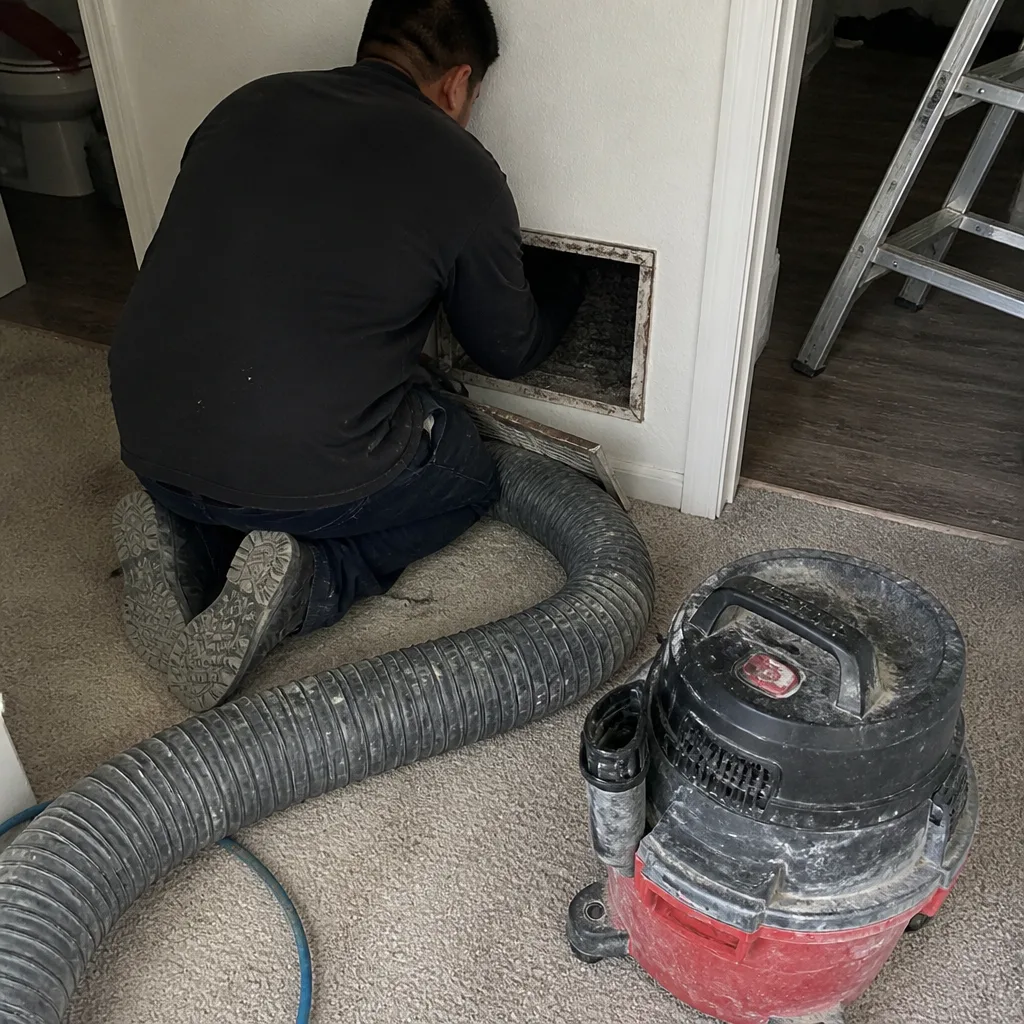 Before
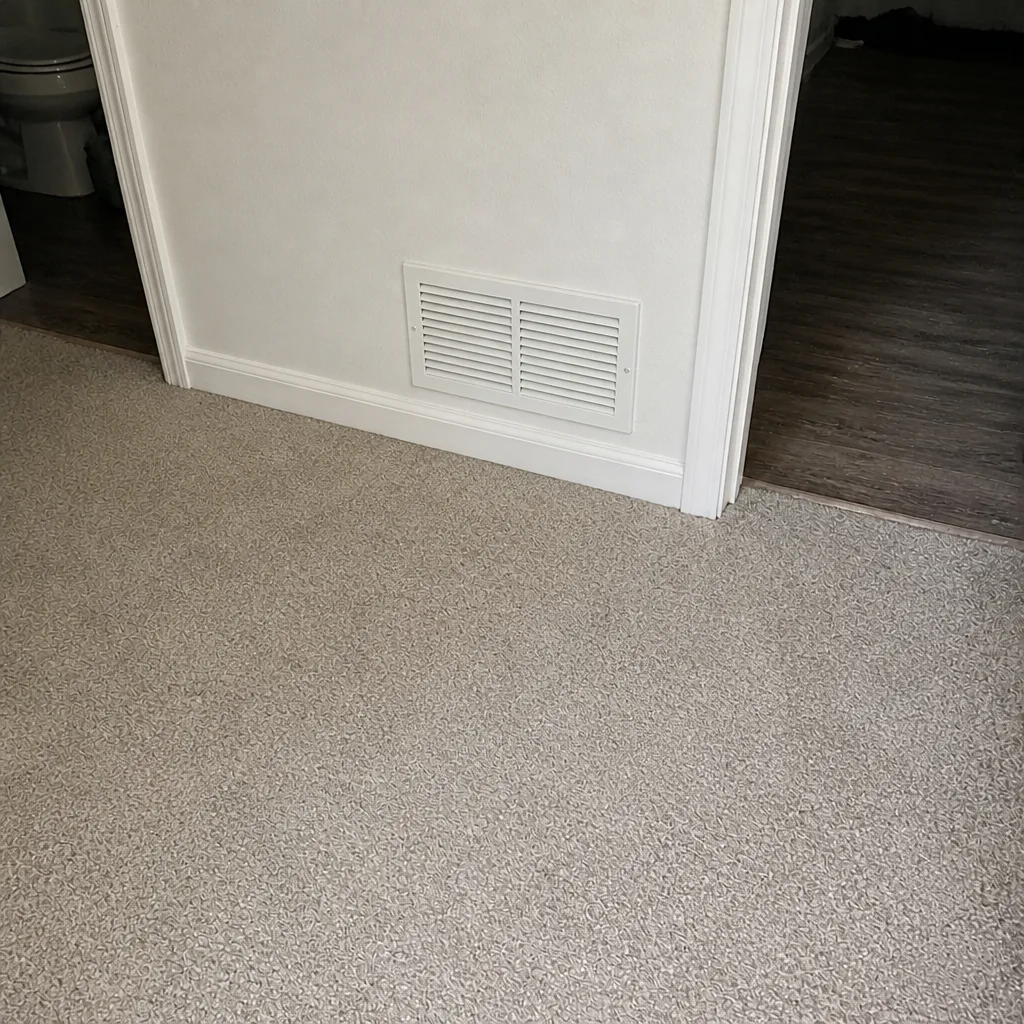 After
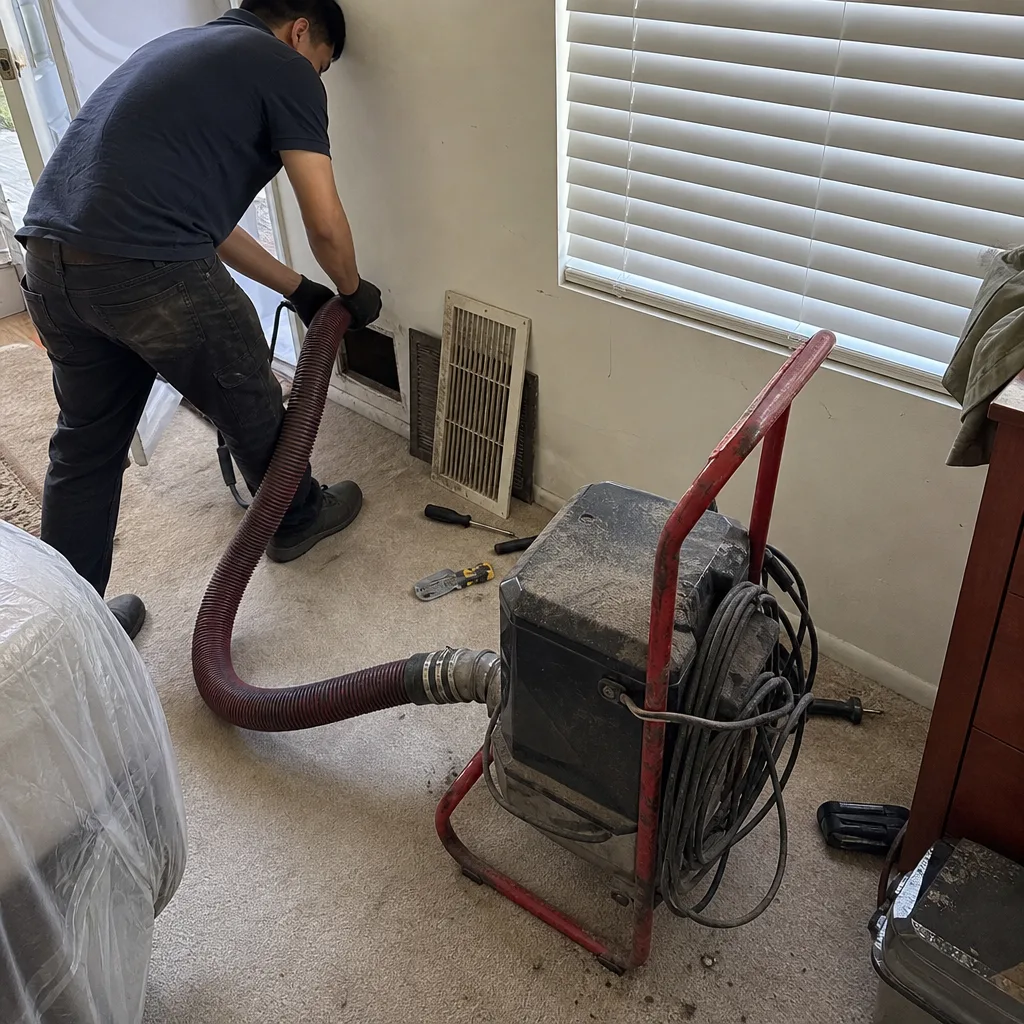 Before
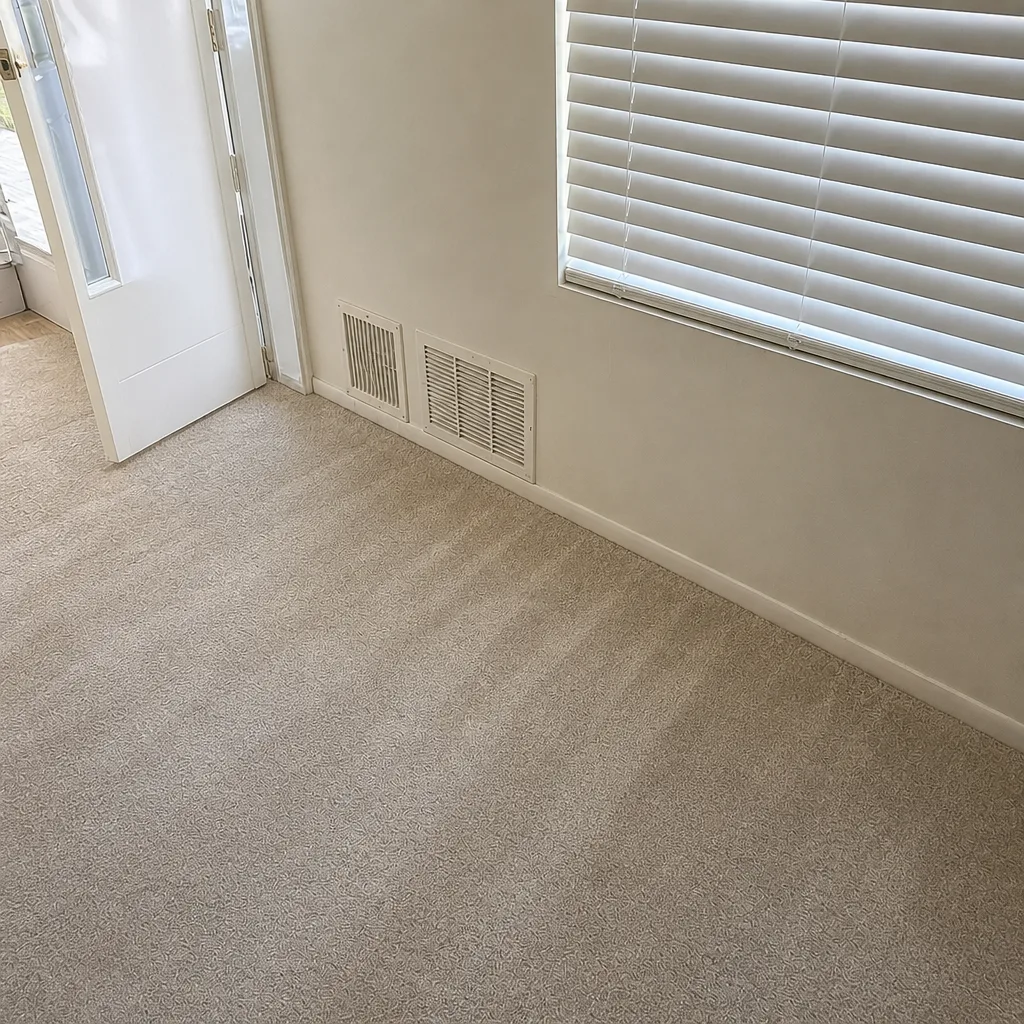 After
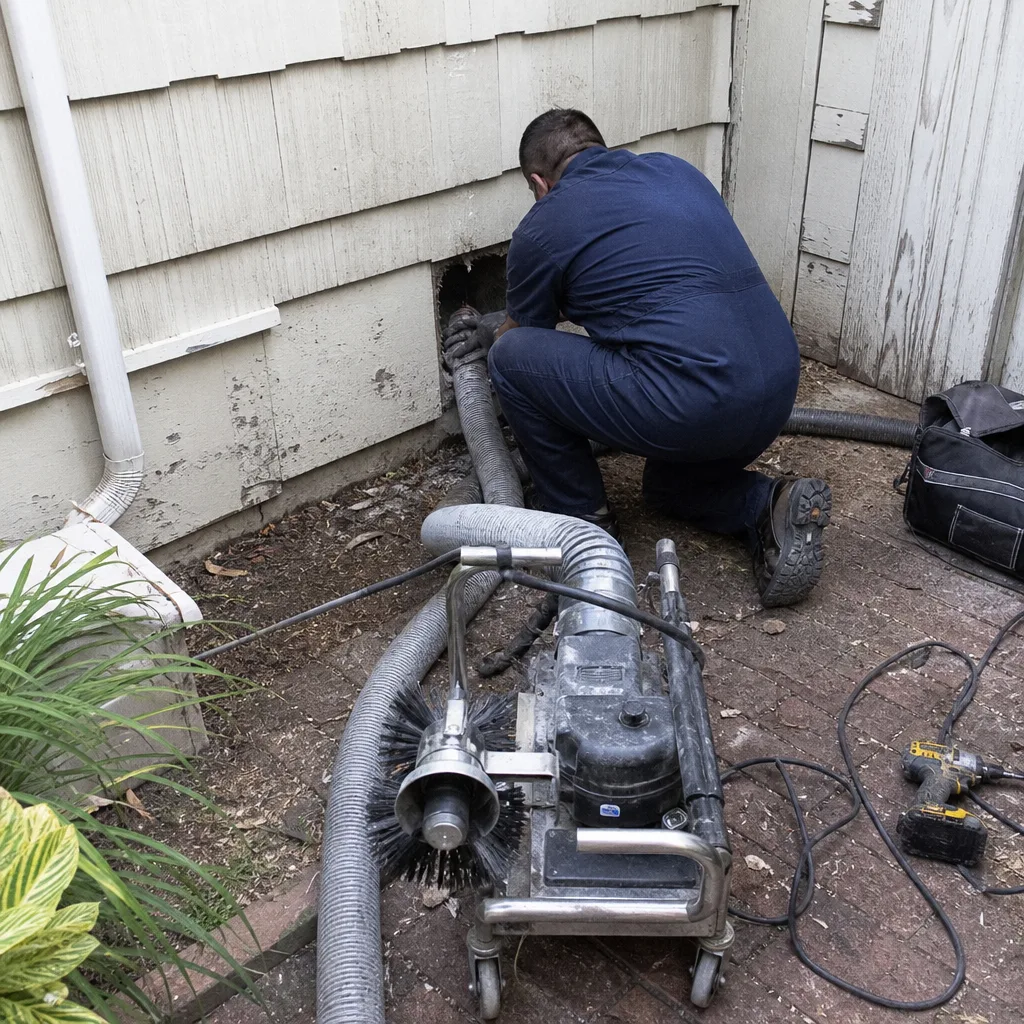 Before
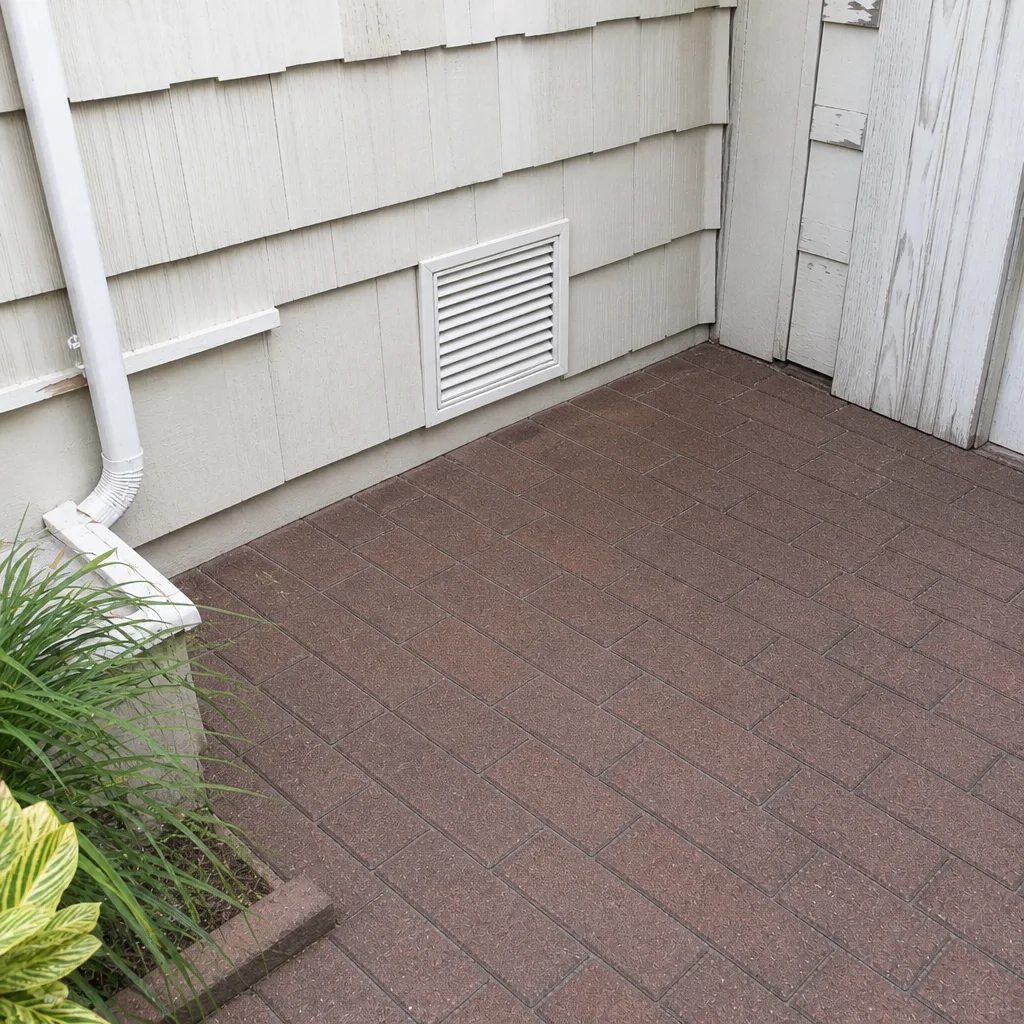 After
When to Call a Professional
Some seasonal work belongs in the homeowner’s hands: filter changes, grille inspection, window screen maintenance, closing the windows during a smoke event. The rest is a trained-technician job, and here’s when to make the call:
- You’ve noticed a persistent musty or smoky odor at return grilles with the fan running.
- Dust accumulates on horizontal surfaces faster than it used to, or family members report allergy or asthma symptoms that get worse indoors.
- You’re buying a home in Peralta Hills and want a verified clean slate before move-in.
- You’ve had a smoke event with lingering indoor odor, or you’re preparing for a fire season and want the duct penetrations inspected and sealed.
- Your ducts haven’t been evaluated in more than two years and you can see visible buildup at return grilles.
Our technicians have up to 11 years of experience, and we bring purpose-built equipment (Rotobrush, Nikro, Abatement Technologies) to every job rather than a repurposed vacuum. The price is set per job by the written estimate, and the estimate is free. Air Duct Cleaning Peralta Hills offers free estimates in Peralta Hills. Call (844) 625-7411. We answer 24/7. Fast dispatch from 7am to 7pm, Sunday through Friday.
Frequently Asked Questions
Most Peralta Hills homes benefit from a full professional clean every one to two years, timed to the seasonal transitions described in this guide rather than a fixed multi-year interval. Homes with pets, recent renovation, or a family member with asthma or allergies generally need the annual cleaning; homes with a clean history and good filtration can stretch to two years between full cleans with interim sealing work and owner inspections in between. The “every three to five years” rule doesn’t account for the smoke and pollen loads that drive the work in this region. Call (844) 625-7411 for an exact quote based on your system.
It depends on the severity of the smoke event in your specific home. A filter change handles most single events where the house stayed closed and no smoke odor appeared indoors. Professional cleaning plus sanitizing is warranted when smoke smell lingered inside for days, residents had indoor irritation symptoms, or the home is being prepared for a new occupant with a cleaning history more than two years old. We can walk you through which category your home falls into. Call (844) 625-7411 for a free estimate.
Sealing is a repair that closes gaps at joints, collars, and plenums so outside smoke and attic dust can’t be pulled in through the ducts. Cleaning removes the accumulated dust and particulate from the duct interior. They solve different problems, and for a Peralta Hills home heading into fire season, the sealing is the more urgent of the two. We do both as part of Duct Repair & Sealing and Air Duct Cleaning. Call (844) 625-7411 for a free estimate.
A winter musty smell is a mold or condensation signal more often than a duct-cleaning signal. It usually means warm air is condensing on cold duct surfaces in the attic, and the porous lining inside the duct is holding moisture. If the smell is strongest in the first heat cycle of the day or you see dark streaking at return grilles, that’s the moment to call for a professional assessment. Call (844) 625-7411 for a free estimate.
Upgrade the filter after the cleaning and after any sealing work is done. A higher-MERV filter installed before the cleaning sits behind a dirty system and catches less than it should. Filter cabinet upgrades (Honeywell, Aprilaire) work best once the ducts are clean and sealed, so the new filter isn’t compensating for leaks. Call (844) 625-7411 to schedule the sequence correctly.
It’s a separate service, but it belongs in the annual home safety routine. Dryer vent cleaning addresses one of the leading causes of residential fires, and the spring duct cleaning window is a reasonable time to have it done alongside. It’s not an air quality service in the same sense as duct cleaning, but it’s the same principle: the system that moves air through your home needs periodic attention beyond the filter. Call (844) 625-7411 for a free estimate.
The Bottom Line
The takeaway is not “clean your ducts more often.” It’s “clean and seal your ducts at the right moments.” Peralta Hills homes run through a dry fire-risk summer, a Santa Ana fall, a wet winter that condenses inside poorly insulated duct runs, and a spring pollen wave that loads the return side. Pre-fire-season sealing before June, post-event filter changes in the fall, mold-focused attention after the winter wet, and a spring cleaning timed to the pollen peak will do more for indoor air quality and equipment life than any fixed cleaning interval. Build a two-year rolling calendar around those transitions, keep the filter right, and call for the sealing work before you need it. That’s how the seasonal cycle works in this town.
If it’s time to align your Peralta Hills home’s duct care to the season it’s actually in, we’re here to help. We bring Rotobrush and Nikro equipment on every job, seal what we clean, and set the price per job by the written estimate. Call (844) 625-7411. We answer 24/7. Fast dispatch from 7am to 7pm, Sunday through Friday.
Written by the team at Air Duct Cleaning Peralta Hills.