
Last updated November 25, 2026
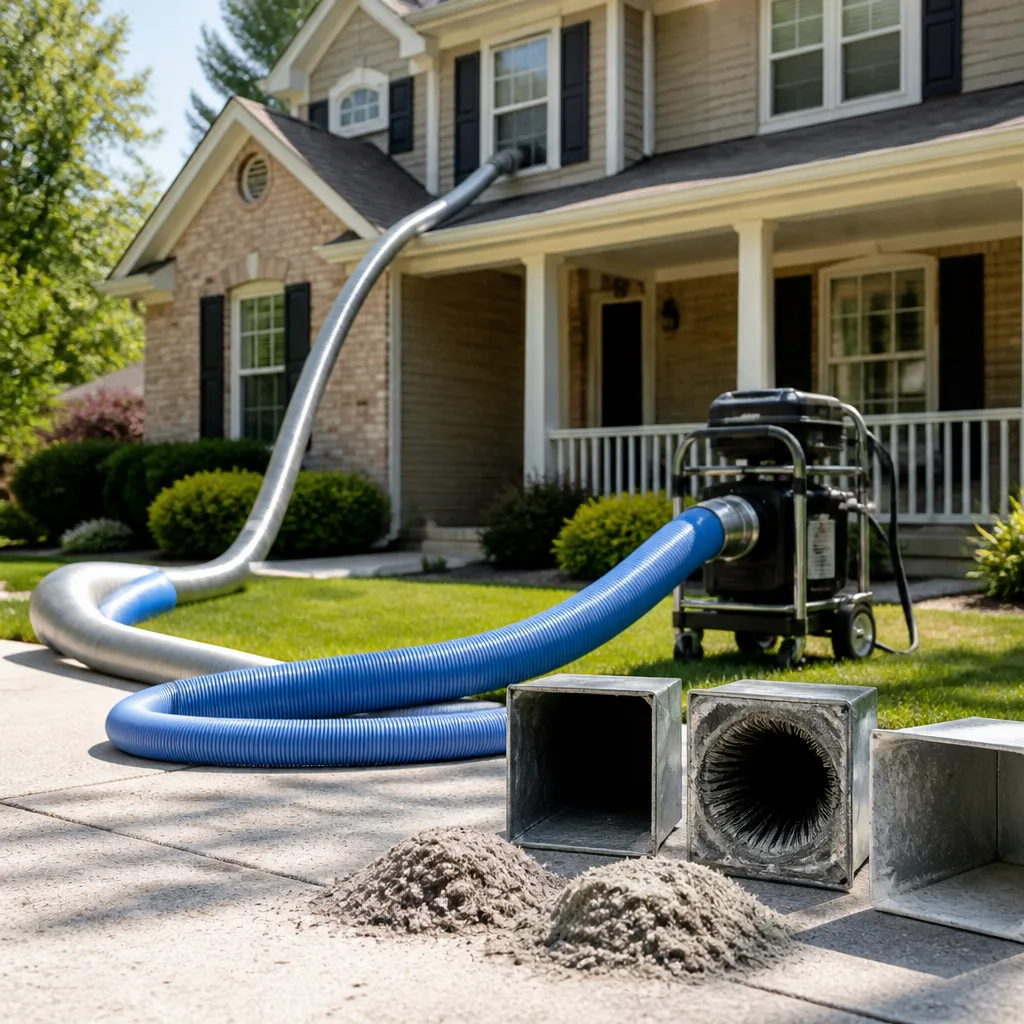 Whole-home duct cleaning
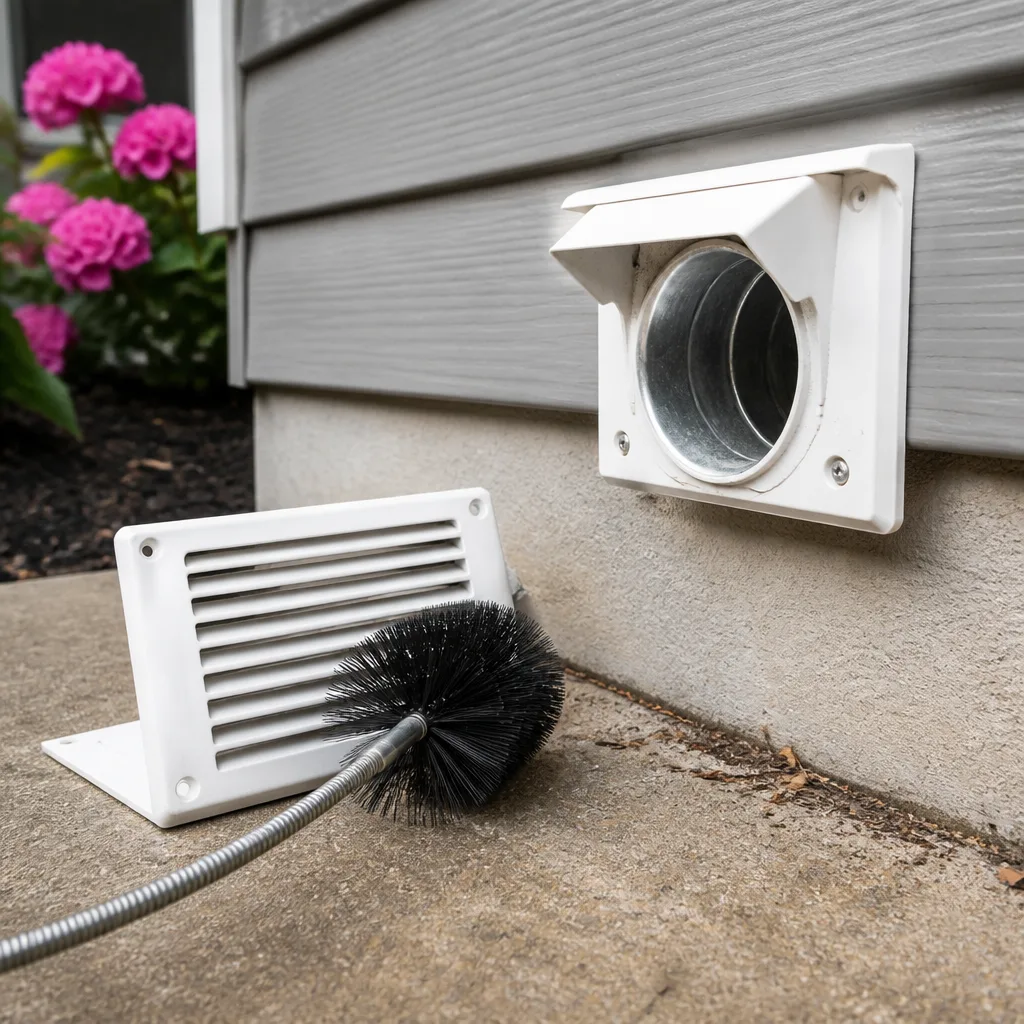 Dryer vent cleaning
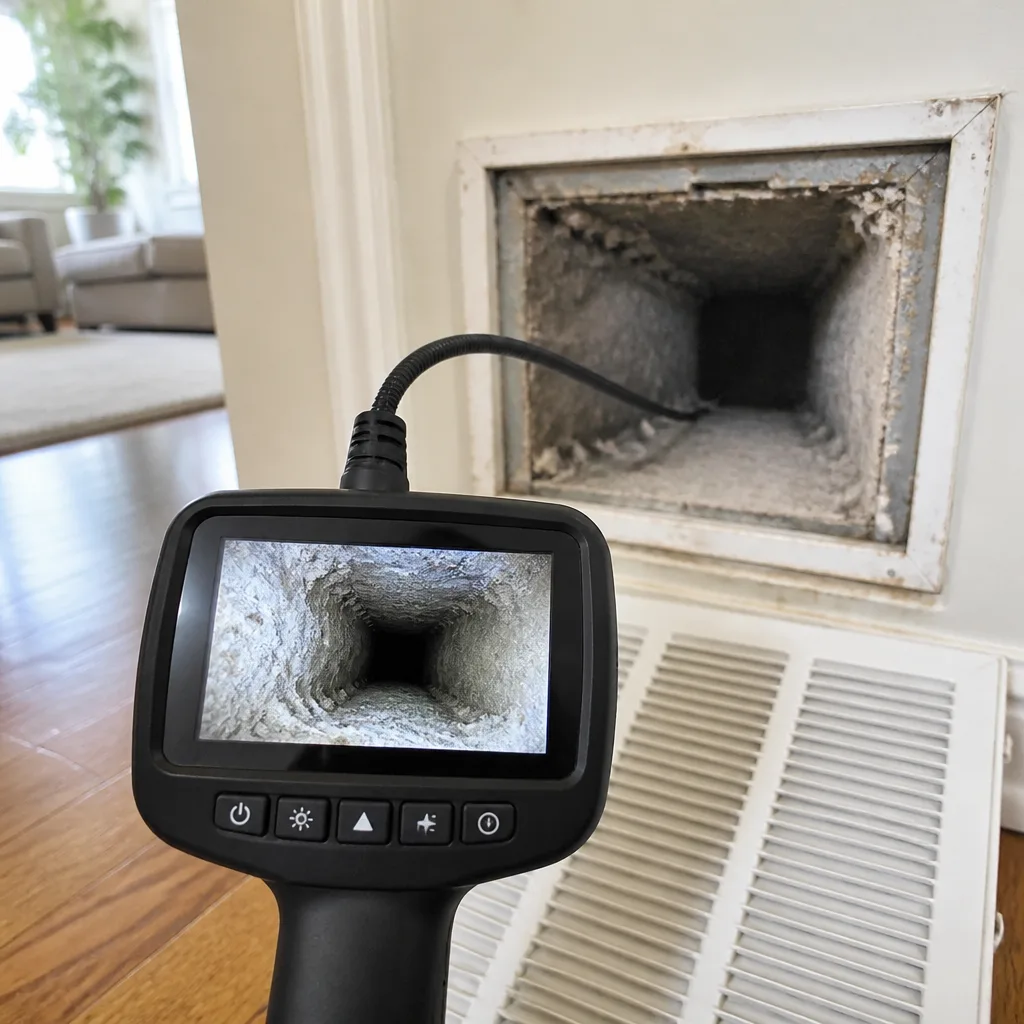 Camera inspection
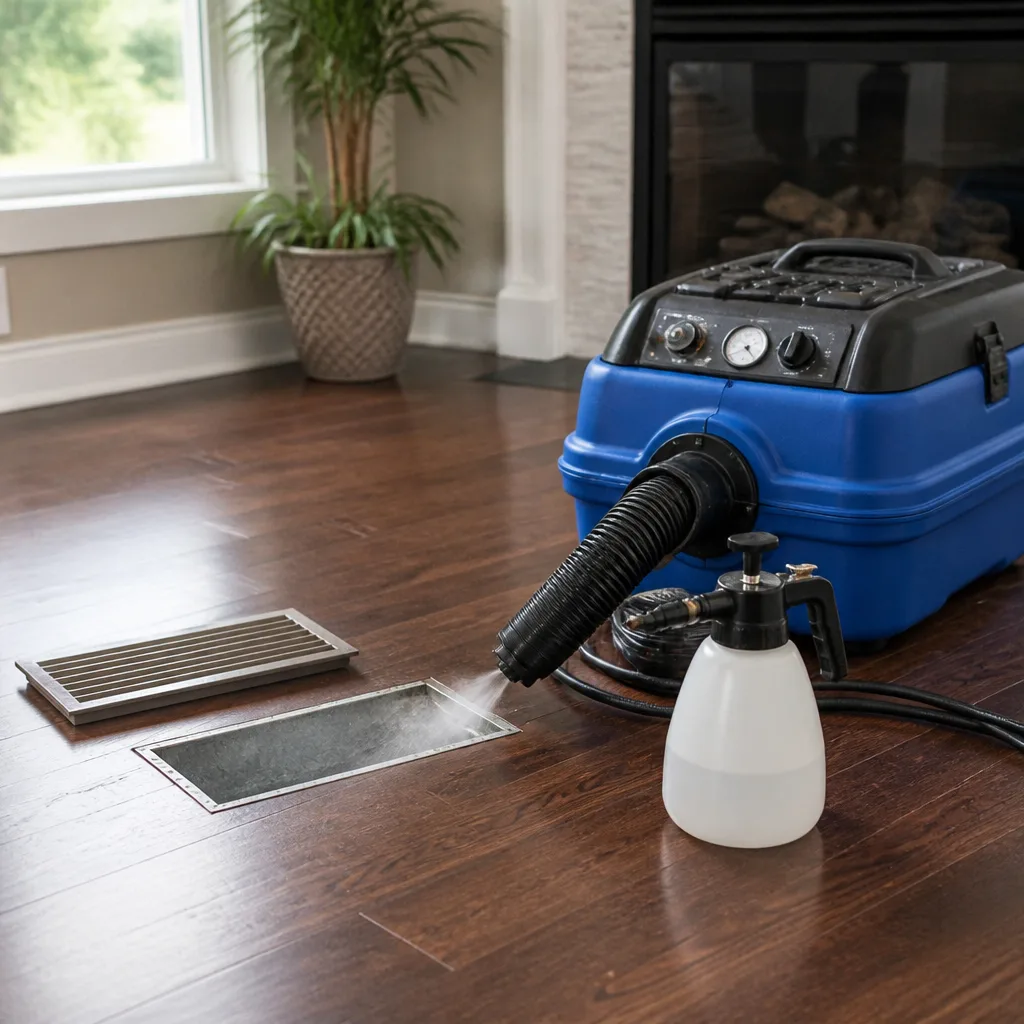 Sanitizing & deodorizing
Whole-system duct and dryer vent check with before-and-after photos - you see exactly what came out of your vents
That "$99 whole-house special" is a bait ad - the real number appears once they are in your hallway, or the "clean" is a shop-vac at the register. We photograph the inside of your ducts before and after instead.
Air Duct Cleaning Maintenance Checklist for Peralta Hills Homeowners
The filter box says to change every 90 days. In Peralta Hills, that number is wrong for a good part of the year. When Santa Ana winds pull dry, dust-laden inland air across the canyons and through the ranch properties around here, a filter can load up in a fraction of the time the packaging suggests. And a clogged filter sitting upstream of a dirty duct system doesn’t protect anything. It just compounds the problem, choking airflow while the ducts behind it keep collecting whatever gets past. What follows is a working checklist for Peralta Hills homeowners: what to inspect, when to inspect it, and where the line sits between what you can reasonably do yourself and what needs professional equipment.
Quick Answer
A sound duct maintenance checklist in Peralta Hills follows the local seasons, not the calendar on a filter box. Change filters more often during Santa Ana season and the spring pollen peak, visually inspect registers and grilles every month, and schedule professional deep cleaning roughly every two to three years, or sooner after a renovation or a visible mold finding. The checklist below breaks each task down by month and marks clearly which ones you can do and which ones need Rotobrush and Nikro-class equipment.
Styles & brands we work with
- Whole-home duct cleaning
- Dryer vent cleaning
- Camera inspection
- Sanitizing & deodorizing
Table of Contents
- A Month-by-Month Calendar for Peralta Hills
- How to Self-Inspect Registers, Grilles, and Visible Ducts
- Choosing the Right MERV Rating for Local Air
- DIY Tasks vs. Professional-Equipment Tasks
- Keeping a Dated Log You Can Hand to the Next Contractor
- Adding the Dryer Vent to the Same Checklist
- Why Sealing Belongs With Cleaning
A Month-by-Month Calendar for Peralta Hills
The single biggest mistake in duct maintenance is treating it as one annual event. In Peralta Hills, the demands on an HVAC system shift through the year, and a checklist that doesn’t shift with them will always be behind. Here’s how we frame the year for the homes we work in, whether it’s a hillside property tucked into the canyons or a newer build closer to the canyon edge.
Late winter (roughly January into March): This is your quiet maintenance window. Have a professional inspect the full air pathway before the heavy seasons hit. Check that all registers are open, remove and wash the return grilles, and note any new whistling or rattle. If the system hasn’t been cleaned in more than three years, book the deep clean now, before the busy stretch.
Spring (roughly April into June): Pollen peak. The native chaparral and the ornamental plantings around the canyons all release at once. Change or clean filters on a shorter interval than usual, vacuum registers weekly if anyone in the house is sensitive, and watch for the return grille looking fuzzy. This is when light dust that got in over winter starts showing.
Pre-fire season (roughly late summer into early fall): Make sure exterior vents and intake screens are clear of debris and haven’t been blocked by leaf litter or brush clearance work. If you’ve done any fire-prevention trimming near the house, expect dust and particulate to find its way in and check filters more often for the following weeks.
Post-Santa Ana (after the wind events subside): The most important inspection of the year. Walk every register, check filters, look for grit at the supply outlets. The dry winds push fine particulate into the envelope, and this is when a quick professional assessment pays for itself.
Post-summer HVAC recovery: After months of cooling load, have the system assessed while it’s still warm enough to run the fan and check airflow. Clean or change filters after the heavy-use period, and consider a professional HVAC cleaning if the system has been working hard with a dirty filter for weeks.
How to Self-Inspect Registers, Grilles, and Visible Ducts
You don’t need to disassemble anything to catch the early warning signs. A five-minute walk-through each month, done without tools, reveals most of what a homeowner needs to know about whether the ducts are due for attention.
Start with the supply registers. Look at the fins and the grille face. A light, even haze is normal dust settling. A fuzzy gray coat, dark streaks, or visible debris caught in the fins means particulate is making it through the system and settling at the outlet. Take a photo of each one for the log we’ll get to later.
Then look at the return grille, the largest one, usually central or in a hallway. This is the single best indicator of filter performance. If it looks dirty quickly after a filter change, the filter is either the wrong rating or underperforming for the load. Hold a tissue to it while the fan runs; if it barely moves, airflow is restricted and something upstream is clogged.
Check around the base of each register for streaks or dust trails. Dust trails at the seams suggest a leak in the ductwork, which pulls unconditioned air and particulate in from the crawl space or attic. That’s a repair issue, not just a cleaning issue, and worth flagging. Look at the visible duct runs you can see, usually in a utility space or attic access. Any sagging, tape peeling away at joints, or dark staining on the insulation is a signal to have a professional look.
Finally, smell. Run the fan with the house closed for a few minutes. A musty or earthy smell means moisture has found a home somewhere in the system. That’s the one sign that should not wait for the next scheduled clean.
Choosing the Right MERV Rating for Local Air
Filter selection is where most of the “change every 90 days” advice falls apart. The right filter for a Peralta Hills home isn’t the one the manufacturer lists as a minimum, and it isn’t the highest MERV you can buy. It’s the balance point between capturing the particulate this microclimate throws at you and not choking the airflow the system needs.
- MERV 8: The safe baseline for most homes. Adequate for typical dust and pollen loads, easy on airflow, and the right choice for older ductwork or a system that already runs high static pressure. Change it more often than the box says during Santa Ana season.
- MERV 11: A reasonable step up for households with allergy sensitivity, provided the system is in good repair and not already straining. Still a standard 1-inch or 4-inch depth depending on your filter housing.
- MERV 13: Only sensible with a thicker 4-inch or 5-inch filter cabinet and a clean system. In a 1-inch slot, MERV 13 can knock airflow down and push the blower harder. The gain from marginally better capture is easily lost to higher static pressure.
Match the rating to how the air actually behaves in your part of Peralta Hills. If you’re on a ridge or near canyon open space, you’ll see more wind-borne particulate than a home tucked in a sheltered pocket, and should lean toward more frequent changes at a moderate rating rather than pushing the rating higher. When in doubt, keep the rating moderate and change more often. And if you’re connecting the dots from filtration to broader indoor air quality upgrades, we work with Honeywell and Aprilaire systems and can advise on the filter housing and humidity control side.
DIY Tasks vs. Professional-Equipment Tasks
Knowing which tasks you can own and which need real equipment keeps you from wasting effort and keeps you from getting hurt or doing damage. Here’s the honest split.
Tasks a homeowner can handle:
- Changing and washing filters on schedule.
- Vacuuming and wiping supply and return grilles.
- Visual inspection of registers and visible duct runs (no disassembly).
- Noting and photographing changes for a dated log.
- Keeping exterior vents and intake screens clear of debris.
Tasks that need professional equipment:
- Mechanical agitation of the duct interiors. A shop vacuum pulls at the surface; it doesn’t loosen the bonded dust film on the duct walls. That requires a rotary brush system. Rotobrush is the professional standard for this, and it’s what we use.
- Negative-pressure extraction and containment. If you clean without pulling the debris out and containing it, you just redistribute it into living spaces. Nikro negative-pressure systems are engineered for exactly this and aren’t adapted from another trade.
- HEPA-level filtration for allergen, mold, or post-renovation jobs. Abatement Technologies filtration in the toolkit is what lets a job that starts with visible mold risk or drywall dust end with the space genuinely clean.
- Duct sealing and repair where seams have failed or flexible duct has torn. Cleaning without fixing a leak is wasted work, because the leak recontaminates in short order.
- Sanitizing the air pathway after cleaning to address microbial growth where it’s been confirmed.
That distinction is the whole reason professional-grade equipment, not shop-vac shortcuts, matters. A trained technician may take up to a couple of hours on a typical three-bedroom system with the right tools. A shop vacuum will spread the problem around the house and take just as long doing it.
Keeping a Dated Log You Can Hand to the Next Contractor
The checklist just described is only as useful as the record you keep. A written, dated log turns a scattered set of tasks into a home-maintenance history that a contractor can read at a glance. In our experience, it’s also the single best protection against paying for work that’s already been done or missing a problem that’s been quietly growing.
Keep it simple. A small notebook or a document on the phone, one line per entry. Date it, write what you did, and note anything you saw. If it was a professional service, ask them to write their observations in the same log before they leave. Contractors like this. It tells us what the system has been through, what the last filter rating was and how fast it loaded, whether a leak was found and sealed, and how the ducts have deteriorated over time rather than just the state they’re in today.
A well-kept log includes:
- Every filter change: date, MERV rating, and how dirty it looked.
- A monthly note of register condition you can compare over months.
- Every professional visit: what was done, what was observed, what was flagged for next time.
- Any renovation, fire, flood, or pest issue that could affect the ductwork.
- Any change in the home that could shift airflow: a new room added, a return closed, a system upgraded.
That log is also how a new buyer establishes a clean slate. If you’re inheriting a home in Peralta Hills, ask for the log. If there isn’t one, a professional inspection before move-in is the honest starting point, and we can advise on what a proper air duct cleaning should include.
Adding the Dryer Vent to the Same Checklist
Air duct maintenance in Peralta Hills should include the dryer vent, even though it’s a separate system. Lint buildup in a dryer vent is one of the leading causes of residential fires, and it’s a fire-safety service many duct specialists omit. If you’re checking the HVAC ductwork, you’re already in the right mindset to check the dryer vent too.
The maintenance side is simple. The pro side is a genuine equipment job. On the DIY end: clear lint out of the lint trap after each load, and at the same time each season, disconnect the vent behind the dryer and vacuum the first couple of feet. If the line is long or runs through a wall, that’s where it gets hard, and you shouldn’t try to fish a shop vacuum down a long enclosure. Get professional dryer vent cleaning once a year or so, more often if you dry heavy loads daily. Watch for the dryer taking longer than it used to, or clothes that come out hot, as signs the line is restricting.
Why Sealing Belongs With Cleaning
Cleaning and repair aren’t separate errands. They’re two halves of the same job, and doing them out of order is a common way to waste money. When the cleaning is done but the seals are compromised, dust from the attic or crawl space reenters the system within weeks and the work is partly undone. When repair happens on a dirty line, the technician is sealing a seal around contamination. Do them together.
A properly sealed system in a Peralta Hills home holds its pressure, moves conditioned air where it’s meant to go, and keeps outdoor particulate where it belongs. That means lower dust at the registers, better airflow, and a quiet drop in the energy wasted moving air you’re not using. When we work a home, we seal what we clean. If the inspection found sagging flex runs, peeling tape at the joints, or leaks at the collar, those become part of the same visit and the same written estimate.
Duct Repair & Sealing is one of the five core services we offer, alongside Air Duct Cleaning Peralta Hills, Dryer Vent Cleaning, HVAC Cleaning, and Air Quality & Sanitizing. That structure exists specifically so that the full air pathway is handled by one provider and the log, the repair, and the cleaning all line up.
Common Mistakes to Avoid
- Following the filter box timing without adjusting for Santa Ana season. The manufacturer interval is right for average conditions. Peralta Hills is not average during wind events, and a filter that’s been running three months is often already half-loaded before the winds arrive.
- Buying the highest MERV filter the store sells. A MERV 13 in a 1-inch slot on a system that’s already high static pressure does more harm than good. The filter removes less when airflow is choked, and the blower suffers.
- Using a shop vacuum to clean the ducts. It pulls loose surface dust and blows the rest into the house. A professional cleaning needs agitation from a rotary brush system and negative-pressure extraction to actually collect the debris.
- Skipping the dryer vent because it isn’t part of the HVAC. It’s the highest fire-safety item on the checklist, and the cost of ignoring it is not a dollar figure you’ll ever want to learn the hard way.
- Waiting for a musty smell before taking action. Smell is a late symptom, not an early one. The plasticizer or moisture issue behind it has usually been developing for months.
- Never keeping a written record. Without a dated log, the next contractor works blind, and you can’t distinguish a problem that is slowly worsening from one that’s already been addressed.
- Dealing with duct cleaning and duct repair as separate jobs. They’re not. Cleaning a leaking system without repairing the leak is wasted effort, and repairing a dirty system is wasted money.
See the difference
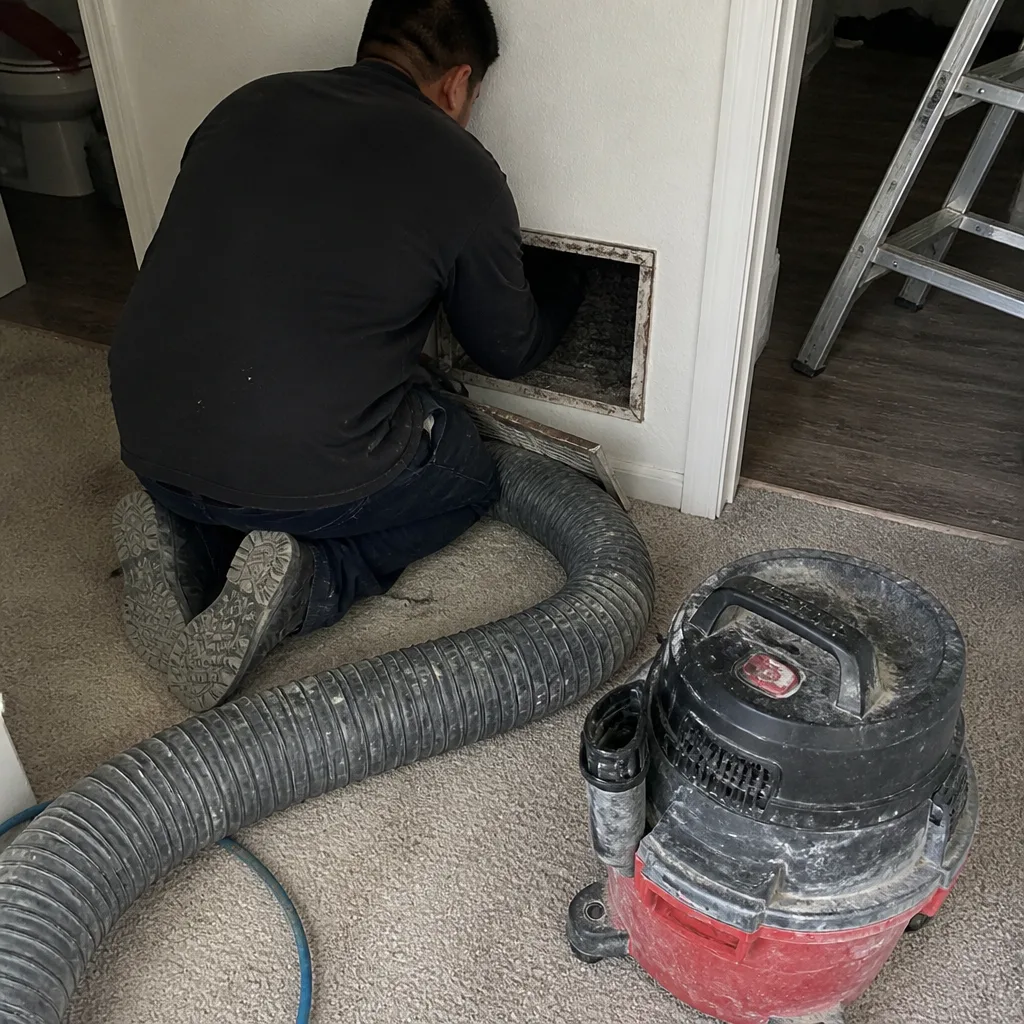 Before
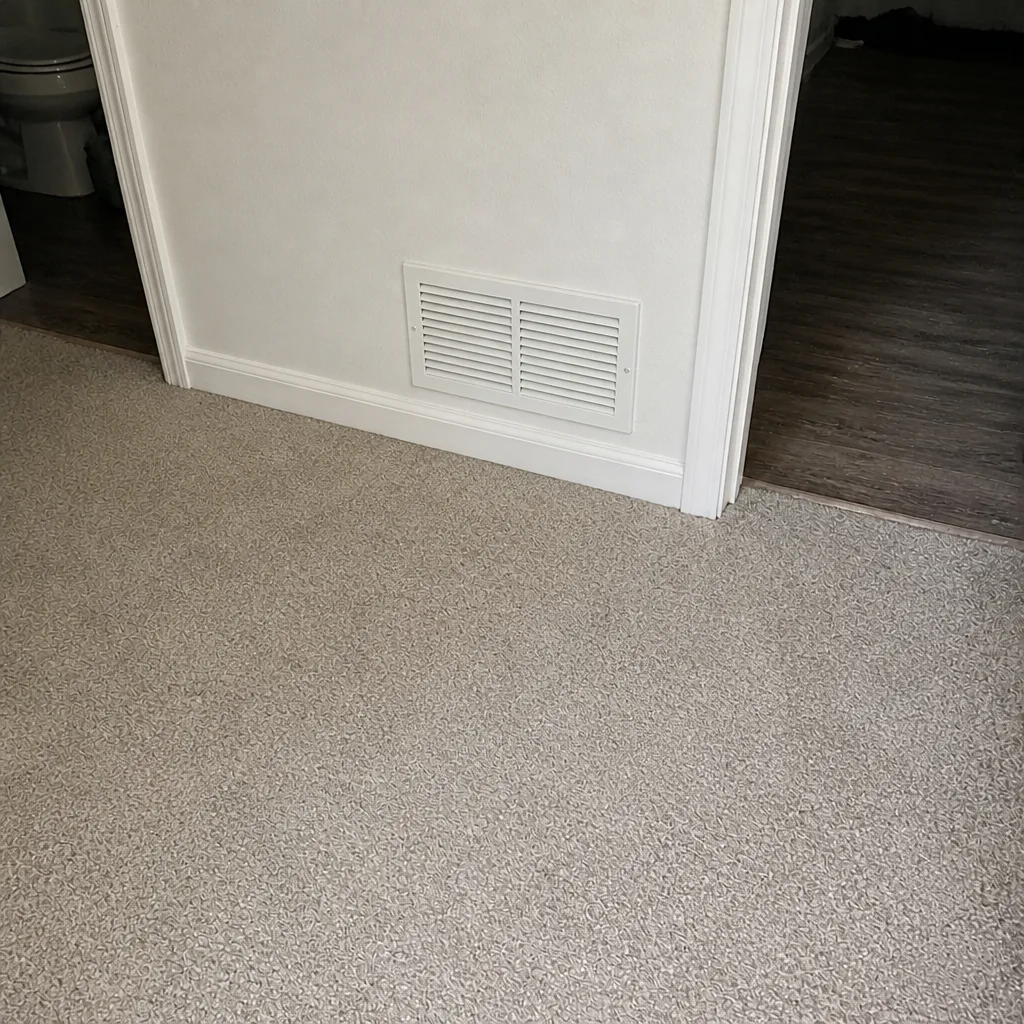 After
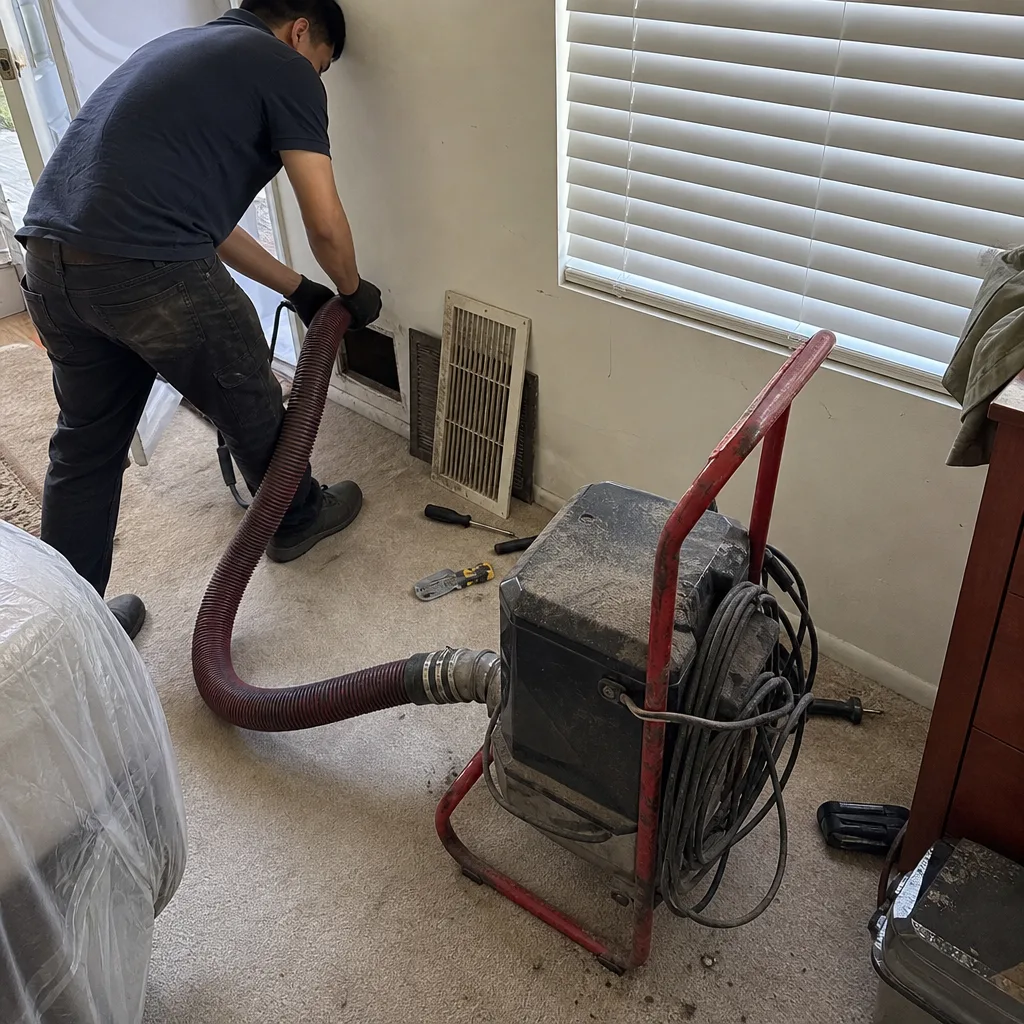 Before
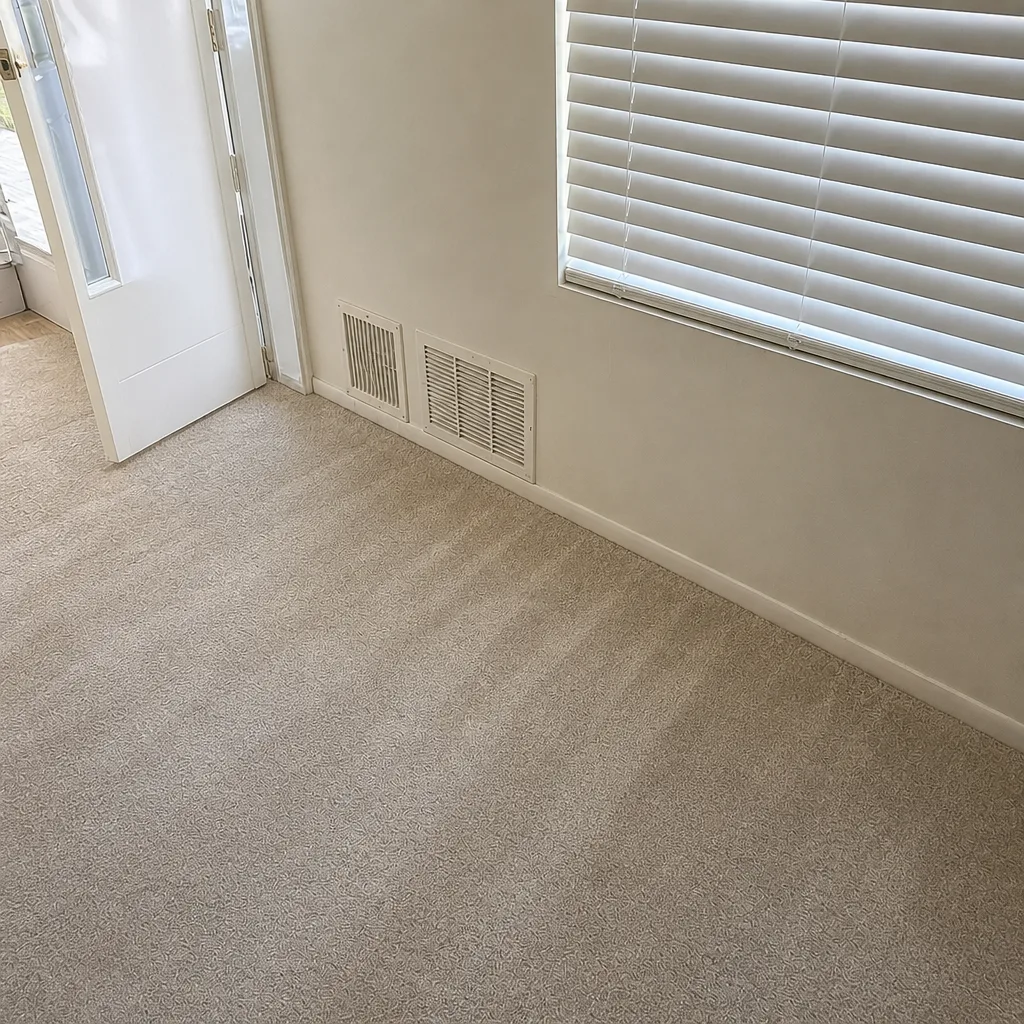 After
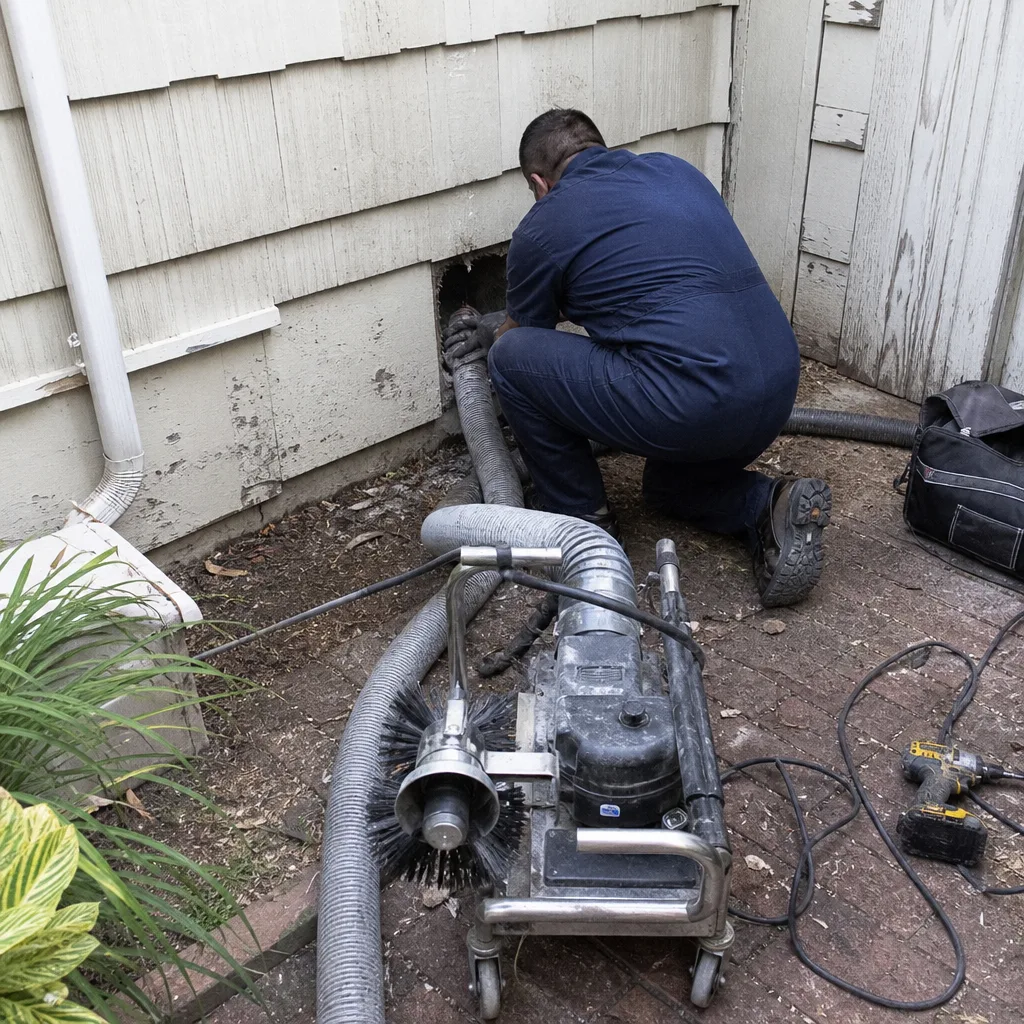 Before
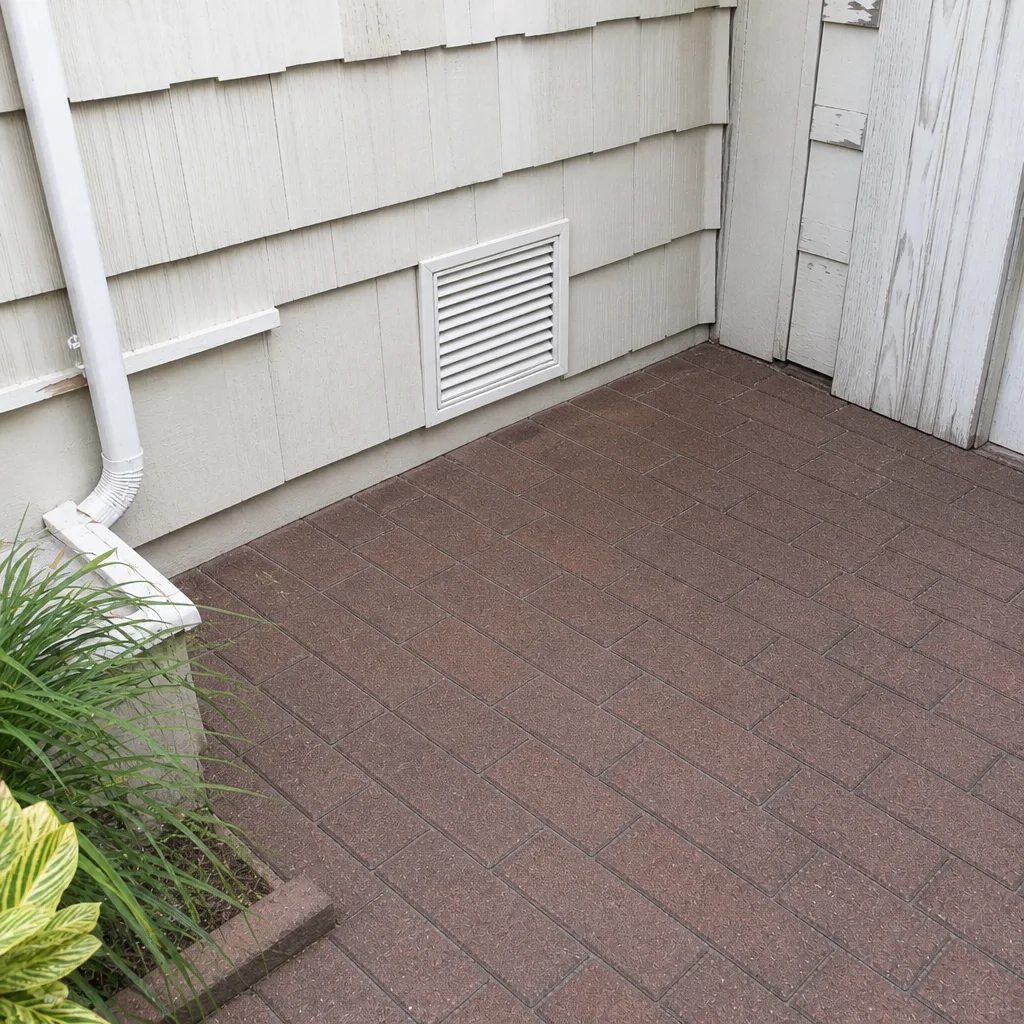 After
When to Call a Professional
Some signals are worth a phone call rather than a spot check. If you see a musty or earthy smell when the fan runs, that’s a moisture finding and should be assessed promptly. If a return grille is visibly dirty within days of a filter change, or a tissue held to a supply register barely moves, airflow is restricted and needs diagnosis. If you’ve just finished a major renovation, or your system has been running on a dirty filter for a long stretch, cleaning needs professional equipment. If the ducts have never been cleaned according to any record, the assumption that they’re fine is one you can’t verify.
Free estimates are available in Peralta Hills from Air Duct Cleaning Peralta Hills. Call (844) 625-7411 to talk through what the checklist has shown and get a written scope before anything is scheduled.
Frequently Asked Questions
Clean every two to three years as a baseline, and sooner after a renovation, a visible mold finding, or a musty smell that won’t go away. The right interval in this microclimate depends on how exposed your property is to wind-driven particulate during Santa Ana season and whether the system has been run on dirty filters. A written estimate after a professional inspection sets the real timeline.
Most whole-system cleanings fall in the range of a few hundred dollars to around a thousand, depending on the size of the home and how many runs are involved. The important thing is that you’re quoted per system, not per vent, and that the price is agreed in writing before work starts. Call (844) 625-7411 for a free estimate, so you’re comparing a real number rather than a coupon headline.
A cheap quote usually reflects a shop-vac-based cleaning without agitation or negative-pressure containment and without a real scope of work. The low number becomes much larger once a technician is on site and finds what the first price didn’t include. One flat price per system, agreed in advance, is the only quote structure that lets you compare fairly. Call (844) 625-7411 for a written estimate you can compare line for line.
Ask for before-and-after photos of your own ducts. A professional cleaning can be documented from the first view down the run to the final one, with the same camera and the same access point. If the provider can’t or won’t document, that’s a fair reason to look elsewhere. Call (844) 625-7411 to hear what our documented process involves.
Yes. The dry wind events push fine particulate into the home envelope and through the filter far faster than baseline conditions. Check the filter more often during and immediately after those events, and change it as soon as it looks loaded rather than waiting for the manufacturer interval. Call (844) 625-7411 if you’re seeing rapid loading and want to know why.
Yes. Dryer vent cleaning is one of our five core services, and it belongs on the same checklist because lint buildup in the vent is a genuine fire-safety concern. When we’re already assessing the HVAC side, it makes sense to assess the dryer vent at the same time, and to note both in the log. Call (844) 625-7411 for a free estimate covering both.
The Bottom Line
The right checklist for a Peralta Hills home runs on local seasons, not on the filter box calendar. Filter changes belong frequent during Santa Ana and spring pollen peaks, MERV ratings should match airflow rather than maximum capture, and self-inspection is worth a monthly walk-through that never requires a tool. The tasks that actually move the needle, agitation with Rotobrush, extraction with Nikro, HEPA-level filtration with Abatement Technologies, sealing and repair, and sanitizing, need professional equipment and a written scope. Keep the log, add the dryer vent, and get a professional assessment before a small issue becomes a full repair. Our technicians have up to 11 years of experience, and the estimate is free.
Call (844) 625-7411 for a free estimate. We answer 24/7. Fast dispatch from 7am to 7pm, Sunday through Friday. We’re closed on Saturday. Every estimate is written, the price is set per system, and you’ll see documented before-and-after photos of your own ducts.
Written by the team at Air Duct Cleaning Peralta Hills.