
Last updated November 25, 2026
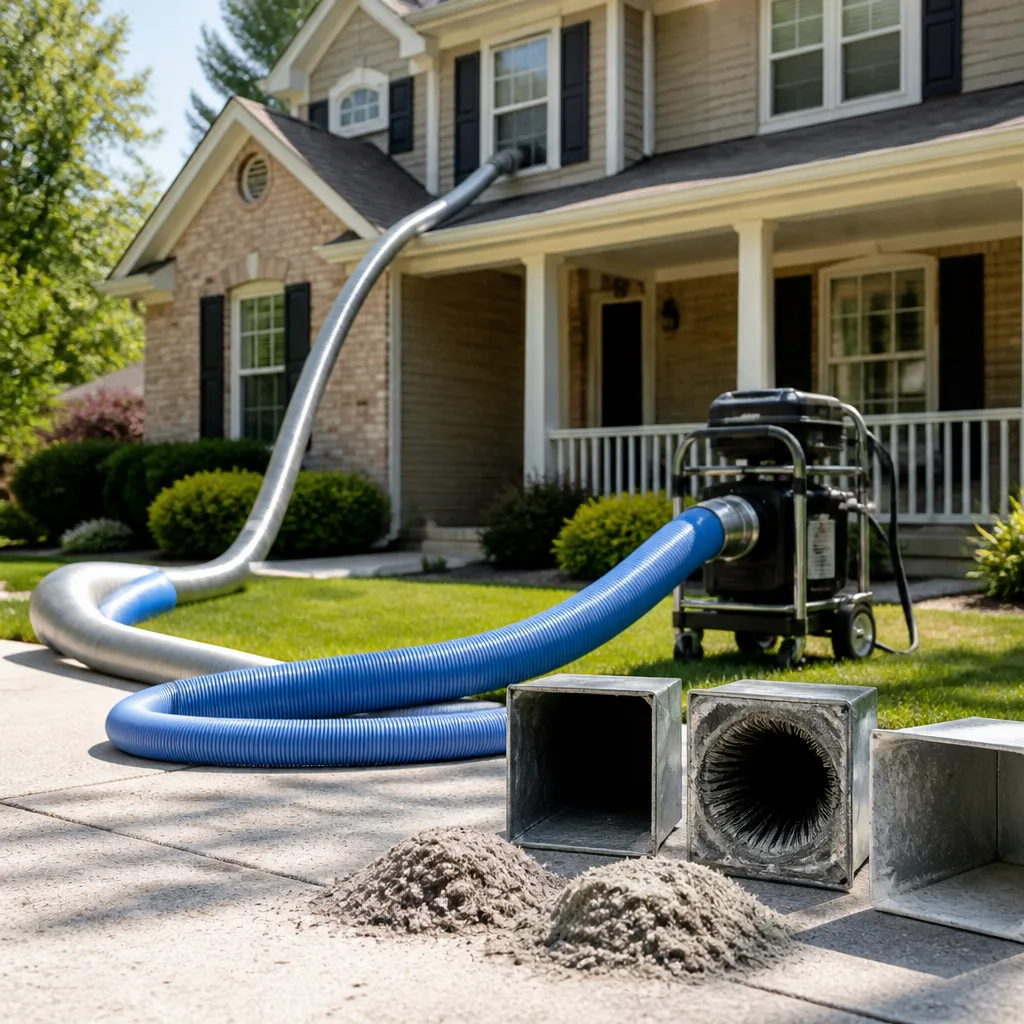 Whole-home duct cleaning
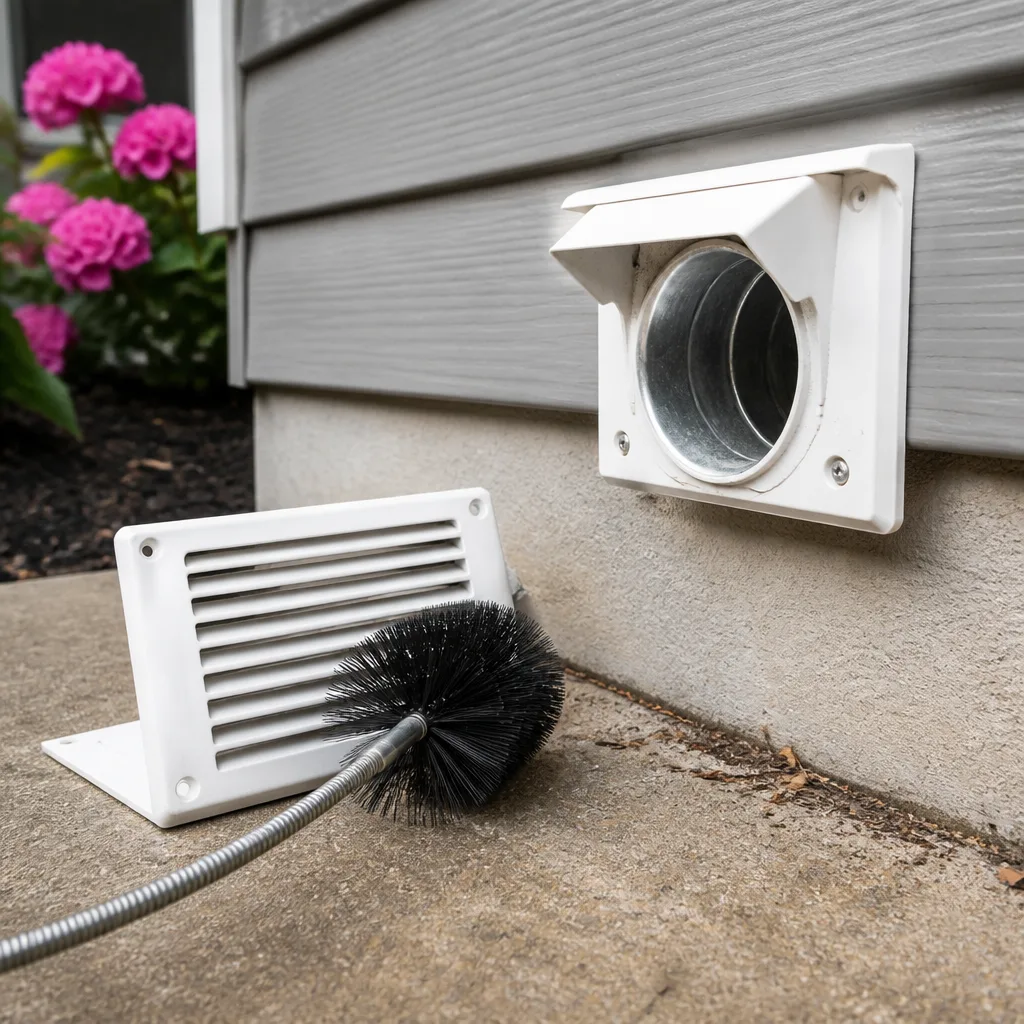 Dryer vent cleaning
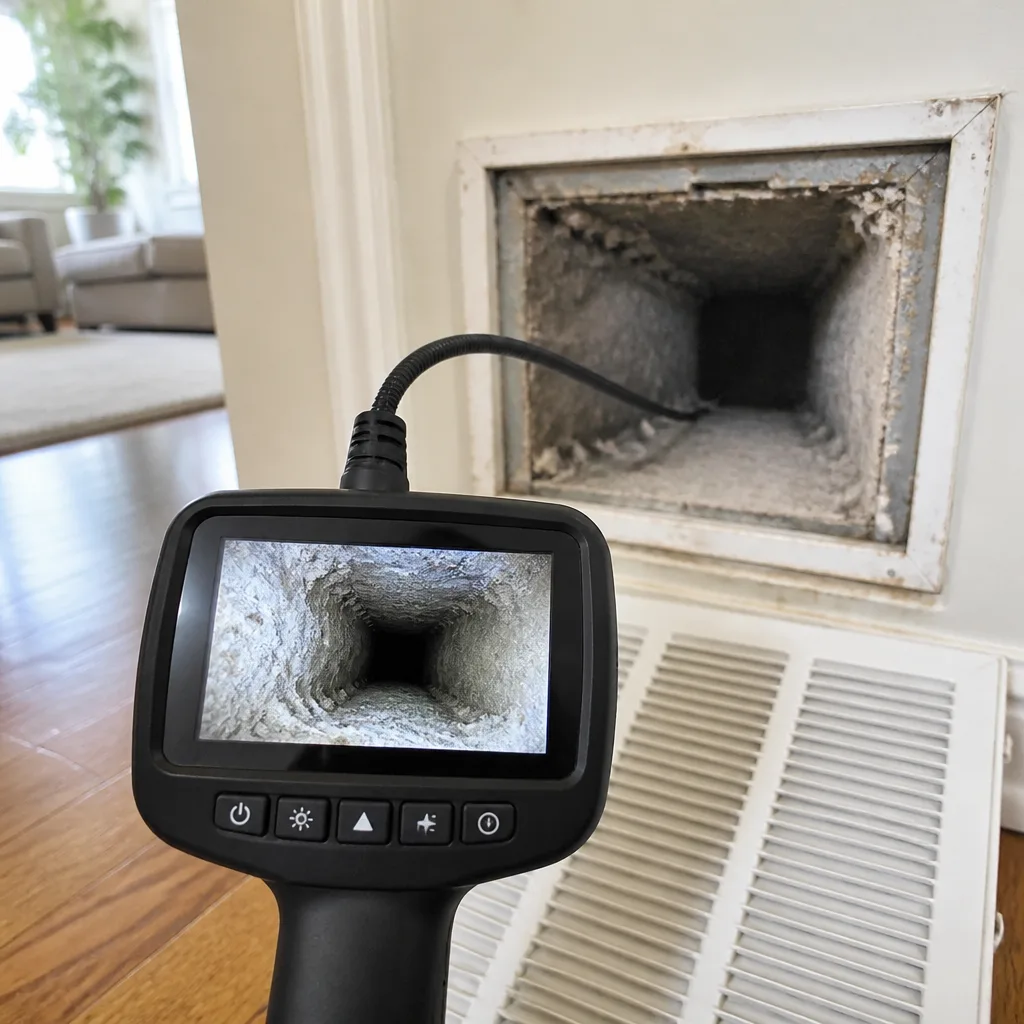 Camera inspection
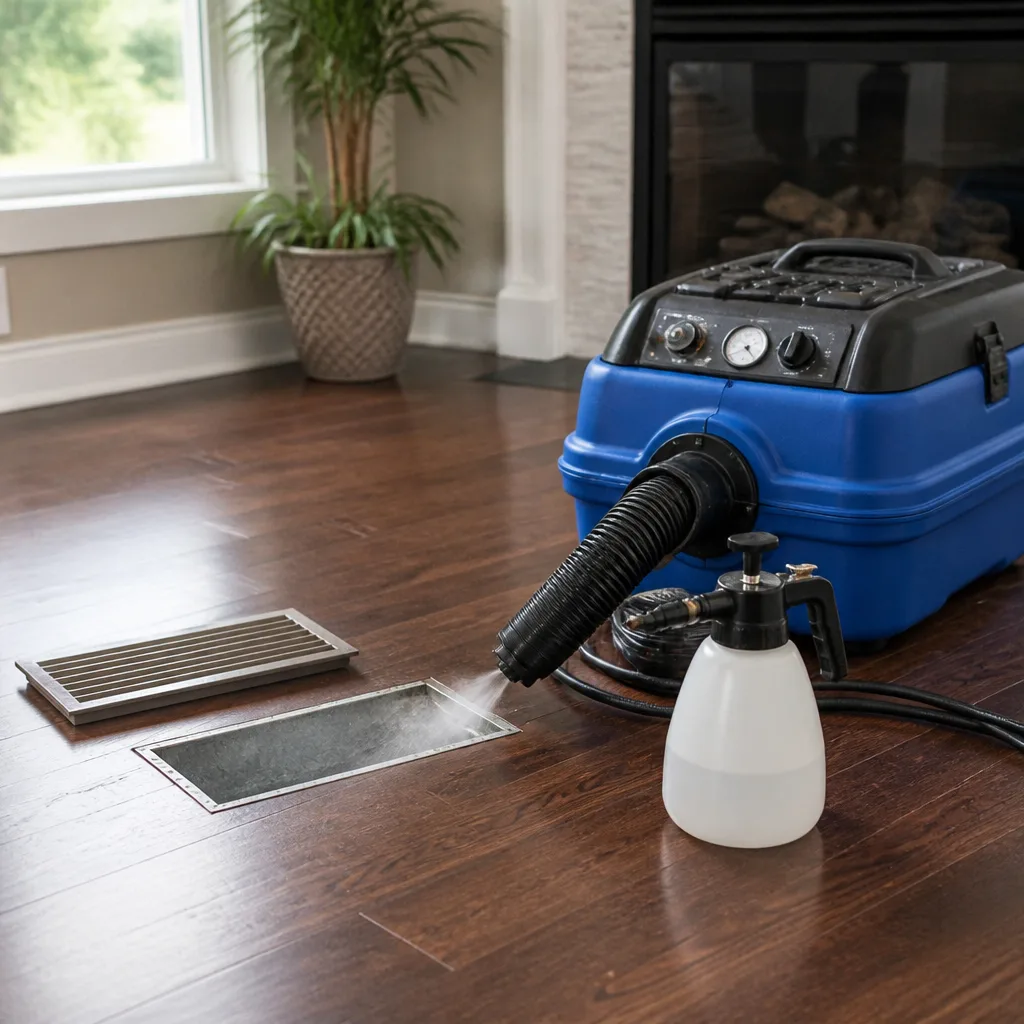 Sanitizing & deodorizing
Whole-system duct and dryer vent check with before-and-after photos - you see exactly what came out of your vents
That "$99 whole-house special" is a bait ad - the real number appears once they are in your hallway, or the "clean" is a shop-vac at the register. We photograph the inside of your ducts before and after instead.
DIY vs Professional Air Duct Cleaning: The Peralta Hills Homeowner’s Decision Guide
Most homeowners assume duct cleaning is an all-or-nothing decision: either you vacuum every register in the house yourself or you hand the whole system to a truck-mounted crew. That’s not how the physics works. A consumer dryer vent brush kit and a handheld shop vacuum genuinely can clean accessible register faces and the first few feet of a branch run. Those same tools pointed down a 40-foot trunk line or into a contaminated air handler cabinet don’t clean anything; they move debris from one part of the system to another. The difference isn’t effort, it’s airflow control. This guide maps the exact line between what’s reasonable to own yourself and what requires negative-pressure extraction and rotary agitation, so you can decide in Peralta Hills with actual information instead of guesswork.
Quick Answer
DIY air duct cleaning in Peralta Hills is genuinely sufficient for two narrow tasks: wiping down accessible register grilles and the short branch runs behind them, and keeping the dryer vent clear of lint. Everything past the first few feet of ductwork, and everything inside the air handler, needs professional negative-pressure extraction with rotary agitation. Without containment, DIY tools push contamination into living space rather than removing it. The limit isn’t skill or bravery, it’s equipment and airflow direction.
Styles & brands we work with
- Whole-home duct cleaning
- Dryer vent cleaning
- Camera inspection
- Sanitizing & deodorizing
Table of Contents
- What DIY Tools Can Actually Reach (and What They Can’t)
- The Three Jobs Where DIY Is Genuinely Sufficient
- Why Pushing Debris Without Containment Makes Air Quality Worse
- The Real Cost Math for Peralta Hills Home Sizes
- The Hybrid Model: What to Own, What to Outsource
- Signs Your Ducts Are Past the DIY Stage
- What a Professional Cleaning Actually Involves
- Common Mistakes to Avoid
- When to Call a Professional
What DIY Tools Can Actually Reach (and What They Can’t)
The capability question comes down to two variables: reach and airflow. A typical consumer vacuum creates airflow in one direction and pulls what’s loose. Professional extraction systems create negative pressure across the whole system, meaning air (and debris) moves toward the machine rather than into the room. That’s the fundamental divide between consumer cleaning and remediation-grade work.
Here’s an honest breakdown of what each equipment class can and cannot do in a Peralta Hills home:
- Shop vacuum + crevice tool: Reaches register grilles and the first 6 to 12 inches of branch runs. Lifts loose dust and pet hair. Cannot reach trunk lines, and pushes fine particulate back into the room without a HEPA filter and proper containment.
- Consumer dryer vent brush kit: Genuinely effective on dryer vents from the interior to a few feet out. Underpowered for anything longer than a short straight run, and unable to navigate 90-degree elbows in long duct sections.
- Rotary brush on a drill attachment: Reaches past the register, but without simultaneous negative-pressure extraction it just agitates contamination into suspension.
- Rotobrush rotary agitation system: Feeds a rotating brush through the duct while a simultaneous vacuum pulls loosened debris into a sealed collection unit. Reaches branch runs and portions of the trunk line.
- Nikro negative-pressure equipment: Creates an enclosure around the system so the entire duct network is under vacuum while a technician agitates the interior. The standard for real mechanical cleaning, and what separates professional work from cosmetic.
- Abatement Technologies filtration: the HEPA-grade extraction component that removes fine particulate, mold spores, and post-renovation dust from the airstream during and after the cleaning, rather than cycling it back through the registers.
What this map shows is that DIY owns the surface layer. Professional equipment owns the interior. A homeowner with reasonable tools can maintain the accessible edges of the system; nobody without purpose-built equipment can address what’s twelve feet inside a trunk line.
The Three Jobs Where DIY Is Genuinely Sufficient
There are exactly three scenarios where we tell Peralta Hills homeowners to skip professional service and handle it themselves. They’re worth knowing precisely, because knowing when not to call is as valuable as knowing when to.
1. Post-renovation dust on accessible register faces
After a kitchen or bathroom remodel, drywall dust settles on register faces and the immediate interior edge of the grille. A damp microfiber cloth and a shop vacuum take care of this in minutes. No professional visit is warranted if the visible contamination is only at the surface. What does warrant a call is when that dust entered the system while the HVAC was running during demolition, because at that point it’s distributed well past the registers. If you see dust in the supply air after running the system for an hour, it’s inside the ducts, not on the grille.
2. Dryer vent maintenance
Dryer lint is one of the leading causes of residential fires, and the most common accumulation point is accessible: the transition duct behind the dryer and the exterior vent hood. Pulling the dryer out once a year and vacuuming the transition duct, then clearing the hood flap, is a reasonable owner task. What’s not reasonable is a run longer than the reach of a consumer brush kit, or a vent that discharges through a roof or long wall run. Those need the kind of dryer vent cleaning that uses rotary equipment capable of walking the full length of the run and pulling the lint column out intact.
3. Pre-service visual inspection
Before you ever call any contractor, you can look. Remove a few register grilles, hold a flashlight into the duct, and take a photo. That inspection tells you three things: whether you see visible dust accumulation, whether you smell anything musty or stale, and whether the interior duct surface is intact or damaged. That information makes any call more productive, and it helps you decide whether you’re dealing with a maintenance issue or a genuine contamination problem. It’s the single most useful DIY task on the list, and it costs nothing.
Why Pushing Debris Without Containment Makes Air Quality Worse
Here’s the part most DIY guides skip: ductwork is a pressure system. When the HVAC fan is running, the supply side is pressurized and the return side is under negative pressure. When you insert a vacuum or a brush into a supply register and agitate the interior surface, you’re releasing years of accumulated particulate into a chamber that’s actively blowing air back into the room you’re standing in. The visible dust you see rise from the register is the fraction large enough to see. The rest – fine particulate, mold spores, allergen-bearing particulate – stays suspended in the airstream and settles across the room surfaces over the following hours.
This isn’t theoretical. It’s why we use negative-pressure containment on every job. The technique is to enclose the system under a continuous vacuum, so the entire duct network is under negative pressure relative to the room before any agitation begins. When the rotary brush loosens material inside the duct, the debris moves toward the extraction unit, not back into the living space. Abatement Technologies filtration in that airstream catches the fine particulate before it exits, and the process runs clean.
There’s also the matter of what a shop vacuum actually does to a duct system. Consumer vacuums create localized airflow, not system-wide negative pressure, and they discharge exhaust into the same room. A vacuum sitting in your hallway while you clean a register is a debris redistribution system dressed as a cleaning tool. The homeowner who reports feeling worse after a DIY attempt isn’t imagining it: the airstream math is against them.
The Real Cost Math for Peralta Hills Home Sizes
The DIY case rests on the assumption that the tools cost less than the service. In practice, the math rarely favors the homeowner once you count equipment rental, time, and partial effectiveness. Here’s the realistic breakdown for a typical Peralta Hills home – the neighborhood’s lot sizes mean most homes here have duct runs long enough that branch reach matters:
- Shop vacuum rental: $30 to $50 for a day, plus the HEPA filter cartridge if you want it to do any air-quality work worth the name.
- Rotary brush kit: $30 to $60 for a drill-attached version, which as noted above agitates without extracting.
- Dryer vent brush kit: $20 to $40, and useful enough that we count it as reasonable owner equipment.
- Time: a full Saturday for a homeowner attempting every reachable register, plus the cleanup.
- Effectiveness: limited to register faces and first lengths of branch runs. Trunk lines and the air handler remain untouched.
Add the cost of a second attempt six months later when the dust returns, and the homeowner is in for the same money they’d spend on professional cleaning, with none of the extraction coverage. For a small home with a single system and a short duct network, DIY genuinely can make sense as a stopgap between professional visits. For anything with a full trunk line, a central return, or more than one zone, professional cleaning is the more honest math. We’re happy to walk through the numbers with a free estimate for Peralta Hills homeowners – the estimate sets the final price, and the price is set per job, not per register.
The alternative you should decline: any contractor quoting per-vent prices. One flat price per system is a fair quote. Per-vent pricing is a structure that rewards the salesperson for finding more problems.
The Hybrid Model: What to Own, What to Outsource
The most defensible path for most homeowners isn’t DIY or professional service. It’s a hybrid where the homeowner owns the accessible maintenance and the professional handles the extraction work on a longer cycle. This stretches the interval between professional visits without letting the system drift into contamination.
Here’s the division we recommend to Peralta Hills clients:
- Monthly: Replace or clean the HVAC filter. This is the single highest-impact owner task, and it prevents more buildup than any duct cleaning schedule can compensate for after the fact.
- Monthly: Vacuum register grilles with a brush attachment. Removes the surface layer of dust before it becomes airborne.
- Quarterly: Run the system with the fan on for 15 minutes, then note any dust trails at register faces or unusual musty smells. That observation is your early-warning system.
- Annually: Pull the dryer and clear the transition duct and exterior hood. One of the most effective home-safety habits a homeowner can adopt.
- Every few years: Schedule air duct cleaning for a full mechanical and extraction pass. This is where the rotary agitation and negative-pressure equipment do the work no consumer tool can replicate.
We work with Honeywell and Aprilaire filtration and humidity systems in the same visit, so if a cleaning turns up a system that would benefit from a higher-MERV filter or a better humidity control setup, that’s addressable without a separate appointment. Clean ducts and correct filtration reinforce each other – clean air starts at the source, and a good filter keeps it that way.
We also fold duct repair and sealing into the cleaning visit. Ducts that are clean but leaking at the joints are duct systems that re-contaminate quickly from attic or crawlspace air. Sealing what we clean is one of the reasons a professional cycle can be stretched further between visits than a purely cosmetic clean.
Signs Your Ducts Are Past the DIY Stage
The decision isn’t always obvious from visual inspection, but there are specific signals that reliably indicate the system needs professional attention rather than a homeowner pass. If any of these are true in your Peralta Hills home, DIY is no longer the right answer:
- Visible dust trails at register faces after the system has been running – this means dust is being distributed from inside the ducts, not settling on grilles.
- Persistent musty or stale odor when the HVAC fan runs, particularly on the first system start after a warm spell. That odor is biological growth in a moist location, usually at the evaporator coil or in a duct run near the air handler.
- Allergy symptoms that worsen indoors when the system is running, especially after a filter change. This pattern suggests interior duct contamination is cycling back through the supply air.
- Visible mold or microbial growth inside a register or at the air handler cabinet. Do not attempt to handle mold contamination yourself; it needs proper containment and sanitizing.
- Post-renovation contamination where the HVAC ran during demolition or drywall work. Fine construction dust infiltrates far past the registers and requires extraction-grade equipment to remove.
- A recent move-in where the previous owner’s maintenance history is unknown. A verified clean slate before move-in is a reasonable investment.
- Rising energy bills without a corresponding change in usage – restricted airflow from duct accumulation or leaks is one of the common culprits.
Any three of these together make a strong case for professional cleaning. Two of them, plus a recent renovation or move-in, make the case conclusive.
What a Professional Cleaning Actually Involves
Understanding the professional process makes the DIY boundary clearer. Here’s what a real cleaning involves – the steps are listed so you can compare to any quote you receive and see what’s genuinely included:
- System assessment and containment setup: We map the duct layout, locate supply and return trunks, and seal the system in a negative-pressure enclosure using Nikro equipment.
- Register and grille removal: Grilles come off so the duct interior is fully accessible to the brush and extraction line.
- Rotary agitation: A Rotobrush system feeds a rotating brush through branch runs and into the trunk line, loosening accumulated debris from the duct walls.
- Negative-pressure extraction: While agitation runs, the containment system pulls loosened material and airborne particulate into a sealed collection unit. Nothing cycles back into the room.
- Air handler cabinet cleaning: The blower wheel, coil face, and cabinet interior are cleaned as part of HVAC cleaning. A system with a dirty air handler re-contaminates the ducts within months if this step is skipped.
- Sanitizing and air quality treatment: Where biological growth or allergen load is present, we apply a treatment appropriate to the system and follow with filtration.
- Duct repair and sealing: Leaking joints, disconnected runs, and damaged sections are addressed as part of the same visit – we seal what we clean.
- Before-and-after documentation: Photos of your ducts, taken before and after, so you can see exactly what changed.
The tools matter, and they’re the reason we lead with them. Rotobrush and Nikro systems are purpose-built for ductwork – the same equipment class used by certified HVAC restoration contractors. A shop vacuum adapted from another trade is a different category of tool, and it produces a different category of result.
You can see the full scope of what we do on our air duct cleaning Peralta Hills page, and if you want a broader view of the whole-home air pathway, that’s where to start.
See the difference
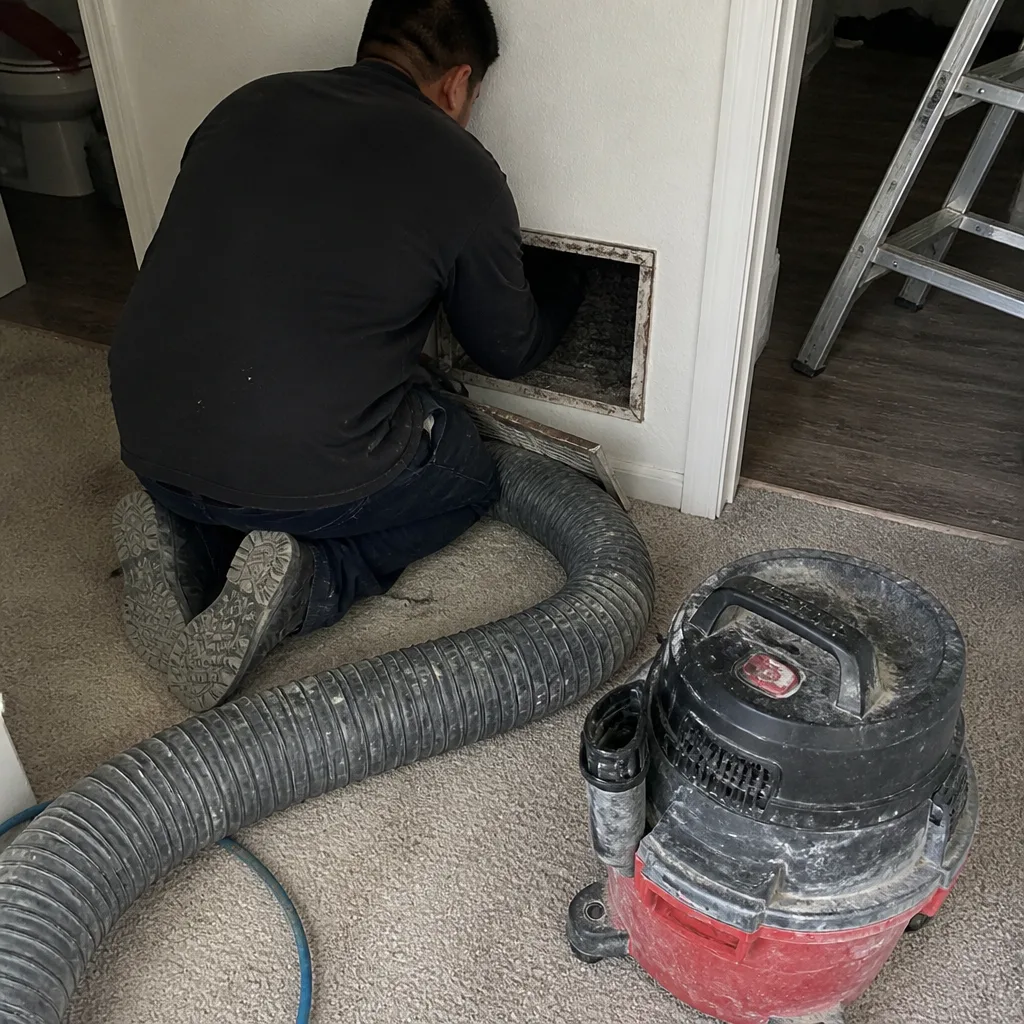 Before
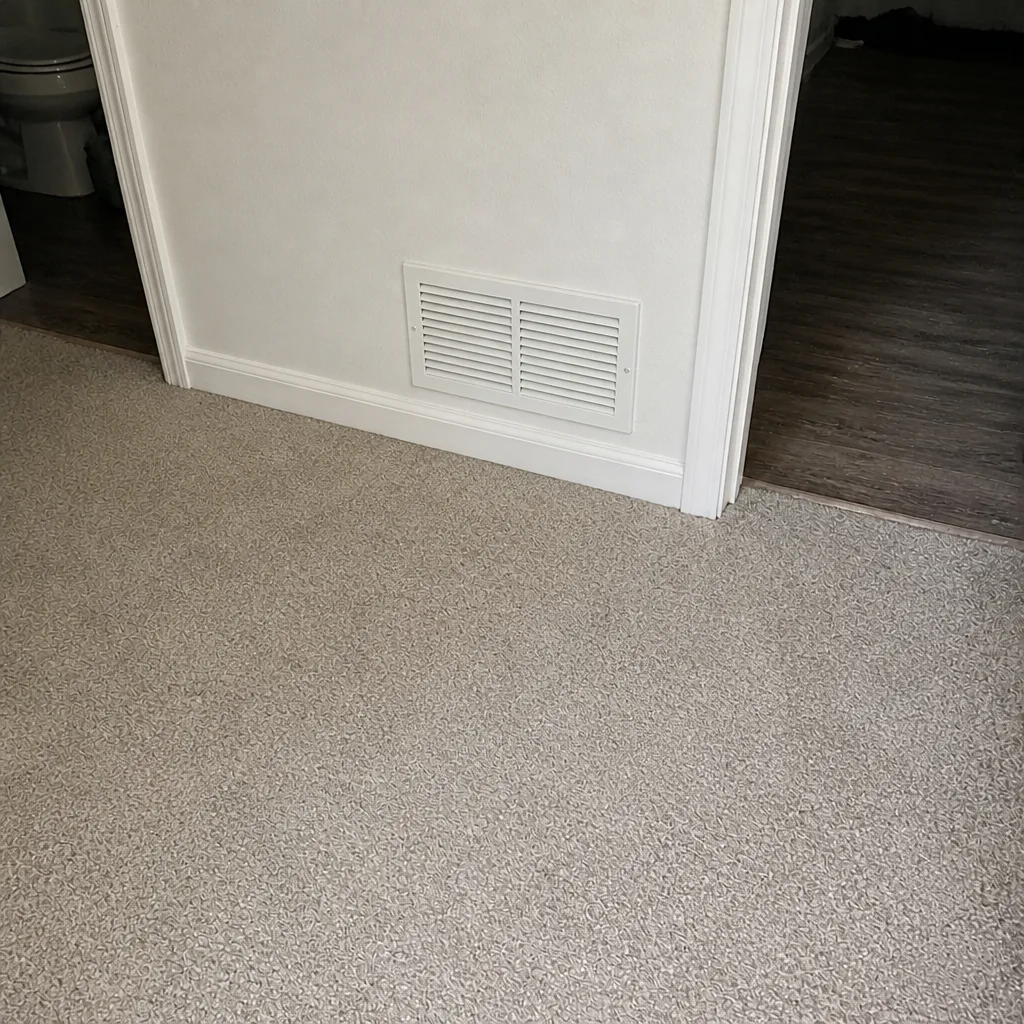 After
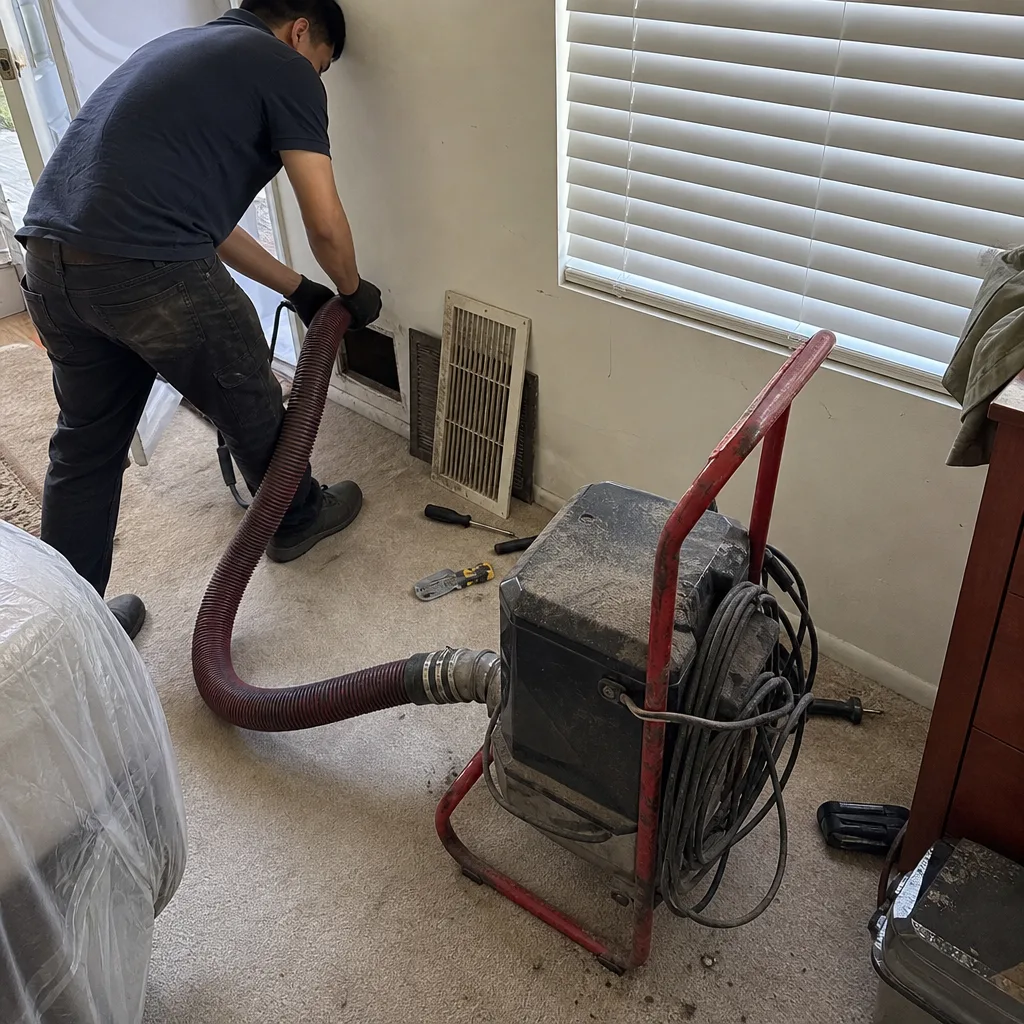 Before
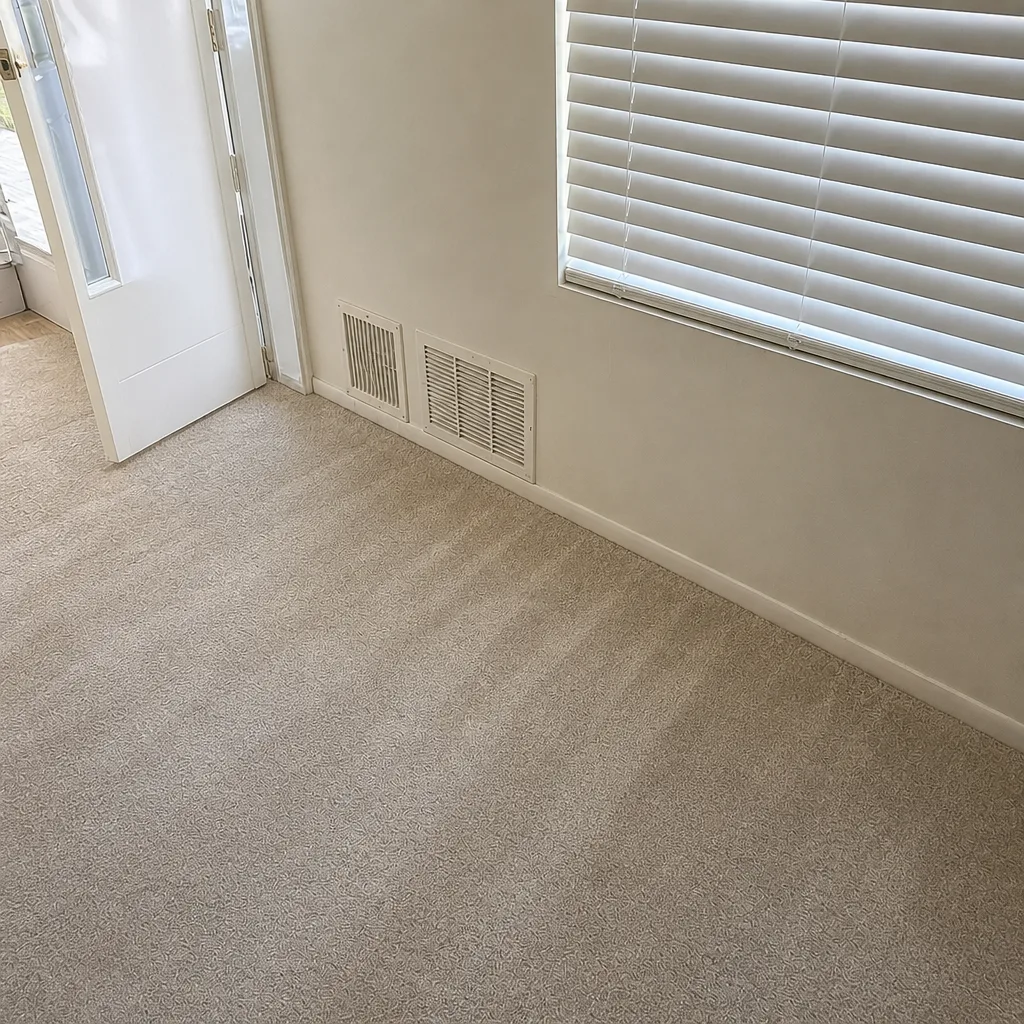 After
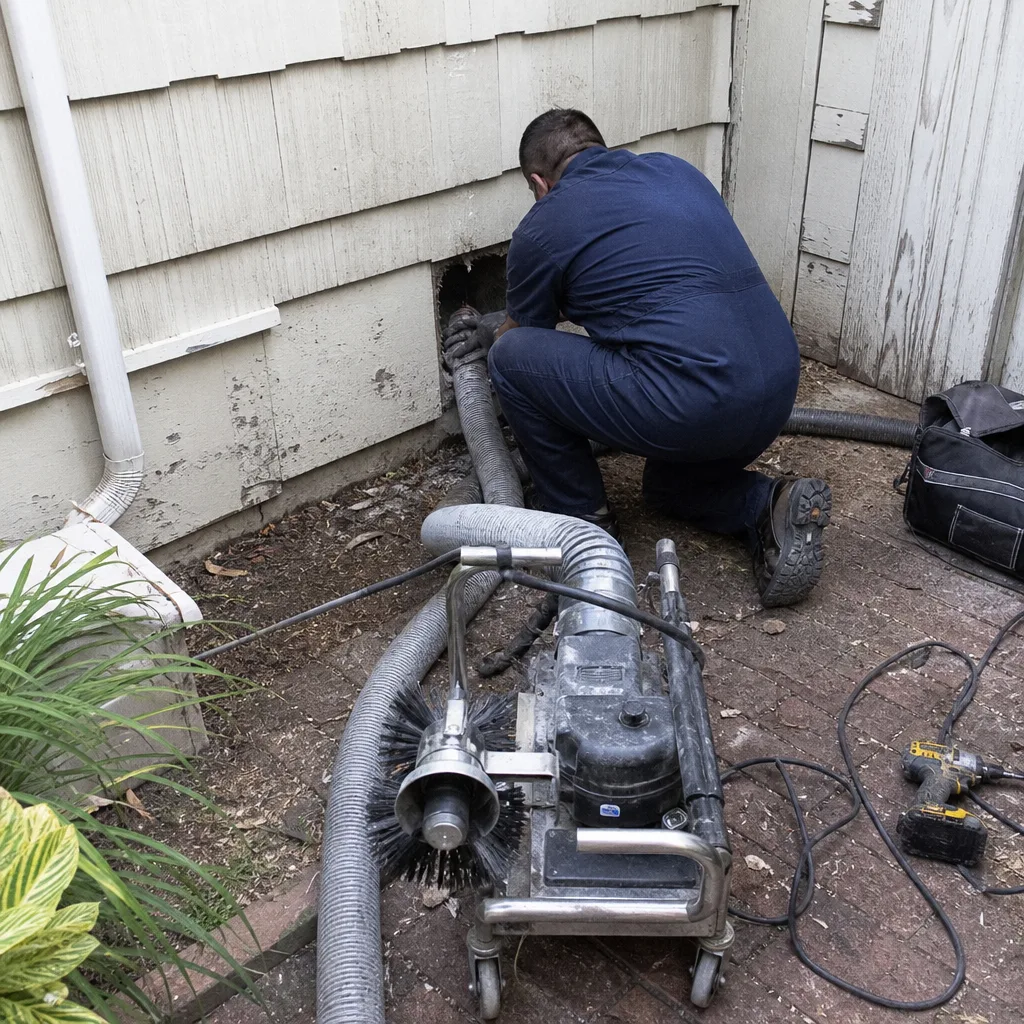 Before
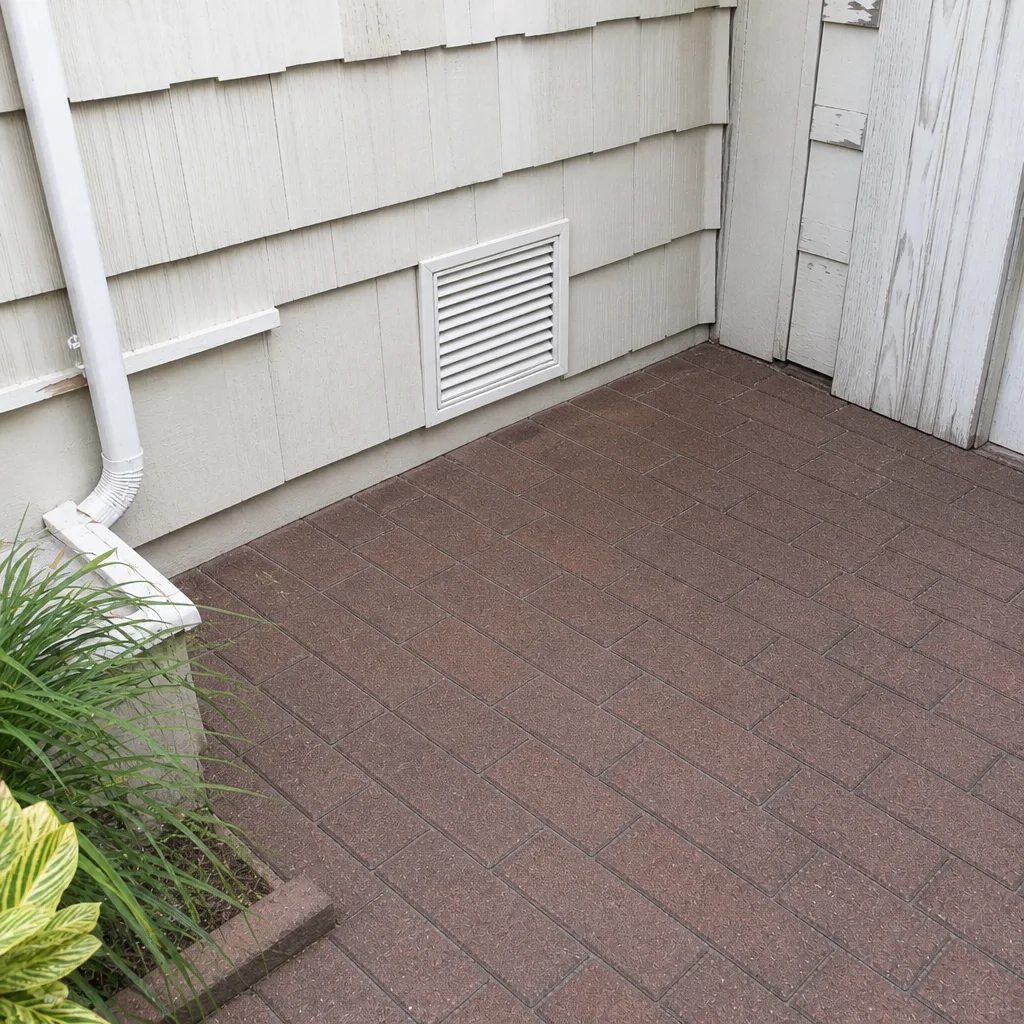 After
Common Mistakes to Avoid
- Cleaning only the registers and calling it done. Register faces are the visible 5% of the system. The trunk line, air handler, and branch interiors hold most of the accumulation, and none of them are reachable with a consumer vacuum.
- Running the HVAC fan during a DIY cleaning attempt. This distributes the disturbed particulate through every room in the house. If you must vacuum a register face, turn the system off first.
- Taking “one flat price per register” at face value from a caller. Per-vent pricing incentivizes upselling once the technician is on site. A legitimate quote is per system, agreed before any work begins, and it doesn’t change once the canopy is set up.
- Skipping the air handler cabinet. This is the most commonly skipped step in duct cleaning. A duct cleaning that doesn’t address the blower wheel and coil face leaves the contamination source untouched, and the ducts will be contaminated again within a year.
- Cleaning without sealing. Ducts that are clean but leaking at the joints pull attic or crawlspace air back into the system. Sealing is not a sales add-on – it’s part of what makes cleaning last.
- Ignoring the dryer vent because the ducts got cleaned. These are separate systems with separate failure modes. Dryer vents are a fire concern; ducts are an air-quality concern. Both need attention on their own schedules.
- Assuming Peralta Hills climate means less duct contamination. Mild winters mean the HVAC runs reliably, but they also mean no cold-season deep freeze that would help dry things out. Long cooling seasons keep evaporator coils wet, and wet coils grow biological matter that then feeds dust accumulation in the ducts.
When to Call a Professional
Call a professional if you’re seeing any of the signals above, if the home has just been through renovation, if you’re moving in and don’t know the history, or if it’s been more than a few years since the last full-system cleaning. Call if you smell musty air when the fan runs. Call if you’ve found visible growth inside a register. Call if you’ve tried DIY and the dust came back within a few months, because that pattern tells you the source is deeper than the registers.
Air Duct Cleaning Peralta Hills offers free estimates in Peralta Hills – call (844) 625-7411. We answer 24/7. Fast dispatch from 7am to 7pm, Sunday through Friday. The written estimate sets the final price, and it’s one flat price per system, agreed before any work begins. Every job includes before-and-after photos of your own ducts, so you can see exactly what changed. Our technicians have up to 11 years of experience with Rotobrush, Nikro, and Abatement Technologies systems, and the licensed and insured local pro is vetted to the standards their state requires.
Frequently Asked Questions
You can clean register faces, the first few feet of branch runs, and the dryer vent transition duct. You cannot effectively clean a trunk line, an air handler cabinet, or long branch runs without negative-pressure extraction and rotary agitation. The limits are equipment and airflow direction, not skill.
Not inherently, but it can make indoor air quality worse if done without containment. Agitating dust inside a duct while the system’s fan is running distributes that material back into the room, and consumer vacuums discharge exhaust into that same space. Turn the system off before any register-face cleaning, and don’t insert a brush deeper than you can see without a containment method.
Professional cleaning in Peralta Hills is typically estimated by system rather than by vent, with the exact price set by a written estimate after the technician sees the layout, number of zones, and condition of the system. We give honest whole-system ranges during the free estimate, not a teaser number that balloons once the tech is on site. Call (844) 625-7411 for a free estimate.
Low quotes usually come from a per-vent price structure or a scope that skips the air handler, sealing, and post-clean documentation. Those quotes are designed to expand once the technician arrives, or to deliver a purely cosmetic pass on the registers. Ask any contractor to quote per system, in writing, before the visit, with scope clearly listed. If the price changes once the equipment is set up, that’s the warning sign.
Before-and-after photos of your own ducts. A contractor who runs rotary and negative-pressure equipment will have a documented interior view of the duct before and after. If a quote doesn’t include documentation, ask for it. The photos are the proof that the extraction removed material rather than relocating it.
Most homes benefit from a full-system cleaning every few years, with the interval stretched by correct filtration, accessible-register maintenance, and prompt repair of any duct leaks. Homes near ongoing construction, homes with pets, homes with allergy-sensitive occupants, and new-homeowners who don’t know the previous maintenance history usually fall on the shorter end of that cycle. Homes that keep up the DIY maintenance and have good filtration can often go longer between professional visits.
The Bottom Line
The DIY question isn’t whether you’re capable, it’s whether the tools match the task. Consumer vacuums and dryer brush kits are legitimate for what they reach: register faces, short branch runs, and the dryer transition duct. The interior of the system – trunk lines, air handler cabinet, long branch runs, and any post-renovation or mold-affected ductwork – needs negative-pressure extraction and rotary agitation to clean rather than redistribute. Peralta Hills homeowners who understand that line can make a genuinely informed choice: own the accessible maintenance, keep the filter current, clear the dryer vent yearly, and schedule professional cleaning on a cycle that matches the home. If you’d rather have an honest assessment of where your system sits, we’re happy to give you one.
Call (844) 625-7411 for a free estimate. We answer 24/7. Fast dispatch from 7am to 7pm, Sunday through Friday. One flat price per system, agreed before work begins, with before-and-after photos of your own ducts in hand at the end.
Written by the team at Air Duct Cleaning Peralta Hills.