
Last updated November 25, 2026
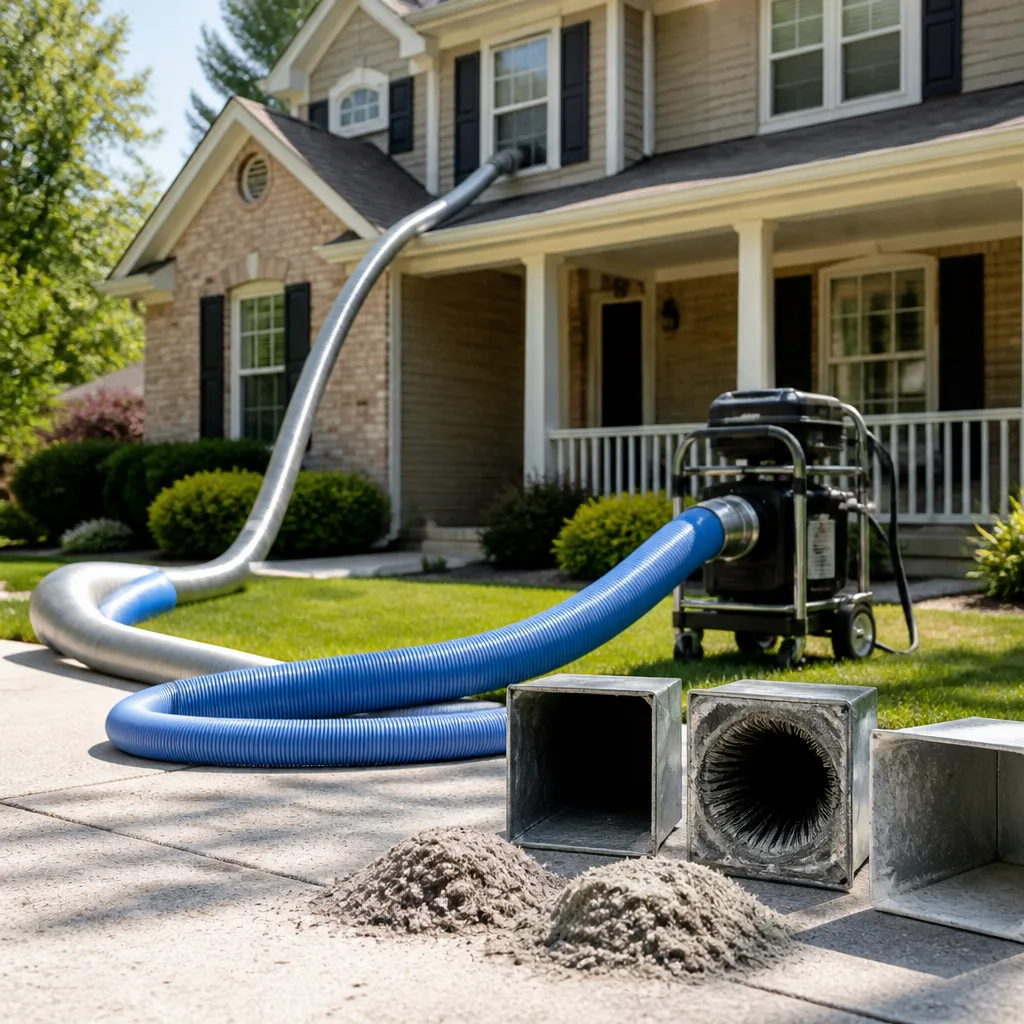 Whole-home duct cleaning
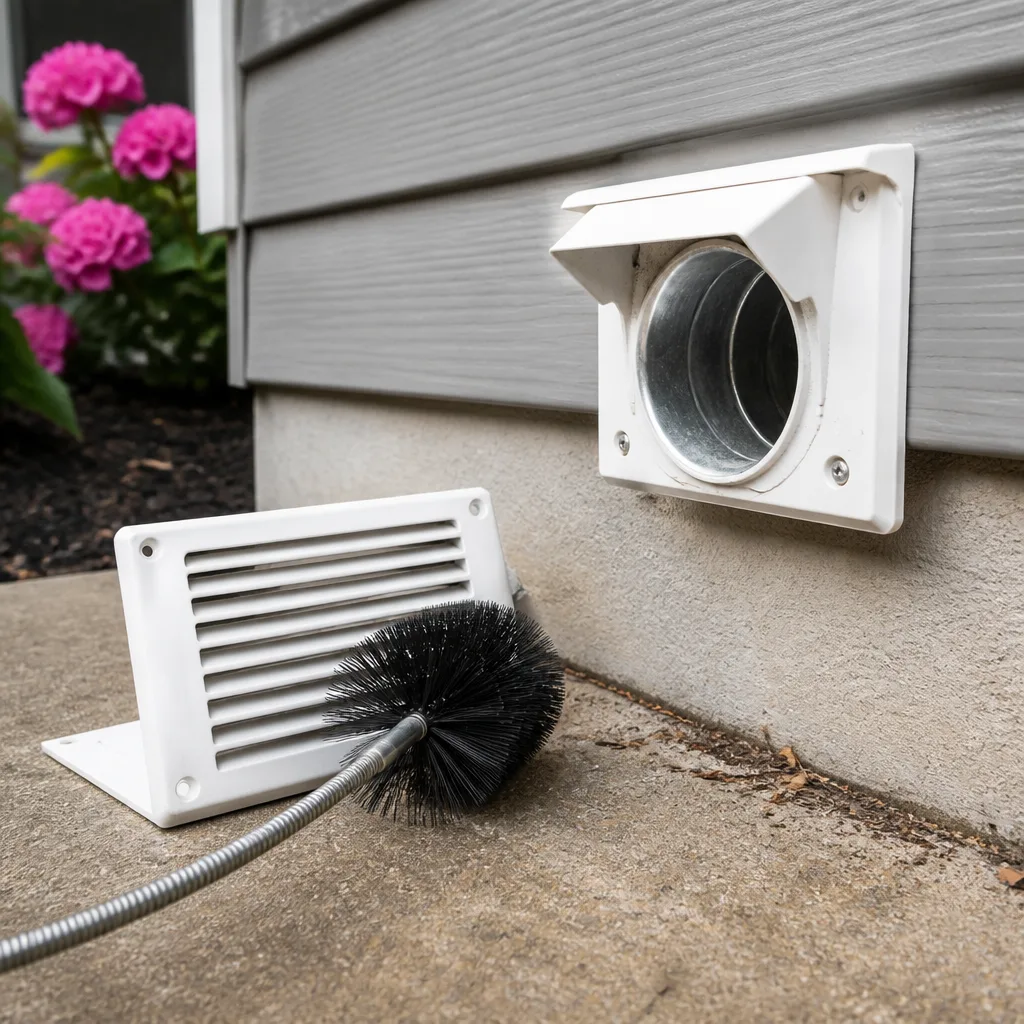 Dryer vent cleaning
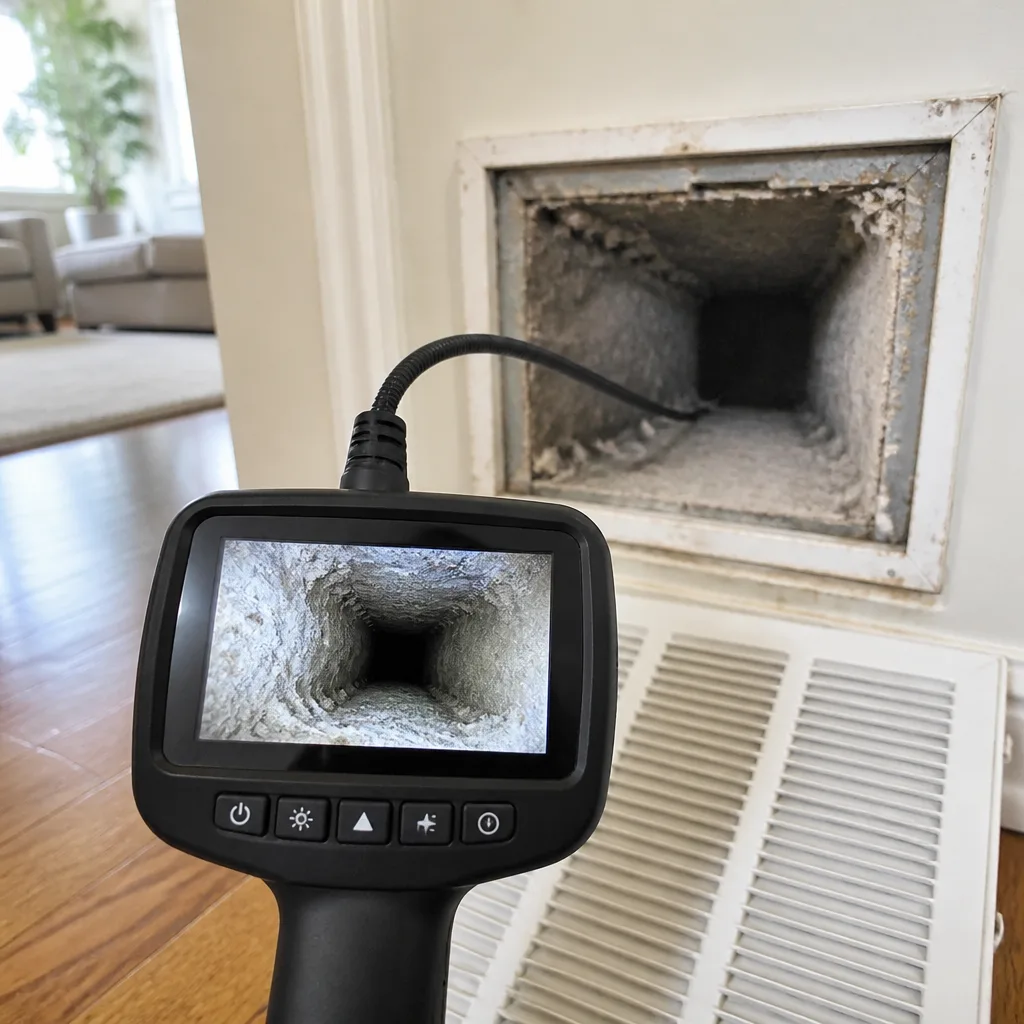 Camera inspection
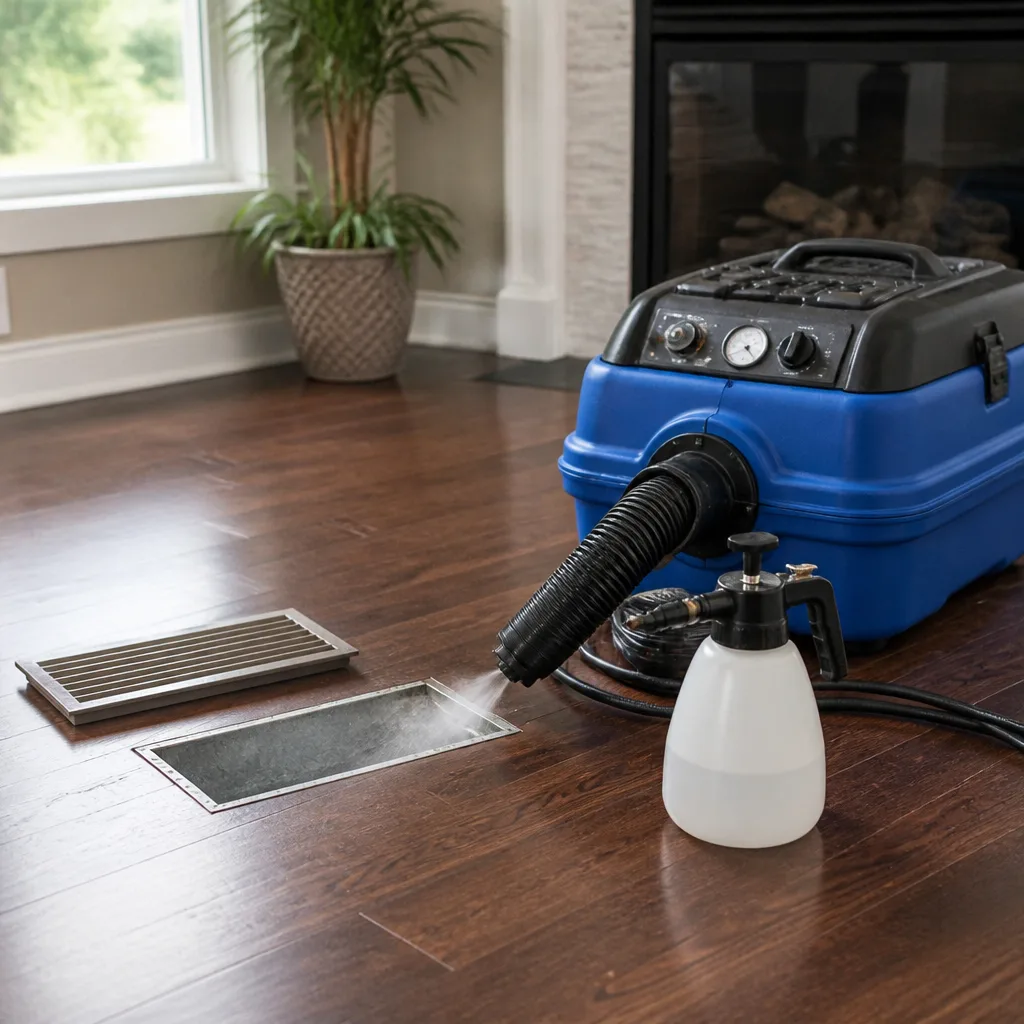 Sanitizing & deodorizing
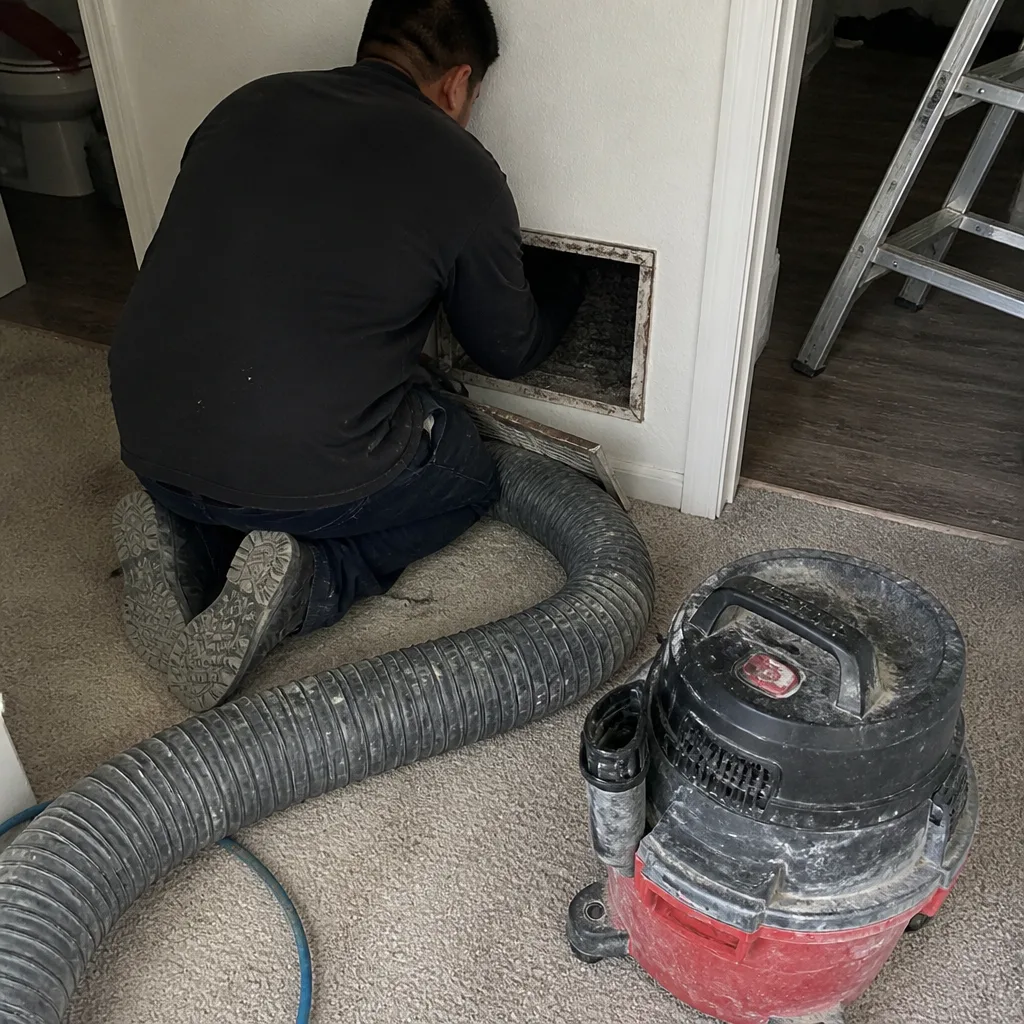
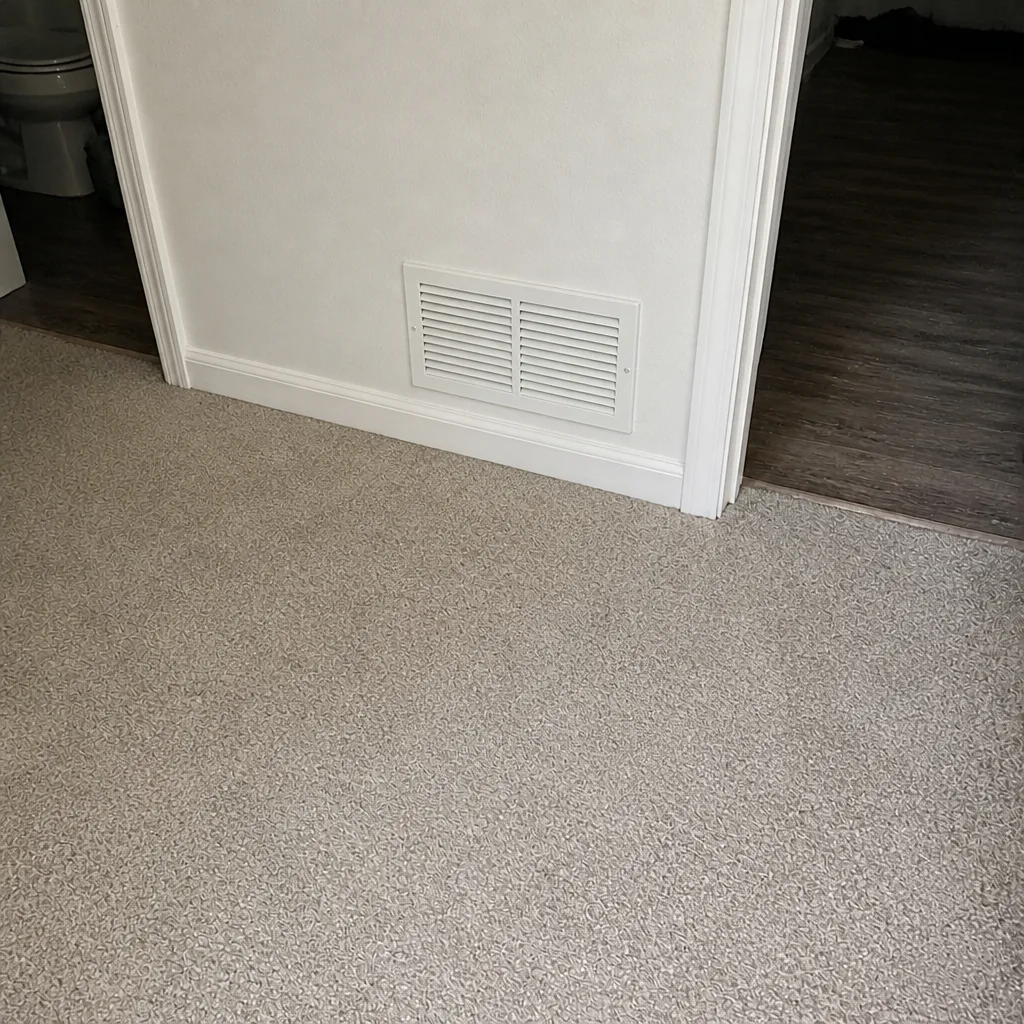
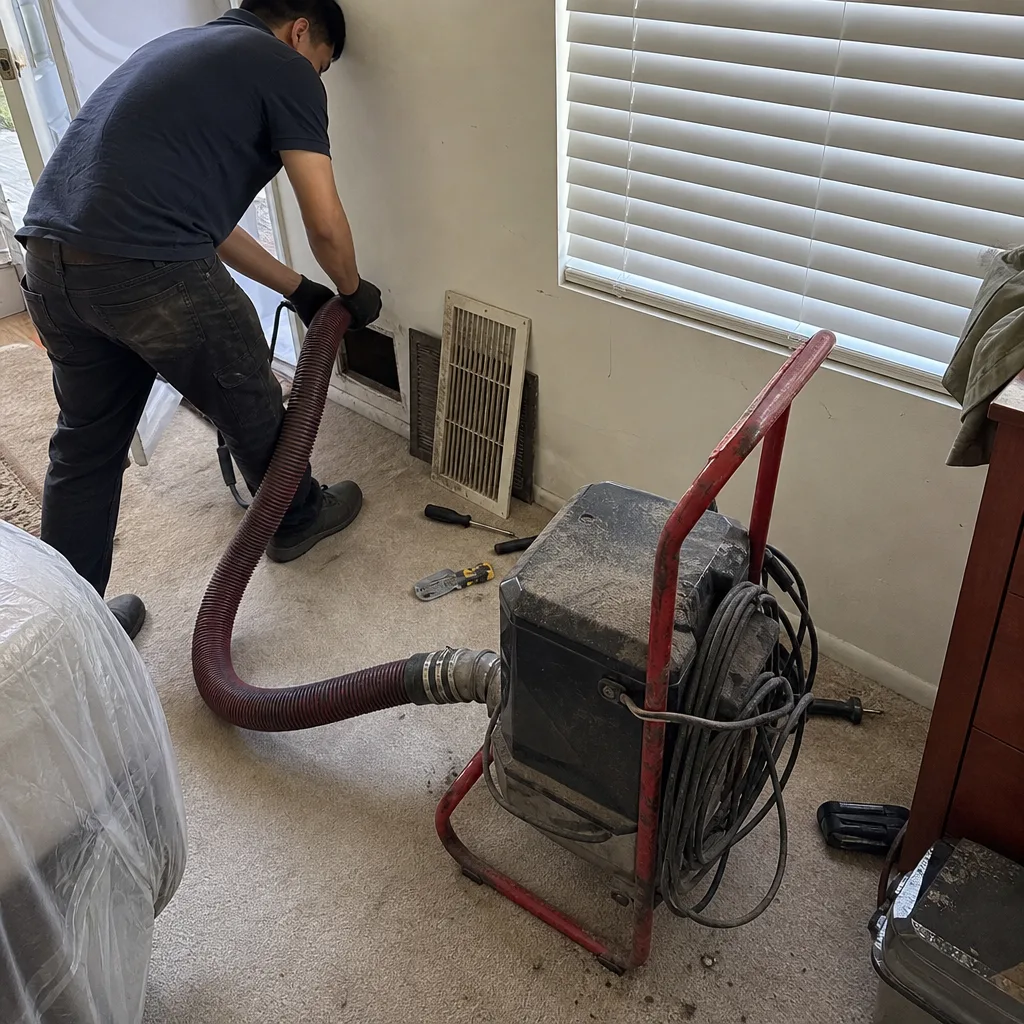
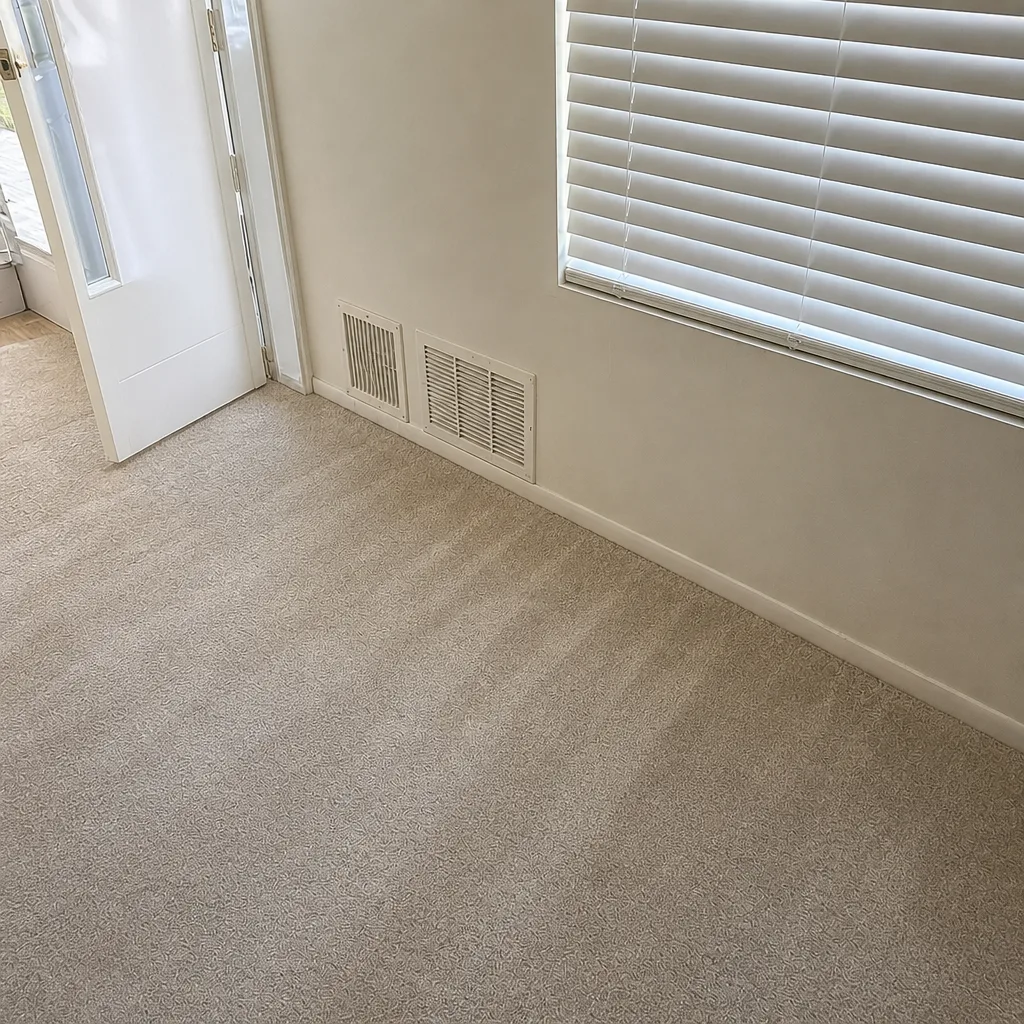
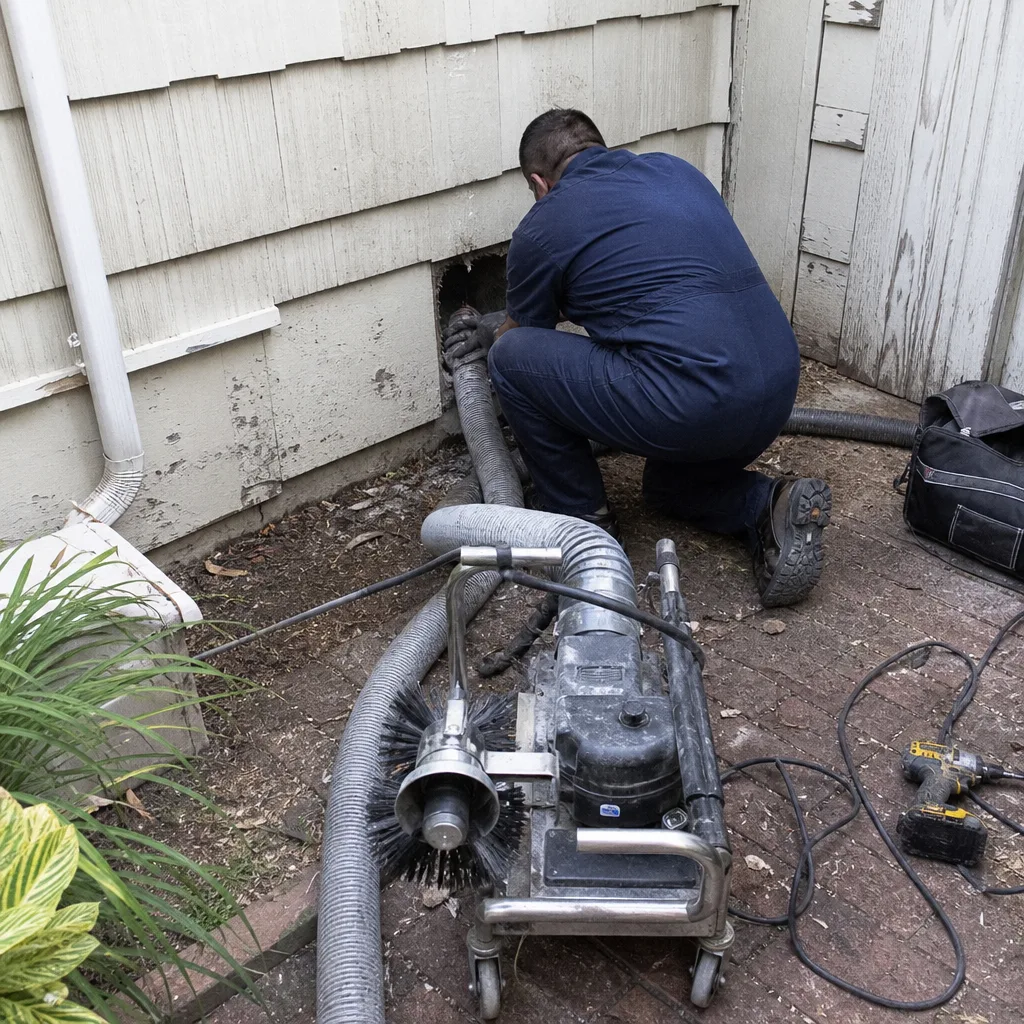
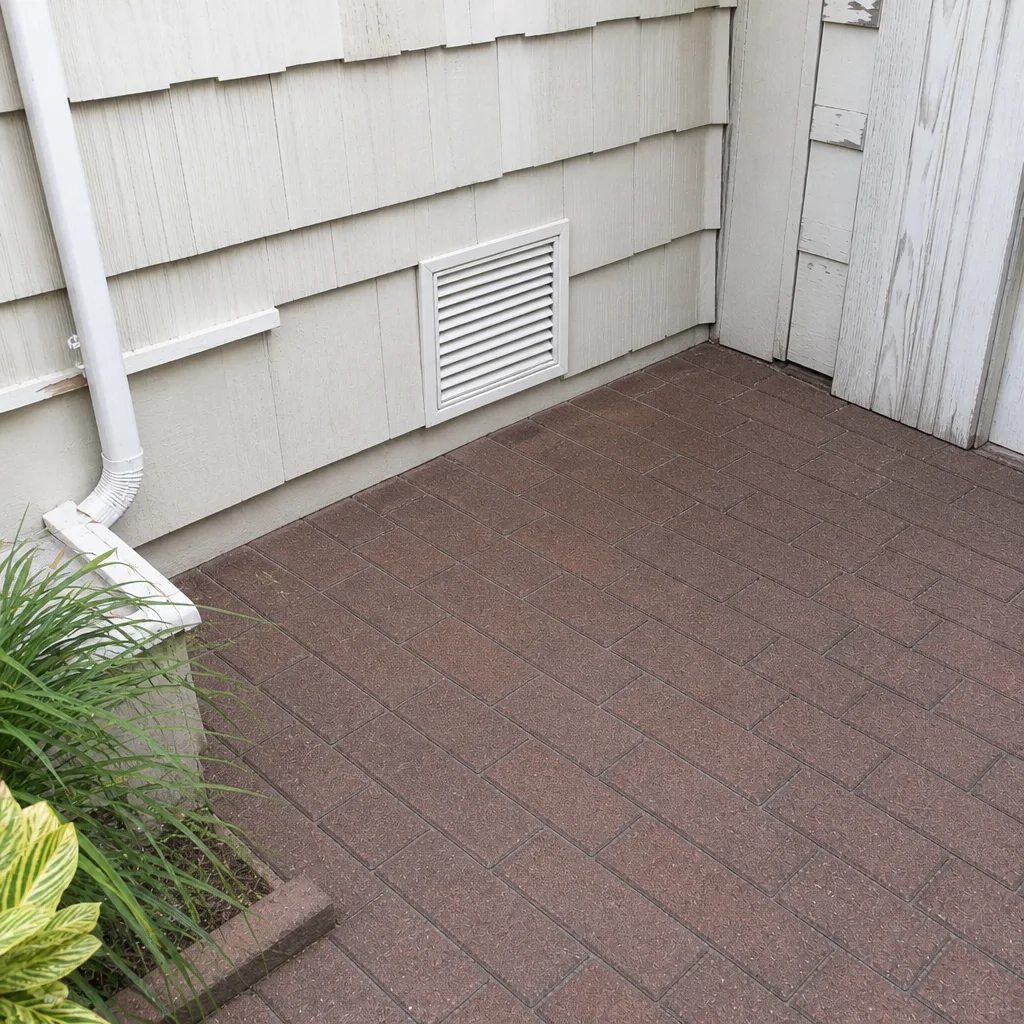
Whole-system duct and dryer vent check with before-and-after photos - you see exactly what came out of your vents
That "$99 whole-house special" is a bait ad - the real number appears once they are in your hallway, or the "clean" is a shop-vac at the register. We photograph the inside of your ducts before and after instead.
Choosing the Right Air Duct Cleaning Brand: A Buyer’s Guide for Peralta Hills
There is no meaningful industry-wide certification that stops an operator with a two-hundred-dollar shop vacuum from calling what they do “professional duct cleaning.” That’s the uncomfortable starting point for any buyer in Peralta Hills, CA. Once you accept it, brand selection stops being a marketing exercise and becomes a technical decision: what equipment is on site, how it’s configured, and whether the person holding the hose can prove they own it. This guide walks through how a Rotobrush brush-in-vacuum system actually works, what Nikro negative-air capacity means for a long supply run, and the exact questions that separate serious operators from consumer-grade imitations.
Quick Answer
The right air duct cleaning brand for a Peralta Hills home is one that brings purpose-built mechanical agitation and HEPA-rated negative pressure into the same process, not a repurposed shop vacuum held up to a register. Ask two things before hiring: what CFM your extraction unit delivers, and whether your agitation tool runs under continuous negative pressure at the cleaning head. An operator who can answer both with specifics, name the equipment (Rotobrush and Nikro are the common professional standards), and produce serial numbers or manufacturer registration is the one worth hiring.
Styles & brands we work with
- Whole-home duct cleaning
- Dryer vent cleaning
- Camera inspection
- Sanitizing & deodorizing
Table of Contents
- Why the Duct Cleaning Equipment Market Splits in Two
- How Rotobrush’s Brush-in-Vacuum System Actually Works
- What Nikro Negative-Air Capacity Measures, and Why CFM Matters
- The Equipment Questions That Sort Serious Operators From the Rest
- Truck-Mounted vs. Portable Professional Systems in Residential Work
- How to Verify a Contractor Owns the Equipment They Advertise
- Beyond Duct Cleaning: The Full Air Pathway
- What Peralta Hills Homes Actually Need From a Duct Cleaner
Why the Duct Cleaning Equipment Market Splits in Two
The equipment used in residential duct cleaning falls into two categories that are easy to confuse in a sales pitch. Consumer-grade machines are adapted from other trades: shop vacuums with duct attachments, wet-dry extractors, sometimes a leaf blower rigged to pressurize a system. Professional-grade machines are engineered specifically for ductwork. They agitate debris mechanically, pull it into a sealed airstream, and contain it in a filtration system rated for fine particulate. The difference isn’t cosmetic. It shows up in what stays in the ducts after the job.
The reason the market splits this way is economic. A consumer machine costs a few hundred dollars and works on a job here and there. A Rotobrush or Nikro system costs many times that and requires training to run correctly. An operator who bought the professional system has made a capital decision tied to doing this work at volume and doing it well. An operator who didn’t has nothing to protect except a low quote. For a Peralta Hills homeowner trying to choose between two brands with similar websites and similar promises, the equipment inventory is the clearest, most objective signal available.
There’s a second layer to this. Even operators with real equipment vary in how they deploy it. A Rotobrush rotary brush works because the brush spins inside the duct while a vacuum pulls at the cleaning head. Someone who pushes a brush down a run without the vacuum engaged is agitating dust into the living space. Someone who vacuums at one end while brushing at the other is doing the same thing across a longer distance. The system only performs as designed when agitation and containment are physically connected.
What “Professional” Should Actually Mean
- Mechanical agitation built for duct interiors, not brush attachments on a shop vacuum hose.
- Sealed negative pressure at or near the cleaning head, not just at the far end of a run.
- HEPA-rated filtration to capture the particulate that gets lifted, including fine dust and allergens.
- Equipment you can verify, with serial numbers and manufacturer registration to match.
When you hear the phrase “professional duct cleaning” in Peralta Hills, treat it as a claim to test, not a credential. It describes nothing specific until someone attaches an equipment name and a spec to it.
How Rotobrush’s Brush-in-Vacuum System Actually Works
Rotobrush systems combine a rotating brush head with a vacuum hose on the same tool. The brush spins inside the duct and lifts dust, debris, and biological growth off the walls; the vacuum, running through the same wand, pulls that material into a sealed collection system before it can escape. The critical detail is location: the negative pressure sits at the cleaning head, not at a distant unit connected by loose flex hose. That matters because released dust in a duct system doesn’t stay where you put it. Pressure differentials move it, and any gap between the agitation point and the collection point is a path into the room.
In our experience, the mechanical action of the rotating brush is what distinguishes a real cleaning from a vacuum pass. Dust in a residential duct system doesn’t sit loose on the floor of the duct; it clings to the walls, set by years of airflow and moisture. Pulling air past a wall of adhered dust removes a fraction of it. A brush dislodges it. That’s the entire reason rotary systems exist, and it’s the reason a shop vacuum with a long hose doesn’t produce the same result regardless of how long the technician runs it.
Where the Rotobrush Process Fits a Typical Job
- Seal access points and set up the collection system before any agitation starts.
- Cut inspection and access openings at key points along the duct run as needed.
- Run the rotary brush through each branch and trunk, with the vacuum engaged the entire time.
- Capture the dislodged material in the filtration unit, not in the room.
- Clean registers, grilles, and the air handler cabinet as a separate step from the ducts.
- Sanitize where biological growth is a concern, then reseal the access openings.
That sequence is what a Rotobrush-based cleaning looks like when it’s done properly in Peralta Hills. If a contractor can’t walk you through it in order, the equipment name on their website may be decoration.
What Nikro Negative-Air Capacity Measures, and Why CFM Matters
Nikro builds industrial-grade HEPA negative-air machines for ductwork and abatement work. The number that matters with these systems is extraction capacity, measured in cubic feet per minute (CFM). CFM is the actual measure of how quickly a machine can clear debris-laden air from a duct run and pull in replacement air behind it. A machine with low CFM can still be running, still be plugged in, still make noise; it just can’t move enough volume to evacuate a long trunk line before the dust settles again.
Why is this the spec that matters most for a Peralta Hills home? Because duct runs in residential construction aren’t short. A typical house has a main trunk that may run most of the length of the structure, with branch lines feeding individual rooms. Fine dust entrained in that air has to travel the whole distance before it reaches the collection unit. If capacity is undersized, the debris drops out somewhere in the middle of the run, out of sight, and the technician who checked the register at the far end may not notice. High-capacity extraction is what makes the difference between a job that removes contamination and a job that moves it.
What HEPA-Rated Negative Pressure Adds
- Fine particulate (including allergens and biological spores) is captured, not recirculated into the home.
- Air entering the working area is filtered, keeping the room cleaner during the job itself.
- The same class of equipment is used in remediation work, which is a different level of containment than basic duct cleaning.
- Post-renovation and mold-risk jobs get the extraction required to handle what standard equipment leaves behind.
Abatement Technologies systems round out the filtration side of this toolkit. They’re built for jobs where the particulate load is higher than normal, whether from allergen buildup, moisture-related growth, or construction debris that made its way into the duct system during a remodel. Operators who carry that class of equipment are set up to handle the harder calls, not just the easy ones. For more on how this connects to health-related concerns, see our guide on air duct cleaning.
The Equipment Questions That Sort Serious Operators From the Rest
You don’t need to become an HVAC technician to evaluate a duct cleaning company. Two questions do most of the sorting, and the way an operator answers them tells you almost everything.
Question one: “What is the CFM rating of your extraction unit?” A serious operator knows the number or can look it up in seconds. They’ll tell you the machine’s model and the rated capacity. A consumer-grade operator will answer in adjectives: “high-powered,” “industrial-strength,” “very strong.” None of those describe a machine that can clear a long duct run, and an operator who doesn’t know CFM probably hasn’t bought equipment where it’s a listed specification.
Question two: “Is your agitation system integrated with negative pressure, or separate?” Integrated means the brush or whip runs inside the vacuum airstream, so whatever it lifts is caught immediately. Separate means the agitation tool is one piece of equipment and the vacuum is another, connected at most by hose, which means the debris has to travel to the vacuum before it’s captured. Integrated is the design principle behind the Rotobrush approach, and it’s the reason that approach performs in residential work.
A Short List of Follow-Ups
- “What equipment brands do you run?” Names you should recognize: Rotobrush, Nikro, Abatement Technologies.
- “Can I see photos of the setup on a residential job?” A real operator has them, including before-and-after shots of the ducts themselves.
- “Do you clean the air handler and registers, or just the ducts?” The full air pathway matters more than any single component.
- “Do you offer duct repair and sealing if you find gaps?” Cleaning without sealing is a partial job.
- “Are you preparing a written estimate with the scope defined before work starts?” A flat per-system price beats any per-vent quote.
An operator who answers all of this cleanly is the one worth hiring. If the answers get vague once equipment specifics come up, that’s your signal. Nothing against a contractor who runs consumer equipment; they’re just not running the class of system a full duct cleaning requires.
Truck-Mounted vs. Portable Professional Systems in Residential Work
Truck-mounted duct cleaning systems are marketed as more powerful, and in raw airflow terms they often are. The claim breaks down when you apply it to a home. A truck-mounted unit needs a substantial hose run to reach the ductwork, and the longer the hose, the more static pressure loss between the vacuum and the point of cleaning. In a narrow access crawlspace, a garage-clearing full of storage, or a two-story home where the air handler sits in a tight utility closet, routing that hose is either impossible or so roundabout that the capacity advantage disappears.
Portable professional systems like Nikro HEPA machines trade raw peak power for accessibility. They get into the same tight spaces the ducts do, they can be repositioned room to room as the job moves, and their capacity is rated for residential duct runs rather than commercial. When paired with a Rotobrush brush-in-vacuum system at the cleaning head, they produce the continuous negative pressure that matters most: at the point where the debris is coming loose. For a Peralta Hills home, that configuration is usually the stronger setup, which is why we deploy it on the jobs we connect homeowners to.
There’s an honesty point buried here. “More powerful” only means something when the power reaches the right place. A truck-mounted unit that can’t seal to the duct run, or that routes through forty feet of flex hose, is not doing the work its spec sheet suggests. Ask any contractor how their equipment couples to the ductwork on a home like yours, and see if the answer is specific. Reach out for a free estimate if you want to see the setup discussed in person.
How to Verify a Contractor Owns the Equipment They Advertise
Equipment names on a website are cheap to write. Verifying that the company actually owns and operates the machines they name is what turns a claim into evidence. The verification isn’t complicated, and a contractor with nothing to hide shouldn’t mind the ask.
- Request equipment serial numbers. Every professional machine has one. If a company can’t produce it, they may not own the equipment.
- Ask about manufacturer registration. Rotobrush and Nikro systems carry registration records that trace a machine to its owner, which is exactly the kind of paper trail a legitimate operator has on hand.
- Request job photos of the actual setup. Not stock images of equipment, but pictures of the machine in a home, connected to ductwork, mid-job. These are harder to fake.
- Ask what they do if their primary machine is down. A serious operator has a plan. A consumer-grade operator doesn’t have a machine to back up.
- Watch for the shift. If the conversation moves from equipment specifics back to marketing language, note it.
In our experience, the questions disrupt one class of operator and reassure the other. A company that has invested in professional equipment wants to talk about it; that investment is the whole reason they can charge for the work. Compare that to a company whose answer to every question is a low per-vent price. Price is easy to quote. Equipment is not.
Why This Matters More Than Reviews Alone
Reviews are useful, but every company’s reviews reflect a mix of jobs, price points, and equipment. They don’t tell you the spec of the machine that will arrive at your house. Equipment does. So does the show-me-your-setup ask, which is why we lead with equipment whenever a homeowner is weighing options.
Beyond Duct Cleaning: The Full Air Pathway
Duct cleaning is the foundation, not the whole job. The air pathway in a Peralta Hills home includes the return side, the supply trunks, the branch runs, the registers and grilles, the air handler cabinet, and any component where air passes through a filter or humidifier. Each of those can harbor contamination, and each has to be addressed if the goal is cleaner air rather than cleaner ducts in isolation. A brand worth hiring covers the full pathway in one scope.
That’s why a professional-grade operator tends to carry a broader service mix. Duct Repair & Sealing is part of the core offering, not an add-on: the same technician who cleans a run can find and seal the gaps that let dust and air leak out. Air Quality & Sanitizing follows cleaning when biological growth or odor is a concern, and works with Honeywell and Aprilaire filtration and humidity equipment when the homeowner wants a lasting hardware upgrade rather than a one-time treatment. You can read more on the cleaning side in our page on HVAC cleaning.
Dryer vent cleaning is the other half of whole-home air system work. A dryer vent is a duct, and it carries hot air and lint through the same kind of enclosed pathway the HVAC system uses. Clogged dryer vents are one of the leading causes of residential fires, and a duct cleaning company that skips dryer vents is telling you something about the scope of its expertise. Ask whether the service is part of the offer.
What a Full-Service Scope Looks Like
- Air Duct Cleaning for the full supply and return network.
- HVAC Cleaning for the air handler, coil area, and cabinet.
- Duct Repair & Sealing to close the gaps cleaning reveals.
- Air Quality & Sanitizing for treatment after contamination is removed.
- Dryer Vent Cleaning for the fire-safety side of the air system.
We seal what we clean, and that phrasing is intentional. Cleaning a duct system with open gaps at the joints is an incomplete job; the next draw of the system pulls unfiltered air back into the path. Full-scope work closes that loop.
What Peralta Hills Homes Actually Need From a Duct Cleaner
Peralta Hills sits inland, in dry, warm country where the air conditioning system runs for a large part of the year. That duty cycle matters for duct cleaning because continuous use drives continuous dust accumulation. Dust pulled in through the return side deposits on duct walls slowly and evenly across thousands of hours of circulation. In a mild climate where heating runs briefly and cooling runs hard, the supply trunks carry the bulk of the load, and that’s where the buildup typically concentrates.
The housing stock in Peralta Hills spans a mix of ages, and that shows up in duct design. Older homes sometimes have duct runs that were retrofitted or added to over time, with flex connectors, sealed joints that have since loosened, and returns that don’t quite match the supply layout. Newer homes tend to have tighter construction, which puts more emphasis on the air handler cabinet and filtration than on duct leakage. A contractor who has worked in Peralta Hills homes long enough to recognize the range is the one worth calling. If a company talks about your neighborhood like it’s a grid of identical houses, ask what they’ve seen in Peralta Hills specifically.
Dry air in this part of the region also matters for sanitation work. Low humidity reduces the conditions mold needs to grow inside ducts, which means a moisture-driven biological problem is usually traceable to a specific source: a condensate line issue, an unsealed access panel near a bathroom, or construction debris left in a duct after a remodel. That’s the situation where Abatement Technologies filtration and Air Quality & Sanitizing earn their place in the process. For the local picture on dryer vents in this part of the region, our dryer vent cleaning page covers that side of the work.
Peralta Hills-Specific Questions to Ask
- How do you handle duct runs that were added or modified in older homes?
- What do you typically find in the air handler cabinets in this neighborhood?
- Do you offer duct repair and sealing alongside cleaning, or only cleaning?
- What’s the typical scope for a single-story Peralta Hills home of moderate size?
Our technicians have up to 11 years of experience, and that experience is what fills in the answers for the specific home in front of them. If you’d like to see the equipment and get a written scope for your house, contact us for a free estimate.
Common Mistakes to Avoid
- Choosing on per-vent pricing alone. A per-vent quote makes it easy to compare brands on price, but it strips out the specification that determines whether the job is done. Whole-system ranges with a written scope are the honest comparison.
- Accepting “professional” as a qualification. The phrase describes nothing until an equipment name is attached. Ask what machine is coming to the house.
- Not asking about negative pressure. A cleaning that agitates dust without continuous containment at the point of agitation moves contamination into the air the family breathes.
- Skipping the air handler and registers. Ducts cleaned while the cabinet and grilles stay dirty leave the pathway partially loaded.
- Cleaning without sealing. Loose joints and access panels let unfiltered air back into the system, which undoes the cleaning faster than expected in a Peralta Hills home where the AC runs most of the year.
- Skipping dryer vent cleaning. It’s a fire-safety service and it’s part of the same pathway. Brands that don’t offer it are telling you about their scope.
- Taking an estimate over the phone without a written scope. The written estimate is the document that sets the price and defines the work. No written scope, no commitment.
See the difference
 Before
 After
 Before
 After
 Before
 After
When to Call a Professional
Not every duct system needs cleaning. But some signs mean it’s time to bring in a professional rather than wait. Visible dust streaking at the registers within days of cleaning them yourself. A musty odor when the system comes on. Allergy symptoms that flare inside the house and ease outside it. Renovation dust that entered the system during a remodel. A dryer that takes longer and longer to dry a load. A recent home purchase where the prior owner’s maintenance history is unknown, or a rental turnover where the system hasn’t been touched. Any of those is a reasonable trigger. Air Duct Cleaning Peralta Hills offers free estimates in Peralta Hills – call (844) 625-7411. We answer 24/7. Fast dispatch from 7am to 7pm, Sunday through Friday.
Frequently Asked Questions
Most single-family Peralta Hills homes fall into a moderate whole-system range, with the exact figure set by the written estimate after we see the number of runs, the air handler configuration, and whether duct sealing or sanitizing is included. We quote per system, not per vent, so the number you receive reflects the full scope of the job. Call (844) 625-7411 for an exact quote – estimates are free.
Cheap quotes usually come from operators running consumer-grade equipment, or from a low headline number that becomes a larger invoice once the technician is on site. The equipment question cuts through this fast: ask for the CFM rating of the extraction unit, and ask whether the brush or whip is integrated with negative pressure. A quote built on a shop vacuum and a per-vent rate isn’t comparable to one built on Rotobrush and Nikro systems. Call (844) 625-7411 for an estimate based on the equipment we actually bring.
No industry-wide certification prevents an under-equipped operator from advertising “professional duct cleaning.” Equipment specification is the objective differentiator that survives a sales conversation, which is why we lead with it. Ask for serial numbers and manufacturing registration on the machines; a legitimate operator will produce them. Call (844) 625-7411 to schedule a free estimate.
Before-and-after photos of your own ducts are the clearest evidence, and a contractor who works with professional equipment expects to show them. Ask to see the setup mid-job, and ask to see the collected material. A camera inspection of the runs before and after is another solid check. Call (844) 625-7411 and we’ll walk through what documentation comes with a standard job.
Most homes don’t need a full cleaning every year; the typical interval is several years, sooner after a renovation, a move-in, water intrusion, or when signs of contamination are visible. If a company presses for an annual plan before seeing your ducts, that’s a marketing signal. Call (844) 625-7411 and we’ll tell you what your particular Peralta Hills home needs.
A complete job addresses supply trunks, return runs, registers, grilles, and the air handler cabinet, not just the accessible ductwork. Cleaning without sealing loose joints or panels leaves a partly clean system, which is why Duct Repair & Sealing is part of our core scope. Call (844) 625-7411 for a free estimate that covers the whole pathway.
The Bottom Line
The right air duct cleaning brand in Peralta Hills is the one that can name its equipment, prove it owns it, and explain in technical terms how the cleaning is going to be done. Rotobrush brush-in-vacuum systems agitate debris and pull it into a sealed airstream at the point of contact. Nikro HEPA negative-air machines measure their capacity in CFM, which is the number that determines whether long runs actually get cleared. Abatement Technologies filtration covers the harder jobs. Honeywell and Aprilaire let a cleaning visit connect to a lasting air quality upgrade. Ask the CFM question and the integrated-agitation question, verify the machines are owned not rented, and price the job per system, not per vent. Then decide.
If you want the answers in person, with the equipment in front of you and a written scope for your Peralta Hills home, call (844) 625-7411. We answer 24/7. Fast dispatch from 7am to 7pm, Sunday through Friday. Estimates are free, the price is one flat price per system agreed before work starts, and we work with your insurer where coverage is involved. Start with our main page on Air Duct Cleaning Peralta Hills if you want the full picture of what we do.
Written by the team at Air Duct Cleaning Peralta Hills.