
Last updated November 25, 2026
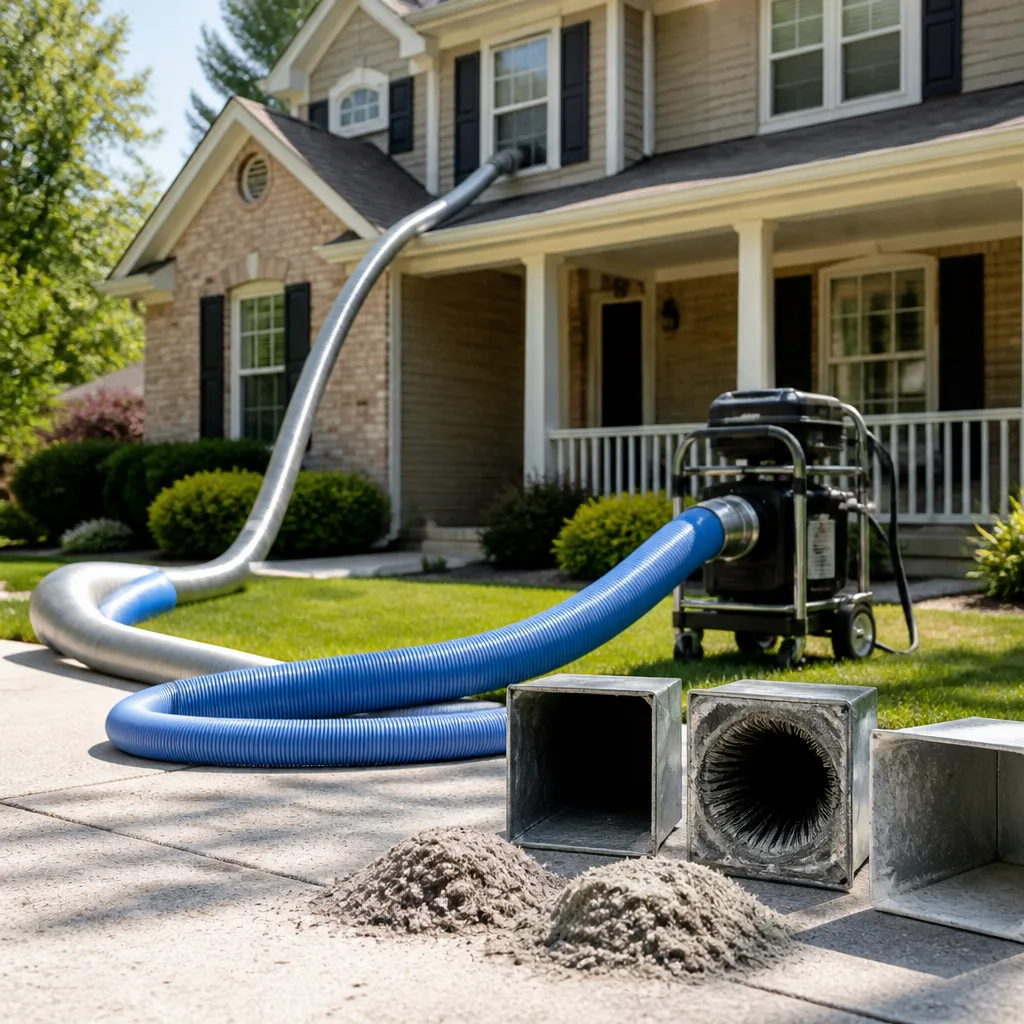 Whole-home duct cleaning
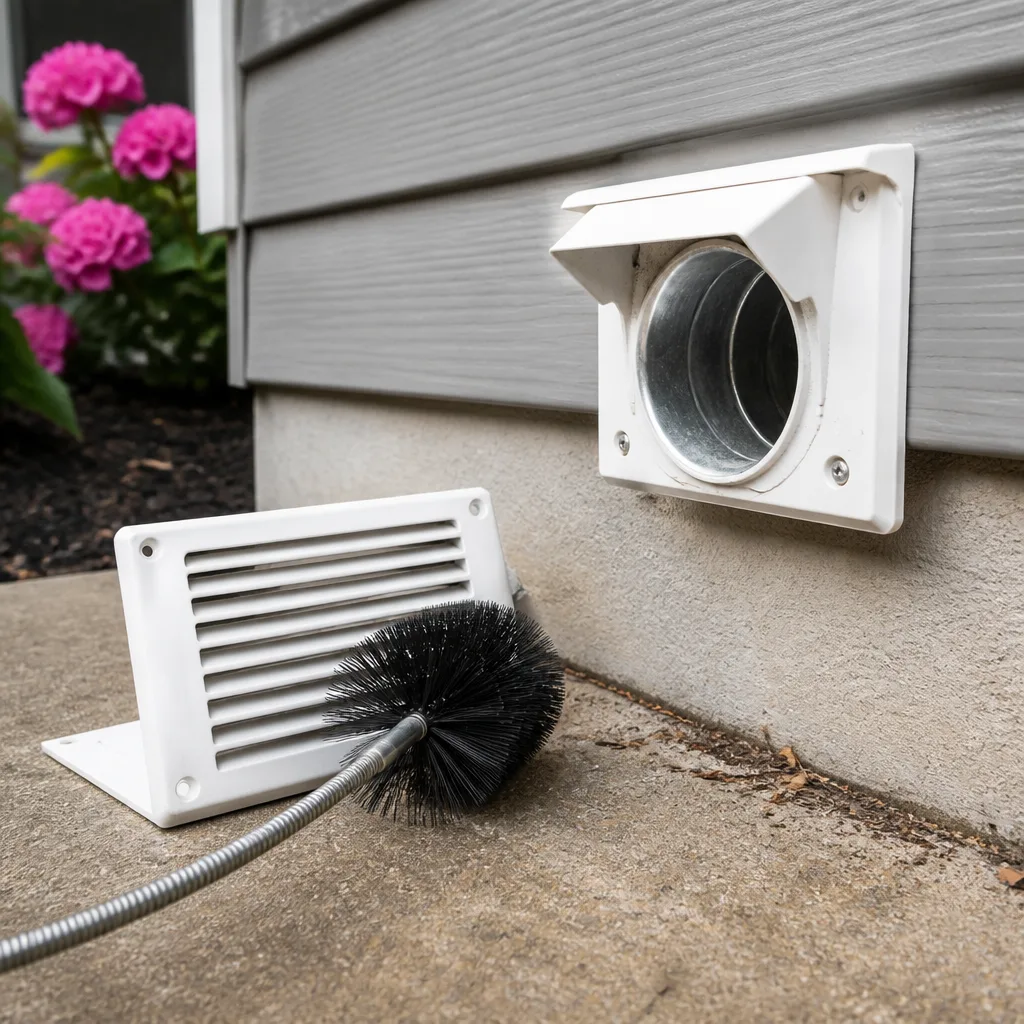 Dryer vent cleaning
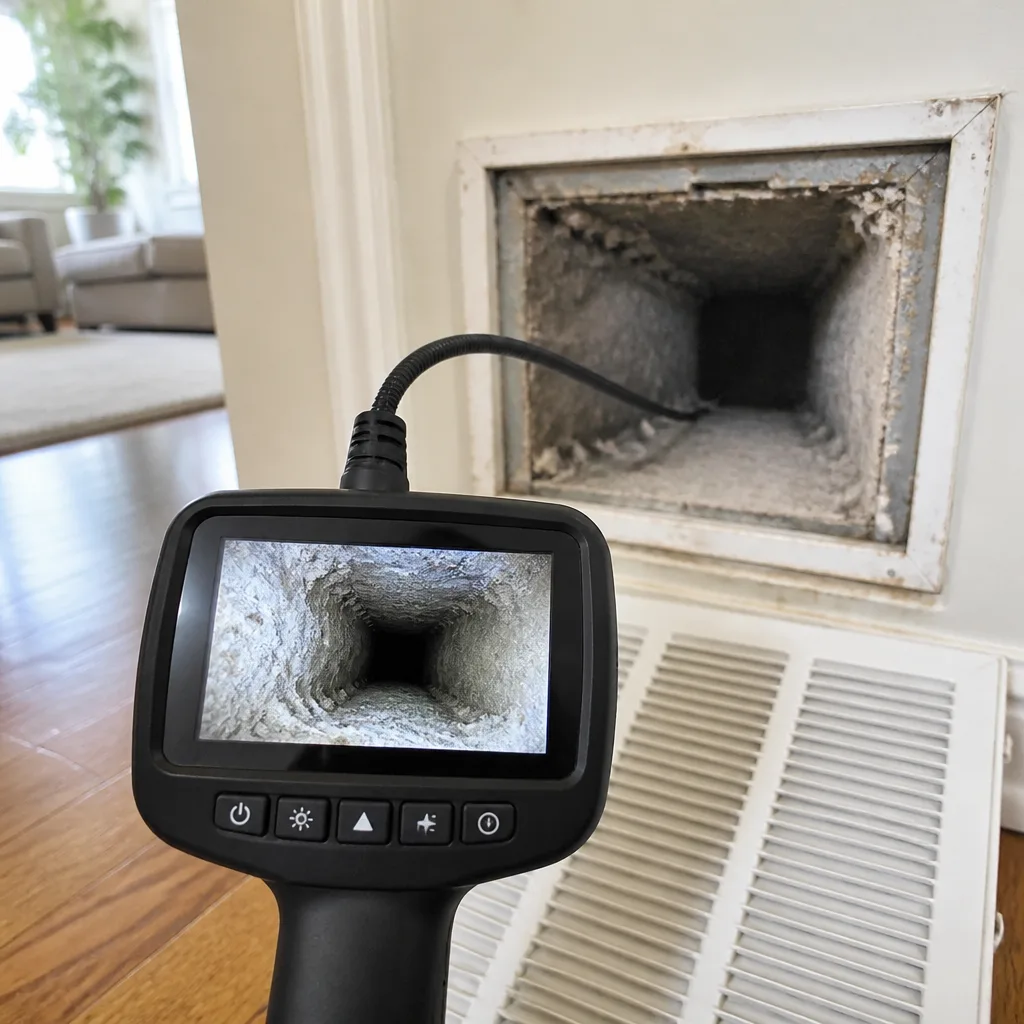 Camera inspection
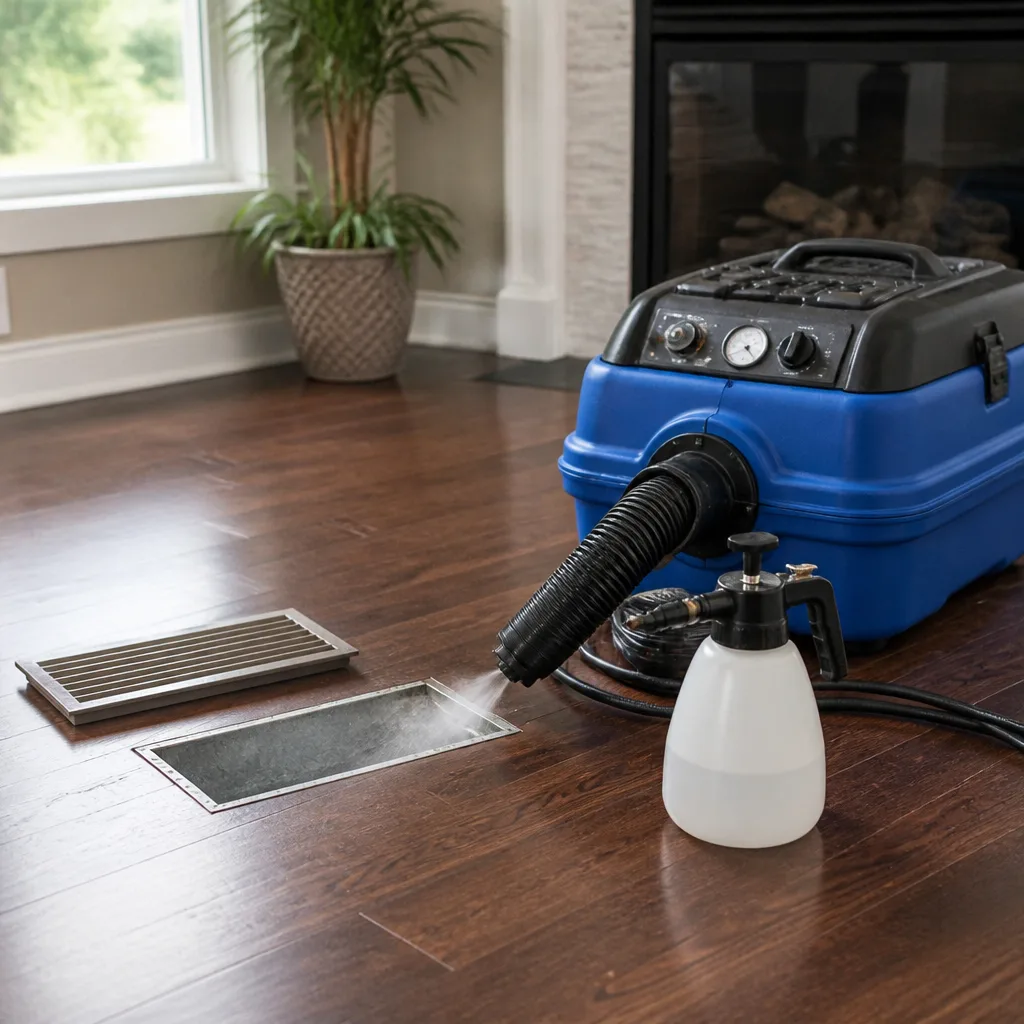 Sanitizing & deodorizing
Whole-system duct and dryer vent check with before-and-after photos - you see exactly what came out of your vents
That "$99 whole-house special" is a bait ad - the real number appears once they are in your hallway, or the "clean" is a shop-vac at the register. We photograph the inside of your ducts before and after instead.
Air Duct Cleaning Emergency Preparedness Guide for Peralta Hills Homes
The counterintuitive part of wildfire smoke is that the smoke you can’t see is often the smoke that matters most. A house can look clean, the walls wiped, the windows sealed, and still be pulling fine particulate into its duct system with every run of the furnace or air handler. That’s because return-air intakes and fresh-air dampers do their job year-round, smoke or no smoke. They don’t pause during an air quality emergency unless you stop them. This guide walks Peralta Hills homeowners through preparing the duct system before fire season, running it correctly during a smoke event, and deciding afterward whether the system needs professional remediation or full replacement.
Quick Answer
Air duct cleaning after wildfire smoke in Peralta Hills comes down to timing and method: shut down or recirculate the HVAC during a smoke event, then assess with indoor and outdoor PM2.5 readings and a visual register check once the air clears. If fine ash or odor persists inside the ducts, professional remediation using HEPA extraction, coil inspection, and smoke-specific sanitizing – followed by duct repair and sealing of gaps that let smoke bypass the filter – is what a standard cleaning won’t do and what insurance often covers if you document it properly.
Styles & brands we work with
- Whole-home duct cleaning
- Dryer vent cleaning
- Camera inspection
- Sanitizing & deodorizing
Table of Contents
- Pre-Season HVAC Preparation: Making Your Duct System More Resilient Before Fire Season
- During a Smoke Event: When to Shut Down the HVAC and When Recirculation Helps
- Post-Event Triage: How to Tell If Your Ducts Need Professional Remediation
- What Professional Post-Wildfire Duct Cleaning Actually Involves
- Duct Repair and Sealing: The Overlooked Step After a Smoke Event
- Dryer Vent Cleaning and Whole-Home Fire Safety During High-Wind Season
- Documenting HVAC Remediation for an Insurance Claim
- When to Call a Professional
Pre-Season HVAC Preparation: Making Your Duct System More Resilient Before Fire Season
The best time to protect a duct system from smoke is before the first fire weather advisory of the year. Peralta Hills sits in a documented high-wind and wildfire risk zone, and the same foothill wind corridors that make fire weather dangerous here also push smoke and ash into neighborhoods that aren’t near the fire line. Preparing the air pathway in spring or early summer gives you options you won’t have during an event, when filter shelves are empty and nobody can get a technician out fast. Here’s what that preparation involves.
- Upgrade to a MERV-13 filter where your system supports it. MERV-13 captures a much finer particle fraction than the basic fiberglass or low-MERV pleated filters most homes run. It doesn’t stop gases in smoke, but it substantially reduces the fine ash and particulate that would otherwise coat the air handler and duct interior. Check that your blower and filter slot can handle the added pressure drop – a technician can confirm the rating your system tolerates.
- Seal return-air gaps and unsealed joints. Return-air ducts and the air handler cabinet often have gaps that pull attic or crawlspace air directly into the system, bypassing the filter entirely. During a smoke event those gaps are an open door. Sealing them is a straightforward duct repair task and is one of the highest-value steps you can take before fire season.
- Understand and control your fresh-air damper. Some homes have a fresh-air intake that deliberately brings outside air into the return. That’s good for indoor air quality on a normal day and bad during smoke. Know where the damper is and how to close it before you need to.
- Get a baseline cleaning. A system that starts fire season clean has far less surface area to trap smoke residue. If your ducts haven’t been cleaned in years, a professional cleaning before the season gives you a clean starting point and a record of condition.
If you’re unsure what your system’s filter slot and damper setup will tolerate, it’s worth having someone look. Our HVAC cleaning service includes inspecting the air handler and duct interior, which is exactly where you’ll find the gaps and bypasses that make a system vulnerable. Our technicians have up to 11 years of experience assessing systems in homes much like the ones throughout Peralta Hills.
During a Smoke Event: When to Shut Down the HVAC and When Recirculation Helps
Most homeowners get this decision backward. They either run the system normally and pull smoke in, or they shut everything off and leave themselves with no filtration at all. The right answer depends on your equipment and on the outdoor air quality at that moment. Use the AQI as your decision trigger.
- AQI under 100: Normal operation is fine. Keep the fan on auto and run your usual filter.
- AQI 100 to 150: Close windows and doors, run the system in recirculation if your thermostat supports it, and keep the fresh-air damper shut. A MERV-13 filter is doing useful work at this level.
- AQI 150 to 300: Shut down the system entirely if you don’t have recirculation mode or a MERV-13 filter. If you have both, run recirculation with the fan on low and leave it there. Don’t open doors to “air out” the house.
- AQI above 300: Shut the system down unless you have a properly sealed return and a MERV-13 or better filter in place. At this level, running an unsealed system pulls smoke into the ducts and deposits it on the interior surfaces where it becomes a remediation job.
Recirculation mode is the single most misunderstood control on a residential thermostat. When it’s on, the system stops drawing fresh outside air and instead cycles indoor air back through the filter and coil. Under smoke conditions that’s a meaningful protection – but only if the return is sealed and the filter is rated for it. If either is missing, recirculation gives a false sense of security. It’s worth confirming your setup now rather than during an event.
One more thing worth knowing: smoke doesn’t only enter through the HVAC. It seeps through window frames, door seals, and attic penetrations. During a heavy event, run a standalone HEPA room purifier in the rooms you spend the most time in. The duct system is one part of a layered approach, not the whole answer.
Post-Event Triage: How to Tell If Your Ducts Need Professional Remediation
Once the smoke clears, the question shifts from protection to assessment. Not every home that smelled like smoke needs professional remediation, but some do, and the difference matters for both cost and health. Here’s how to triage.
- Compare indoor and outdoor PM2.5. A consumer-grade air quality monitor in your living space will give you a rough reading. If outdoor PM2.5 has dropped to a low level and your indoor reading stays elevated by the same margin for several days with windows closed and the system running, that’s a signal that the system itself is re-releasing particulate into the air. If indoor and outdoor track together, you likely don’t have a duct problem.
- Inspect the registers visually. Remove a supply register cover and look inside with a flashlight. A thin film of fine gray or black dust on the duct interior, or visible ash deposits, is a sign of post-event infiltration. Clean registers without interior deposits usually mean the filter did its job.
- Smell the air when the system starts. A faint smoke or char odor in the first minutes after the air handler kicks on, especially if it persists, points to deposited combustion particulate on the coil or duct surfaces. That’s beyond what a filter can address.
- Check the air handler coil. This requires opening the unit, which we don’t recommend for a homeowner. A technician opening the cabinet will see whether combustion particulate has deposited on the coil fins. Deposits there both trap odor and reduce system efficiency.
- Note any change in system performance. If the system is short-cycling, running longer, or producing weaker airflow after a smoke event, that’s consistent with a partially fouled coil or restricted ductwork.
If two or more of those signals show up, professional remediation is worth scheduling. In our experience, homes in Peralta Hills that take the triage steps promptly end up with a cleanable system rather than one that needs extensive duct repair or partial replacement.
What Professional Post-Wildfire Duct Cleaning Actually Involves
Here’s where cheap duct cleanings fall apart in a post-smoke context. A standard vacuum-and-wipe pass removes loose dust but doesn’t agitate the bonded combustion particulate that adheres to duct walls and coil fins. Post-wildfire remediation requires a different set of tools and steps.
- Mechanical agitation with rotary brush systems. Rotobrush equipment is the professional standard for agitating material off duct interior surfaces so it can be extracted. A shop vac has no rotary action, which is why it removes only what’s loose.
- Negative-pressure extraction. Nikro HVAC cleaning systems are engineered specifically for ductwork – they establish negative pressure so released particulate is captured rather than spread into the living space. Abatement Technologies filtration units add HEPA-grade capture for fine particulate and mold spores, which matters in a post-smoke or post-renovation setting.
- Coil inspection and cleaning. The evaporator coil is where combustion particulate tends to collect in a smoke event. Cleaning the coil restores airflow and removes the source of smoke odor.
- Smoke-specific sanitizing. Standard sanitizing addresses biological growth. Post-smoke work needs a sanitizing step that addresses odor-causing combustion residue on surfaces. Our air duct cleaning Peralta Hills service includes this sanitizing stage as part of the final pass.
- Duct repair and sealing. Any gap a technician finds during the cleaning gets sealed so the system stops drawing outside air into the return. We seal what we clean.
That full sequence – agitation, extraction, coil, sanitize, seal – is what separates a remediation-grade job from a consumer-grade cleaning. It’s also what a legitimate insurance claim will be based on.
Duct Repair and Sealing: The Overlooked Step After a Smoke Event
This is the part most post-smoke cleanings skip, and it’s the reason systems get re-contaminated. A sealed duct system is a protected system. A leaky one pulls outdoor air – smoke included – into the return every time the air handler runs. Cleaning a leaky system without sealing it is like washing a floor with the door open to a dirt path.
In Peralta Hills homes, the common leak points are:
- Joints between the air handler cabinet and the return plenum
- Unsealed seams at flex-duct connections and transitions
- Attic penetrations where ductwork passes through framing
- Register boots that don’t sit flush with the wall or ceiling
Each of those leaks bypasses the filter and delivers unfiltered outdoor air directly into the system. Sealing them is a fast, permanent fix. Our air duct cleaning service includes this step, and it’s the single most important thing a homeowner can do to make a duct system resilient against the next smoke event.
Dryer Vent Cleaning and Whole-Home Fire Safety During High-Wind Season
While we’re talking about fire readiness in a high-wind zone, the dryer vent belongs in the same conversation. Lint accumulation in a dryer vent is a documented cause of residential fires, and the same dry, windy conditions that elevate wildfire risk in Peralta Hills also make any ignition source at home more consequential. Our dryer vent cleaning service addresses this, and it’s a fire-safety check most duct specialists skip.
The warning signs are easy to miss: clothes taking longer to dry, the dryer feeling hot to the touch on the outside, or a burning smell when the cycle ends. Any of those means lint has built up somewhere along the run and a professional clean is overdue. It’s a short service with a clear safety payoff.
Documenting HVAC Remediation for an Insurance Claim
Most homeowners don’t think about documentation until after they’ve already cleaned, by which point the evidence is gone. Documenting before remediation is the difference between a clean claim and a denied one. Here’s what to have in hand.
- Photos of interior duct accumulation before cleaning. Register interiors, coil surfaces, and filter condition. These are the visual evidence that remediation was necessary.
- PM2.5 readings. Indoor and outdoor readings taken on the same days, ideally with the system running and with it off. A rising indoor reading after the outdoor reading has fallen is the strongest evidence that the system was the source.
- A professional inspection report. A written report from a qualified technician documenting what was found, where, and what it will take to remediate. Ask for it before work begins.
- An itemized estimate. Cleaning, coil service, sealing, sanitizing, and any component repair broken out separately. Insurance carriers process itemized claims faster than lump sums.
- Before-and-after photos. We photograph the duct interior before and after every job. Those photos serve both as proof the work was done and as documentation for a claim.
We can work with your insurer on documentation, though coverage decisions rest with your carrier. The key is contacting your insurer early and having the technical documentation in hand before remediation begins.
Common Mistakes to Avoid
- Running the system normally during a smoke event without checking the filter or return seals. This is the single most common way homes end up with a duct remediation problem. Confirm your filter rating and seal condition before the season starts, not during an event.
- Opening windows to “clear the air.” During an AQI event, opening windows pulls more particulate in and defeats the filtering you do have. Keep the house closed and rely on filters and purifiers.
- Assuming a clean-looking house is a clean system. The walls and floors can look spotless while fine ash sits in the plenum. Visual register inspection is the only reliable way to know.
- Scheduling a price-first cleaning after a smoke event. Remediation-grade work involves agitation, extraction, coil cleaning, and sanitizing – a lump-sum cut-rate job doesn’t include those steps. A whole-system estimate, not a per-vent price, is the honest basis for comparison.
- Forgetting the dryer vent during fire-prep season. Lint buildup in the dryer vent is a real fire hazard and a fast fix. It’s easy to skip when focus is on smoke.
- Cleaning without sealing. In Peralta Hills homes near the foothill wind corridors, unsealed returns are common, and cleaning a leaky system leaves it vulnerable to the next smoke event. Seal what you clean.
- Cleaning before documenting. If you suspect insurance will be involved, photograph the interior accumulation and the coil before remediation. Once cleaned, the evidence is gone.
See the difference
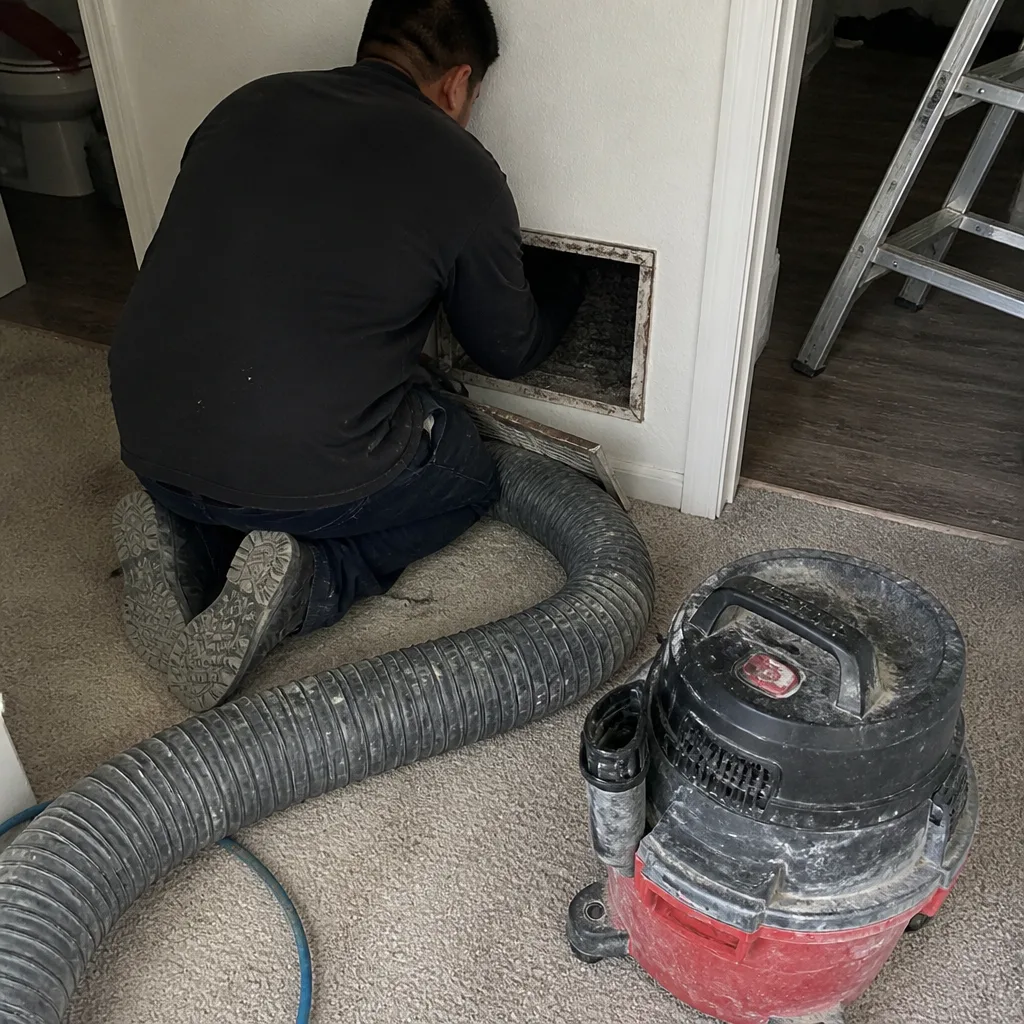 Before
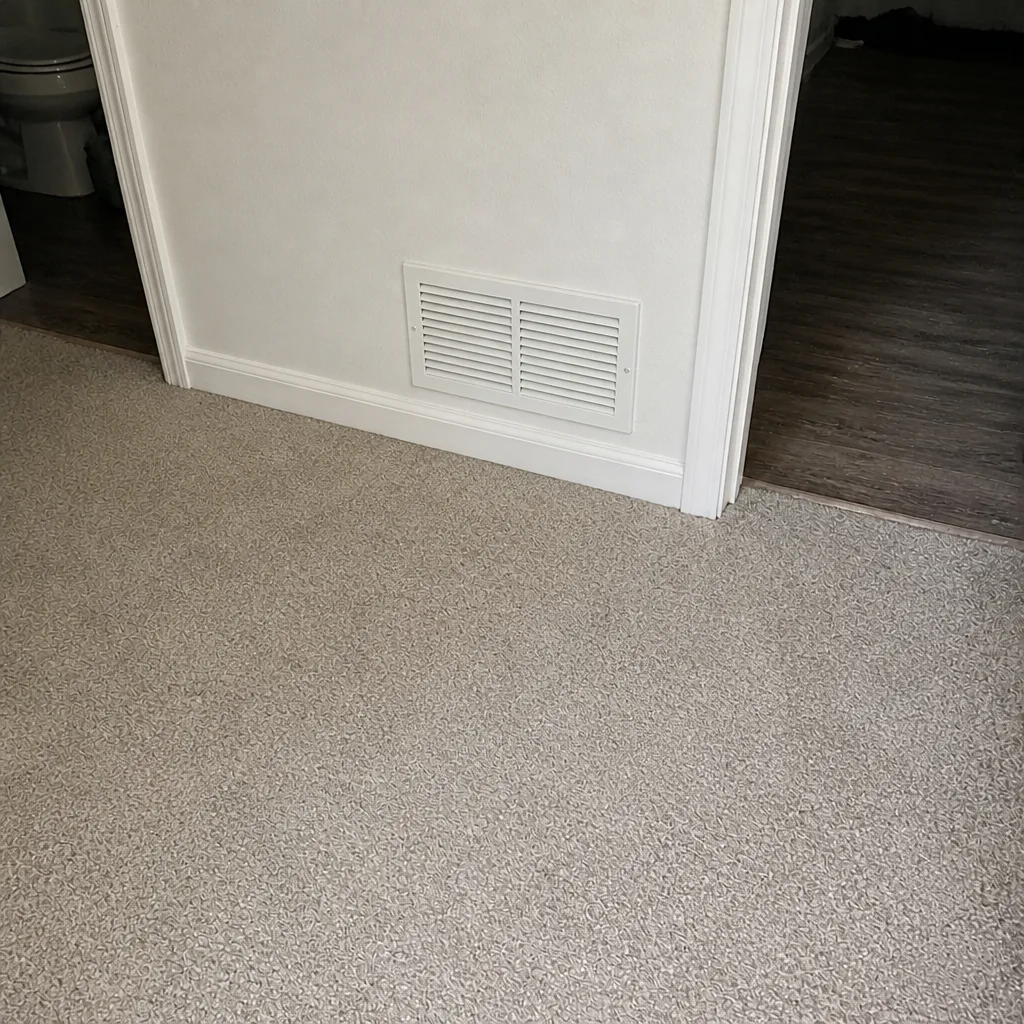 After
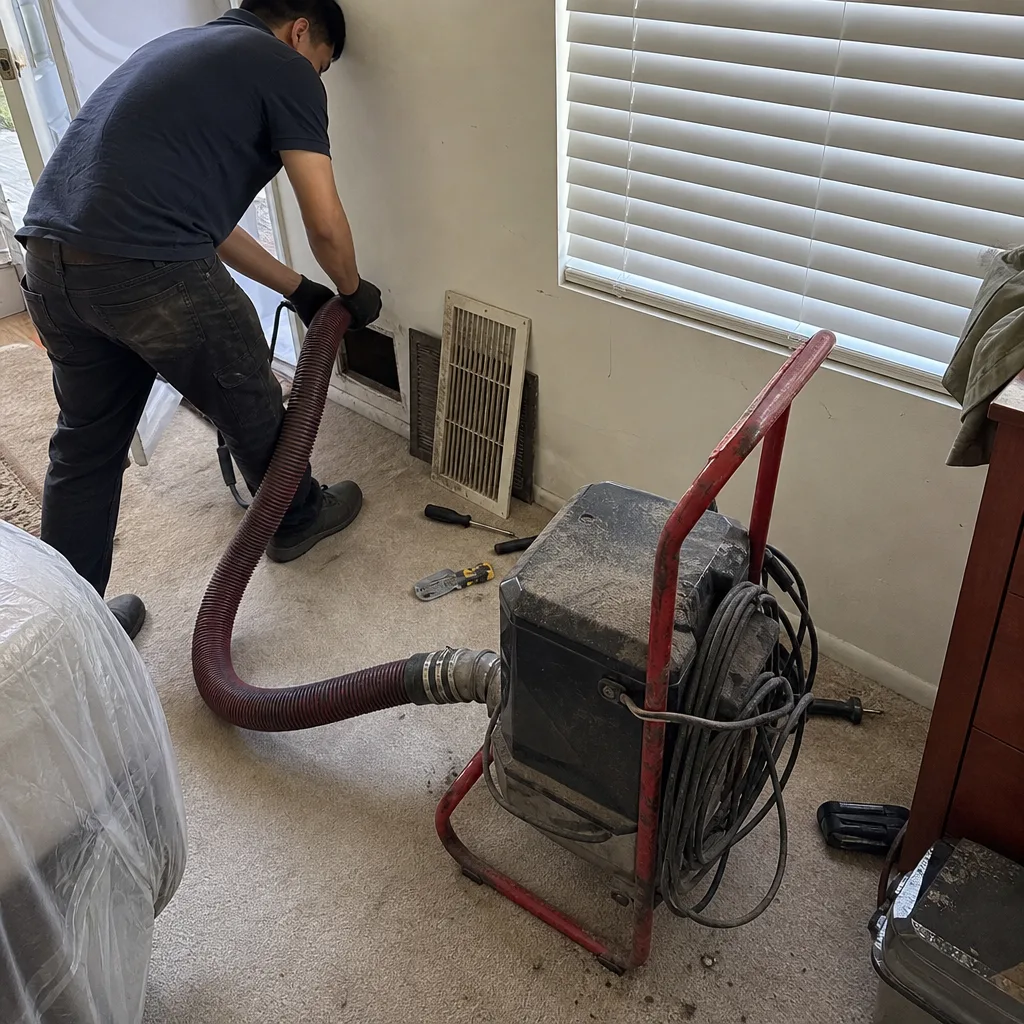 Before
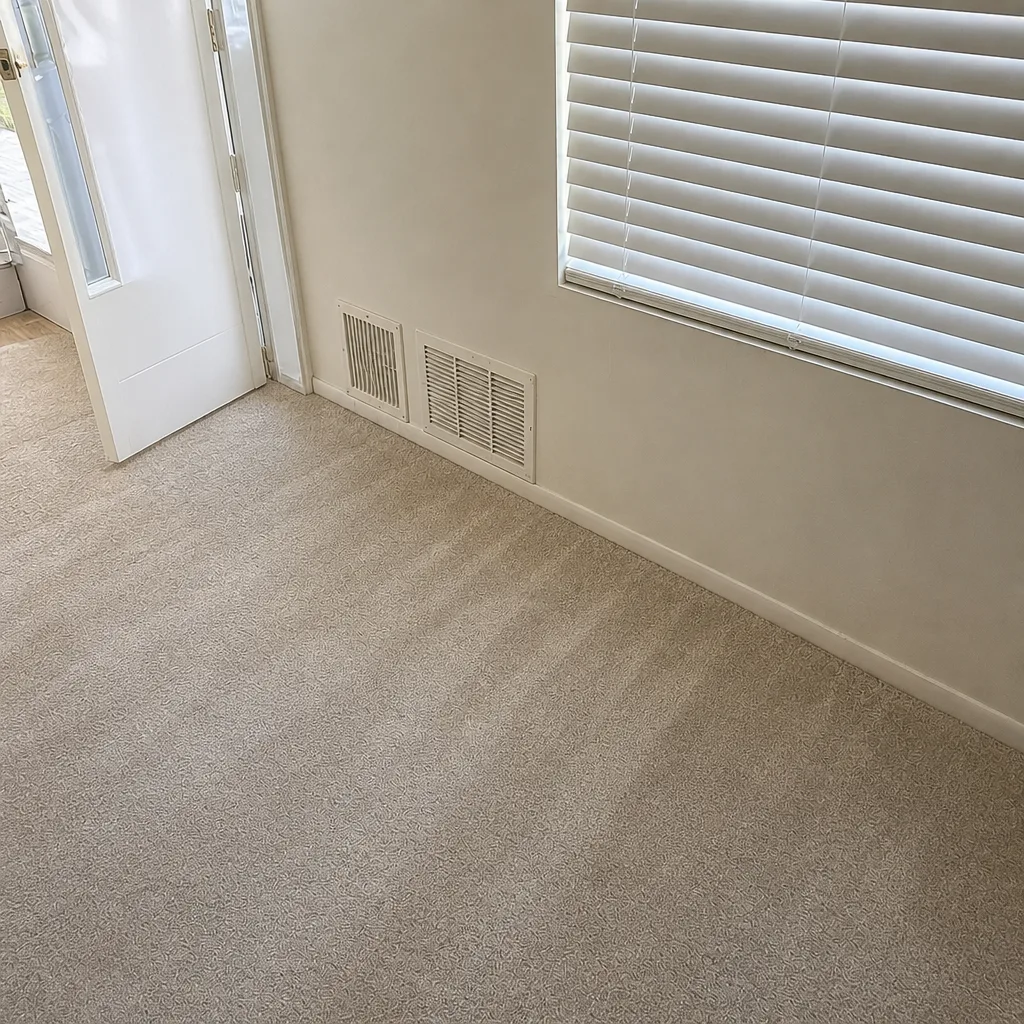 After
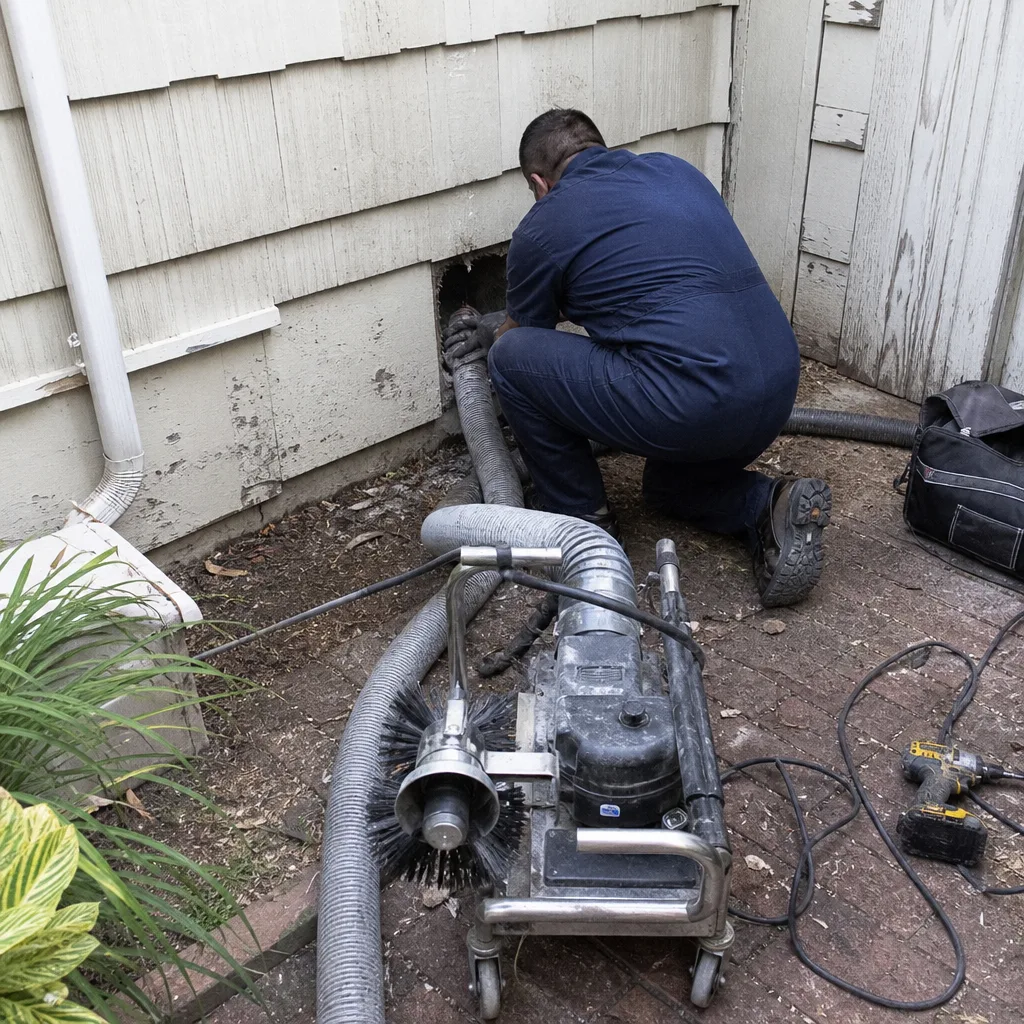 Before
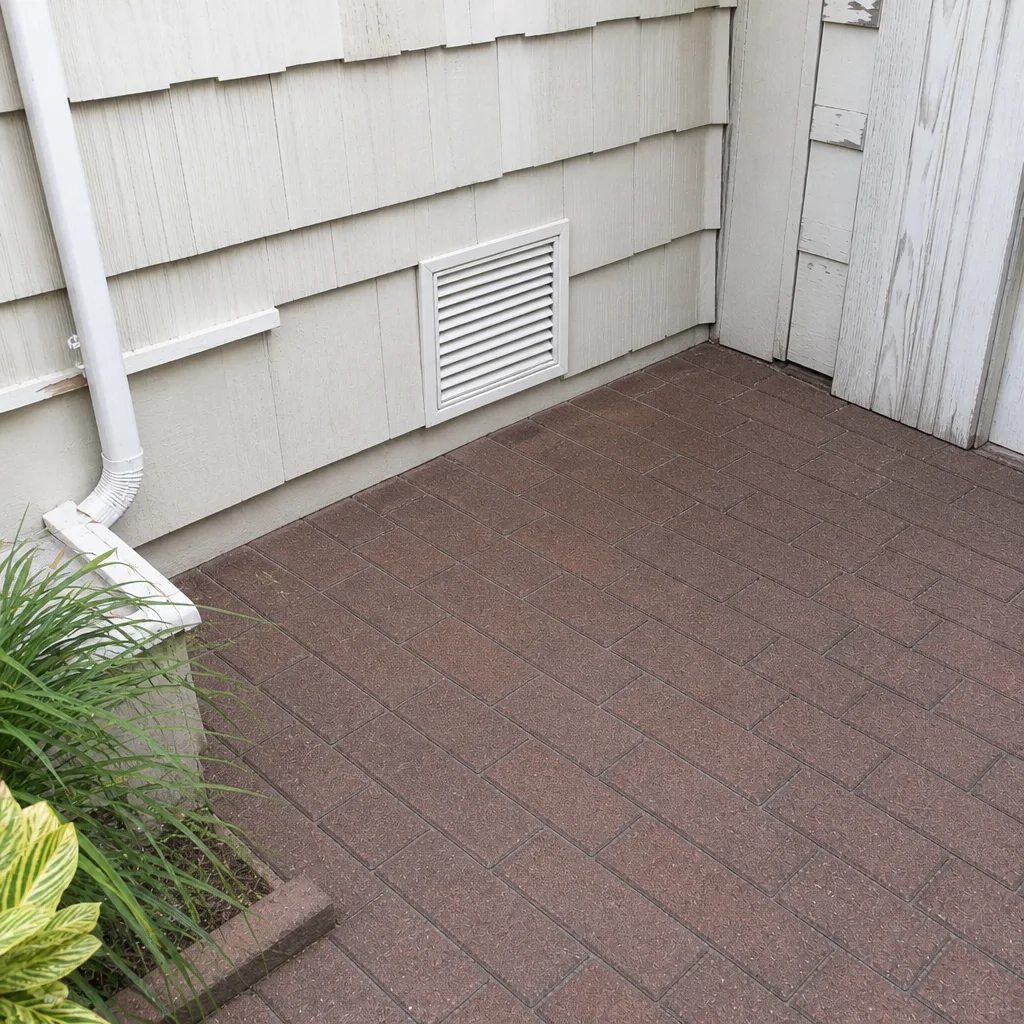 After
When to Call a Professional
Call a professional after any significant smoke event where you noticed odor indoors, elevated indoor PM2.5, or visible ash in registers. Call if you have unexplained allergy or respiratory symptoms that worsened after a fire season and haven’t resolved. Call if you’re preparing a system for the next season and don’t know your filter rating, damper setup, or whether the returns are sealed. Call if you’re buying a home in Peralta Hills in the aftermath of a fire season and want a verified clean starting point before move-in. And call if a recent duct cleaning was done without agitation, extraction, coil inspection, and sanitizing – we can assess what was actually done and what’s still needed.
Air Duct Cleaning Peralta Hills offers free estimates in Peralta Hills. Call (844) 625-7411. We answer 24/7. Fast dispatch from 7am to 7pm, Sunday through Friday. Every job is one flat price per system, agreed before work starts, and every estimate is free.
Frequently Asked Questions
A typical whole-system air duct cleaning in Peralta Hills falls in the range of a few hundred to just over a thousand dollars, depending on system size, accessibility, and whether duct repair or sealing is needed. Post-wildfire remediation with coil inspection, smoke-specific sanitizing, and sealing sits at the higher end of that range, and a written estimate sets the final price. Call (844) 625-7411 for an exact quote – estimates are free.
It can when the cleaning is done at remediation grade – that means mechanical agitation with a rotary brush system, negative-pressure extraction, coil cleaning, and a smoke-specific sanitizing pass on duct surfaces. A surface wipe or shop-vac pass won’t remove the bonded combustion residue that carries odor, so getting the right method matters. Call (844) 625-7411 and we’ll give you an exact quote after inspecting the system.
At AQI above 150, yes, unless you have recirculation mode and a MERV-13 filter in place with sealed returns. Below 150, recirculation with a MERV-13 filter is usually the better choice. If you don’t know your system’s setup, a pre-season inspection is the fastest way to find out. Call (844) 625-7411 for a free estimate on the inspection.
Cheap quotes typically price per vent rather than per system and use consumer-grade vacuums without rotary agitation or negative-pressure extraction. That’s fine for removing surface dust but does almost nothing for bonded post-smoke particulate or coil deposits. A whole-system estimate with a clear scope – agitation, extraction, coil, sanitize, seal – is the honest basis for comparison. Call (844) 625-7411 for a written estimate before you commit.
Ask for before-and-after photos of your own duct interior and coil. Any legitimate remediation job photographs the interior before cleaning and again after. If a company can’t or won’t produce those photos, that’s your answer. Call (844) 625-7411 and we’ll show you exactly what we find and what we clean.
Every few years is the usual cadence for a typical home, but in a documented high-wind and wildfire risk zone like Peralta Hills, the trigger is smoke events rather than a calendar. Any meaningful smoke event with noticeable indoor odor or elevated PM2.5 is a reason to assess, regardless of when the last cleaning was. Call (844) 625-7411 for a free assessment – we’ll tell you if you actually need it.
The Bottom Line
Wildfire smoke preparedness in Peralta Hills starts with three steps that are cheap and fast: a MERV-13 filter, sealed return-air gaps, and a damper you know how to close. During an event, use AQI as your trigger to shut down or recirculate – don’t run an unsealed system and expect it to filter smoke. After the smoke clears, triage with indoor/outdoor PM2.5 comparison and register inspection, document before you clean, and call a professional if the signals point to deposited particulate on the coil or duct walls. The difference between a cleanable system and one requiring full replacement is often just whether it was prepared and inspected in time.
Call (844) 625-7411 for a free estimate. We answer 24/7. Fast dispatch from 7am to 7pm, Sunday through Friday. Our technicians use Rotobrush and Nikro equipment on every job, and we work with your insurer on documentation where coverage applies.
Written by the team at Air Duct Cleaning Peralta Hills.